Istanbul Meeting: Saudi Arabia, Türkiye, Pakistan to Operationalize Makkah Pact
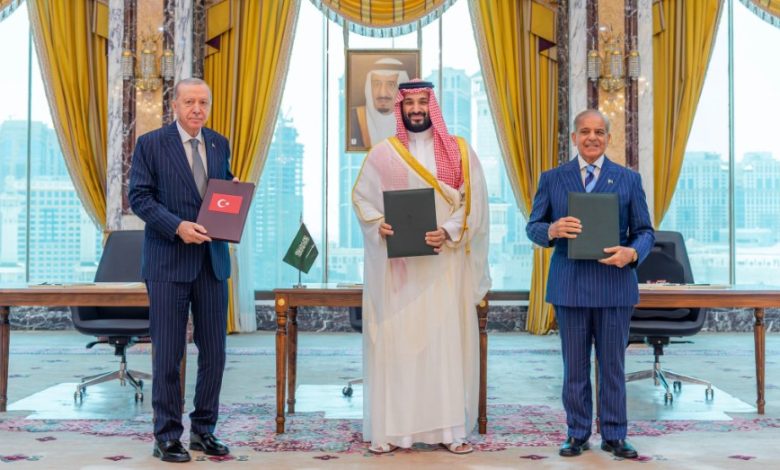
Istanbul is holding the first meeting under the Makkah Joint Defense Agreement, convening senior political and defense officials from Saudi Arabia, Türkiye, and Pakistan.
Riyadh, Ankara, and Islamabad are taking practical steps to translate the new trilateral pact into tangible joint military technology, defense manufacturing, and shared regional deterrence, mapping the future of Middle East security.
The Istanbul Moment
Driving the News: The Turkish Foreign Ministry announced that the first meeting of the Strategic Political and Defense Committee, established under the Makkah Joint Defense Agreement, will take place in Istanbul on Monday, August 31, 2026.
The Big Picture: The Strategic Political and Defense Committee was formed to direct operations and strategic initiatives under the Makkah Joint Defense Agreement.
Who’s Attending: The Istanbul meeting will bring together the foreign ministers, defense ministers, and military chiefs of Saudi Arabia, Türkiye, and Pakistan.
Saudi Arabia:
- Foreign Minister Prince Faisal bin Farhan.
- Defense Minister Prince Khalid bin Salman.
- Chief of General Staff Gen. Fayyadh Al-Ruwaili.
Türkiye:
- Foreign Minister Hakan Fidan.
- National Defense Minister Yasar Guler.
- Chief of General Staff Gen. Selcuk Bayraktaroglu.
Pakistan:
- Foreign Minister Mohammad Ishaq Dar.
- Federal Defense Minister Khawaja Muhammad Asif.
- Chief of Army Staff Field Marshal Asim Munir.
What’s on the Table?
What to Watch: The Istanbul meeting is expected to focus on security issues and ways to enhance defense cooperation, according to Anadolu Agency.
The Agenda:
- Military coordination: Enhance capabilities, improve force interoperability, and expand joint counterterrorism operations.
- Defense industry ties: Boost joint R&D and co-production projects for advanced military hardware.
- Operational setup: Establish a permanent secretariat and other relevant mechanisms and draft a concrete roadmap to guide future joint activities.
Between the Lines: The meeting aims to convey a clear message: The Makkah Defense Pact is an open, cooperative security framework designed to stabilize the Middle East through collective deterrence rather than conflict.
Flashback: On August 7, Saudi Crown Prince Mohammed bin Salman, Turkish President Recep Tayyip Erdogan, and Pakistani Prime Minister Mohammed Shehbaz Sharif signed a joint defense pact stipulating that “any armed attack against any one of the three states shall be regarded as an attack against them all.”
The Trilateral Defense Alliance
State of Play: The Makkah Joint Defense Agreement unites Saudi economic power and regional influence, Turkish technological innovation, and Pakistani military capabilities, building a new defense architecture to anchor long-term regional stability.
Core Objectives:
- Enhancing Defense Capabilities:Enables the three nations to advance joint defense capabilities, strategic deterrence, and operational readiness, while working to integrate and expand military assets.
- Solidifying Security Alliances:Underscores the brotherly ties between the three countries to jointly confront emerging security challenges and military threats.
- Promoting Regional Stability:Reflects a shared commitment to strengthening collective security, driving regional and global peace, and building a secure, prosperous future.
Areas of Cooperation:
- Joint military exercises: Land, naval, and air
- Joint development and production: Air defense and unmanned autonomous systems
- Technology cooperation: Electronic warfare and AI capabilities
- Sustainable maintenance
- Logistics support
Why It Matters: The trilateral pact comes at a critical time for the region, against the backdrop of a month-long conflict involving the US, Israel, Iran, and Iranian-backed militias, raising concerns over regional security.
The Nexus of Three Regional Powers
Zoom In: The pact merges the strengths of all three nations under a collective security umbrella, creating an unprecedented shield against external threats across West Asia.
Saudi Arabia
In addition to its economic weight and political influence, Riyadh possesses advanced military capabilities. Its defense expenditure amounted to roughly $33.23 billion (SAR 124.6 billion) in the first half of 2026, driven by ongoing efforts to localize defense industries, according to Al-Arabiya. The Kingdom also ranks #25 globally in overall military strength, per Global Firepower.
Türkiye
Türkiye, NATO’s second-largest military, boasts a rapidly growing defense industry, particularly in drones, naval shipbuilding, electronic warfare, and armored systems. Its defense and aerospace exports reached $1.12 billion (approximately SAR 4.2 billion) in July. It ranks #9 globally in overall military strength, per Global Firepower.
Pakistan
As the only nuclear-armed Muslim nation, Pakistan possesses a highly professional military, advanced missile capabilities, and a vast experience in counterterrorism. It ranks #14 globally in overall military strength, per Global Firepower.
Looking Ahead: Riyadh, Ankara, and Islamabad have signaled that the defense pact is open for all brotherly countries that aim for the peace, prosperity, and stability of the region, stressing its defensive nature.
- Egypt: Turkish Foreign Minister Hakan Fidan suggested that Egypt could join the Makkah Joint Defense Agreement, which could expand the alliance’s footprint across North Africa and the Red Sea.
- Bangladesh: Dhaka is positively considering joining the pact, marking potential future expansion beyond the Middle East.