In response to recent military tensions and trade disruptions, Saudi Arabia has established a multinational maritime defense coalition to protect shipping in critical waterways including the Bab al-Mandab Strait, the Red Sea, and the Gulf of Aden.
The new coalition builds on Riyadh’s longtime advocacy for joint action and collective defense to anchor peace, maritime commerce, and counterterrorism across the Middle East, Africa, and Asia.
Maritime Defense
Driving the News: Saudi Arabia announced on Thursday the formation of the Multinational Maritime Defense Coalition, alongside 13 founding members, to strengthen maritime security, safeguard international sea routes, and confront threats to maritime navigation and global trade. Hosted by the Saudi Defense Ministry in Riyadh, the meeting brought together the military chiefs of 43 countries, in addition to the EU Delegation to Saudi Arabia.
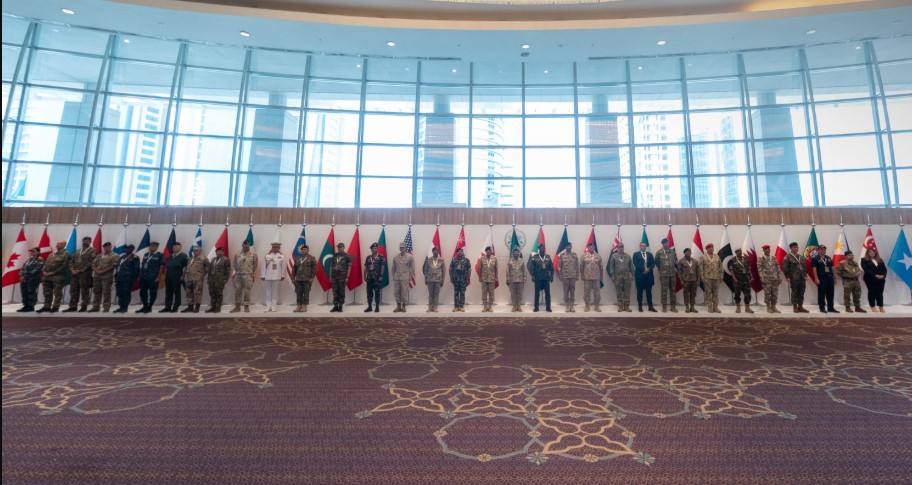
The Big Picture: The participants emphasized the importance of cementing multilateral defense cooperation to address and deter the growing threats to maritime security, including attacks against commercial vessels, energy tankers, and naval infrastructure in the Bab al-Mandab Strait, the Red Sea, and the Gulf of Aden.
What to Watch: The 14 founding members span Gulf Cooperation Council (GCC) members (Saudi Arabia, Kuwait, Qatar, Bahrain), regional heavyweights (Egypt, Türkiye, Pakistan), and key coastal states (Djibouti, Somalia, Yemen, Sudan), as well as Jordan, Bangladesh, and Nigeria.
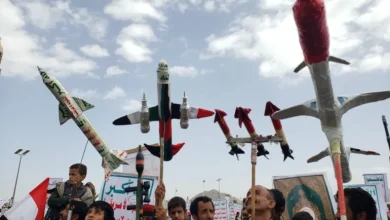
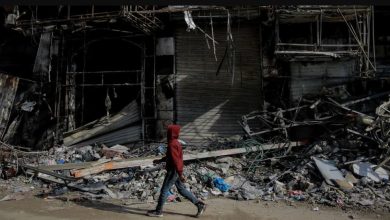
Why It Matters: The creation of the new coalition came amid mounting threats to regional maritime trade corridors, following drone attacks against commercial vessels and energy infrastructure in the Red Sea and the Eastern Mediterranean, including the recent strike near Egypt’s Damietta Port.
Riyadh Leadership
Go Deeper: The founding members agreed to designate Saudi Arabia as the founding and leading nation of the coalition, with Riyadh serving as the host of the headquarter, Joint Command, command-and-control centers, Joint Maritime Operations Center and General Secretariat.
The Anchor: In a joint statement, the coalition’s founding members stressed that the coalition is purely defensive and does not target any particular state. They agreed to bolster cooperation in maritime security, intelligence and information sharing, operational planning, joint exercises, training, capacity building, lessons learned, and joint maritime operations in accordance with the coalition’s charter, while noting that the participation in the coalition’s activities remain a sovereign decision for each member state.
The Takeaway: The Saudi-led Multinational Maritime Defense Coalition aims to boost collective maritime security, protect freedom of navigation and global trade, while embodying the principle of shared international responsibility in addressing common threats – guided by a firm conviction that the security of international sea lanes is a collective obligation requiring an effective, sustained global partnership.
The Architect of Regional Security
Zoom In: In line with its role as a regional stabilizer and its established status as an Islamic, Arab, and Gulf leader, Saudi Arabia spearheads collective efforts to deter threats, protect security, and confront extremism on multiple fronts.
The Islamic Military Counter-Terrorism Coalition
Launched in December 2015 by Saudi Crown Prince Mohammed bin Salman, the IMCTC is a Riyadh-based pan-Islamic alliance, comprising 43 member states from Asia and Africa.

Its main objective is solidifying the joint efforts of Muslim countries in countering terrorism, focusing on four domains:
- Ideology: Raise awareness about the true and moderate principles of Islam and refute extremist narratives.
- Communications: Expose terrorist propaganda and coordinate media strategies.
- Counter-Terrorism Financing: Take effective measures to track, detect, and curb terrorist financing networks.
- Military Coordination: Build security capacity of member states and share intelligence to counter the threats of armed terrorist groups.
GCC Unified Military Command
Formerly known as the Peninsula Shield Force, the GCC Unified Military Command (UMC) is a joint military organization based in Riyadh, working under the umbrella of the GCC Joint Defense Council. Led by Major General Abdulaziz Ahmed Al-Balawi, the UMC coordinates collective defense, intelligence sharing, and regional security among the six GCC members (Saudi Arabia, Bahrain, Kuwait, Qatar, Oman, and the UAE).

The UMC took executive measures to activate joint defense mechanisms and Gulf deterrence capabilities under the Joint Defense Agreement:
- Enhancing intelligence sharing through the UMC.
- Integrating air situation data into all GCC operation centers’ systems.
- Accelerating the work on the GCC Joint Task Force for the Early Warning System against Ballistic Missiles.
- Updating collective defense plans in coordination with the Operation and Training Committee.
- Conducting joint exercises between air defense and operation centers within three months, with a live air exercise to follow.
The Peninsula Shield Force played a pivotal role in the liberation of Kuwait in 1991, the defense of Kuwaiti territory during Iraq liberation in 2003, and the protection of security and order in Bahrain in 2011.
The Engine of Deterrence
State of Play: The Kingdom’s advanced military and defense capabilities, coupled with its status as a diplomatic heavyweight, have positioned it as an ideal convener and host of regional and multinational alliances.
The Anchor: Under Vision 2030, Saudi Arabia targets a localization rate of more than 50% of its military spending by the end of the decade. These efforts are spearheaded by the General Authority for Military Industries (GAMI), alongside Saudi Arabian Military Industries (SAMI). By the end of 2024, the localization rate of military spending reached around 25%, surging from 4% in 2018.
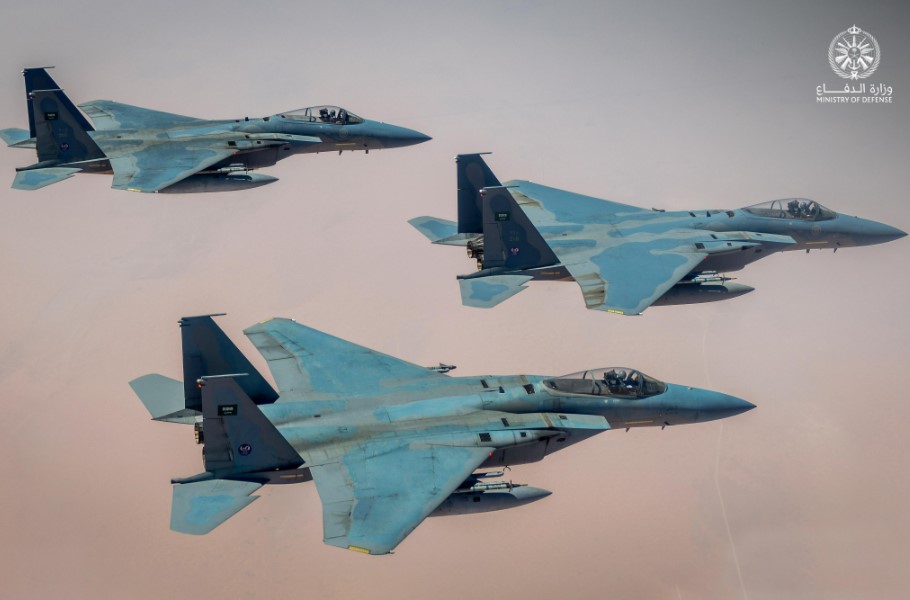
Saudi Arabia is actively building domestic capabilities in:
- Drones
- Naval shipbuilding
- Armored vehicles
- Cybersecurity
Furthermore, Riyadh is diversifying its partners to evolve into a self-reliant developer of advanced defense technologies and achieve supply chain sufficiency. These efforts are further solidified by partnership agreements with major defense leaders, including:
- The US
- The UK
- Italy
- South Korea
- Pakistan
- Türkiye
By the Numbers:
- 25th: Saudi Arabia’s overall military strength ranking out of 145 countries, per Global Firepower.
- 2nd: Saudi Arabia’s global rank for the largest aerial refueling tanker fleet.
- 7th: The Royal Saudi Air Force’s rank worldwide for fighter and interceptor fleet strength.
- $64 billion: Saudi Arabia’s defense budget for the fiscal year 2026, making it the 8th largest globally.
The Bottom Line: Riyadh adopts a balanced, pragmatic, and holistic approach to joint action, using defense coalitions to guarantee immediate security. This model of consensus-building and sovereign partnerships offers a blueprint for stability in an increasingly troubled region.