Beyond Hormuz & the Red Sea: Damietta Drone Attack Exposes New Maritime Front
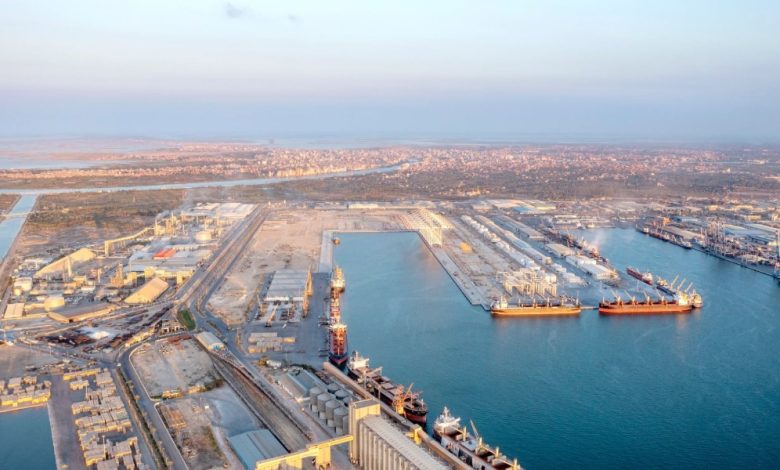
Egypt confirmed Thursday that a drone attack triggered a fire aboard two gas vessels at the Port of Damietta a day earlier.
Although the source of the drones has not been identified, the attack marks a dangerous expansion of unmanned aerial threats to key energy hubs and critical maritime corridors, from the Strait of Hormuz to the Red Sea and now to the Eastern Mediterranean.
The Damietta Attack
Driving the News: The British maritime security firm Ambrey first reported the incident, saying a drone targeted a US-owned gas storage tanker at the port. According to Reuters, citing three sources, the drone hit the US-owned floating storage tanker Energos Winter, triggering a blaze that spread to another vessel, GasLog Salem.
The Egyptian Petroleum Ministry said in a statement that the situation was immediately dealt with in accordance with the approved emergency and rapid response plans through the coordinated efforts of the competent authorities and the on-site firefighting and safety teams.

The Big Picture: A fire erupted Wednesday aboard two gas ships at Damietta Port in the Eastern Mediterranean, with no casualties reported. The Egyptian Cabinet confirmed on Thursday that the blaze was caused by a drone attack, according to preliminary investigations. However, it said no party has claimed responsibility for the attack.
Why It Matters: Located on the Mediterranean, the Damietta Port is home to one of Egypt‘s two LNG liquefaction plants along with Idku. It evolved in 2025 into a central hub for hosting Floating Storage and Regasification Units (FSRUs) as Egypt expanded its LNG import capacity to shore up energy supplies during peak summer electricity usage, according to Al-Ahram Online.
What to Watch: The Egyptian authorities are continuing investigations to determine the circumstances of the incident, affirming that Cairo will take the necessary measures to safeguard Egypt’s interests and national security.
The Expanding Iranian Threat
Zoom In: The New York Times reported, citing two anonymous Iranian sources, that the drone attack against Egypt’s Damietta Port aimed to show that global shipping and energy supplies could face more disruptions if Iran chose to escalate. However, they declined to say whether Iran or one of its allied militias in the region had launched the attack, or from where.
Flashback: The Iranian state television broadcast a map identifying potential targets to hit in retaliation for a Ukrainian strike against an Iranian vessel in the Caspian Sea. The map, released just three days prior to the incident, showed Damietta Port among the list, describing it as a key export hub supplying Europe. The map also identified other regional energy infrastructure connected to the European market.
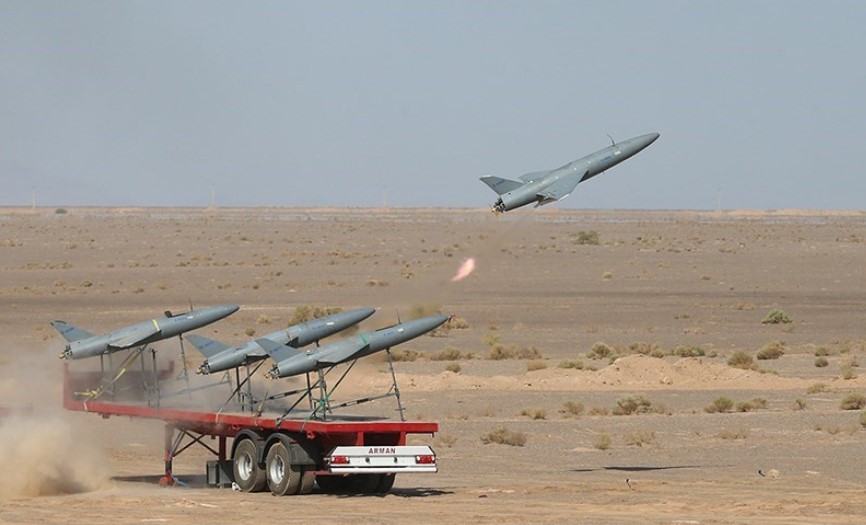
State of Play: Iranian-backed militias in Iraq sent swarms of drones toward oil facilities in the Eastern Region and Riyadh in Saudi Arabia on Monday and Tuesday, all of which were intercepted and destroyed by Saudi air defenses. In response, the Kingdom conducted precision strikes, alongside US Central Command (CENTCOM), targeting Iran-aligned groups in eastern Iraq. Riyadh stressed that while it does not seek escalation, it will not hesitate to take all necessary measures to safeguard the Kingdom’s sovereignty and protect its citizens and national assets.
Maritime Corridors in the Crosshairs
The Context: The recent military escalation in the Middle East has caused widespread disruption to maritime shipping, sending shockwaves across the global economy. Since the outbreak of the US-Israeli war with Iran on February 28, 2026, two critical waterways have come under Iranian-linked attacks.
The Strait of Hormuz
The Strait of Hormuz is a strategic waterway linking the Arabian Gulf with the Gulf of Oman and the Arabian Sea, through which around a fifth of daily global oil and LNG supplies pass. Iran has partially closed the Strait, illegally blocking transit without its permission, despite a ceasefire deal signed with the US on June 18 that obligates Iran to reopen the strategic maritime corridor. This has disrupted the flow of goods, essential commodities and energy and aid supplies.
As a result, US President Donald Trump declared the ceasefire over, ordering waves of military strikes against Iranian targets and reinstating the naval blockade on Iran. Tehran, for its part, retaliated with attacks targeting US bases and facilities across the region.
The Bab al-Mandab Strait
On the western side of the Arabian Peninsula, the Bab al-Mandab Strait offers a gateway into the southern Red Sea and the Suez Canal. Since the blockade of Hormuz, the Red Sea has emerged as an alternative route for global trade and supply chains, linking the Gulf to Europe, through the Suez Canal, and Asia through Saudi ports. By targeting Damietta – located just west of the Suez Canal’s northern Mediterranean exit – the threat now extends to both ends of this vital maritime artery.
In recent weeks, the Iranian-backed Houthi militia has escalated threats around the Bab al-Mandab Strait, targeting two Saudi vessels transiting the waterway. The Saudi response has been firm, with the Joint Forces Command of the Arab Coalition to Restore Legitimacy in Yemen carrying out a resolute and proportionate military response to Houthi attacks against commercial shipping in the Red Sea.
Riyadh & Cairo Alignment
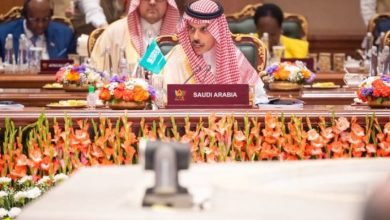
Between the Lines: As key stakeholders in regional maritime and energy security, Saudi Arabia and Egypt have advocated for uninterrupted trade flows of international oil, gas, container shipping, and commercial transit, in accordance with international law and UNCLOS.
On several occasions, Riyadh and Cairo called for the safe passage through the Strait of Hormuz and the Red Sea, reiterating the need to maintain maritime security and freedom of navigation in these critical maritime chokepoints and opposing any unilateral measures that could restrict maritime transit.
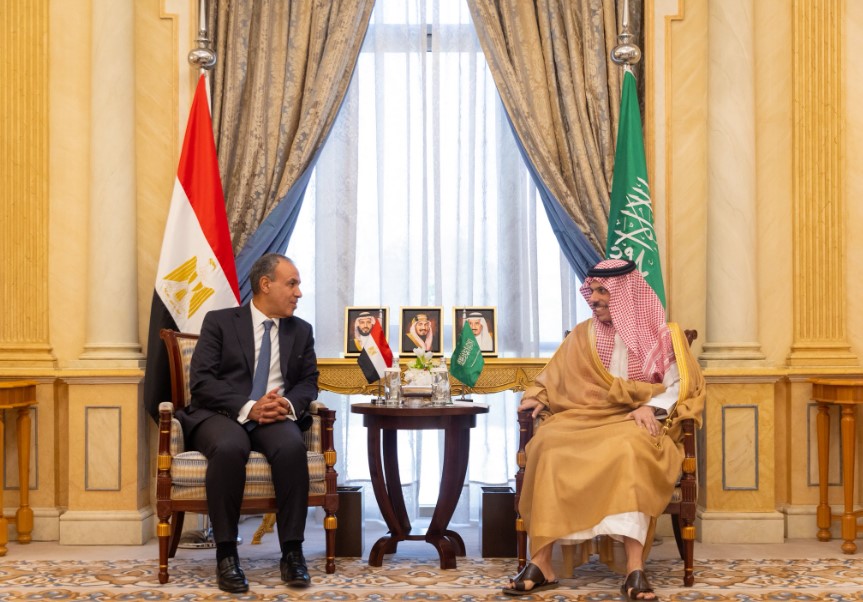
The two countries stressed the importance of diplomacy to resolve the conflict, playing a “supportive role” in the US-Iran talks by encouraging both parties to focus on the diplomatic track to bridge the gaps.
Close Coordination
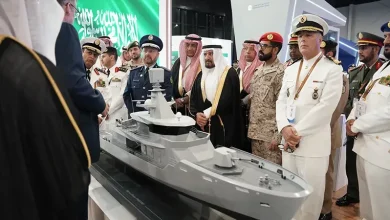
State of Play: Saudi Arabia has deepened its maritime coordination with Egypt to protect the Bab al-Mandab Strait and the Red Sea corridor. This materialized in a cooperation protocol signed in September 2025 to support maritime security efforts in the region. Saudi and Egyptian military officials also discussed avenues for bolstering military cooperation between their respective naval forces, including ways to transfer and exchange expertise.
The Deep Dive: Saudi Arabia and Egypt, alongside Pakistan and Türkiye, are also members of the Regional Four (R-4) group – a quadrilateral consultative framework focused on boosting joint coordination and unifying positions in the face of the rapidly evolving developments and dangerous military escalation in the Middle East.
Furthermore, Riyadh and Cairo are spearheading efforts to activate the Council of Arab and African Coastal States of the Red Sea and the Gulf of Aden, established in 2020.
Key Objectives:
- Maritime Security: Coordinate joint efforts to protect shipping lanes, combat piracy, and manage cross-border threats.
- Economic Cooperation: Foster regional trade, resource sharing, and economic development among member states.
- Geopolitical Stability: Provide a localized forum for coastal states to manage regional security independently and minimize interference from external powers.
The Bottom Line: The Damietta Port attack confirms that drone threats are no longer confined to Hormuz or Bab al-Mandab – they have expanded into the Eastern Mediterranean, threatening global energy transit routes. The deepening Saudi-Egyptian security partnership serves as the central anchor for safeguarding global trade lines and ensuring energy security and freedom of navigation across all three seas.