Saudi Arabia Stresses Right to Self-Defense after Destroying Drones Launched from Iraq
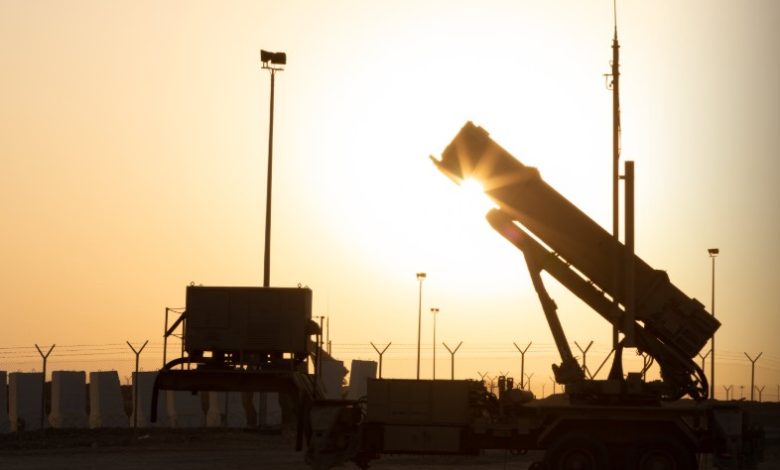
Saudi Arabia said its air defenses had intercepted and destroyed drones launched by Iranian-backed militias in Iraq, reserving the Kingdom’s right to respond.
Baghdad, for its part, ordered a probe into the drone attacks launched from its territory, underscoring the depth of Saudi-Iraqi relations and its firm rejection of any attempts to undermine these ties.
Deterrence in Action
The Big Picture: The Saudi Defense Ministry said on Monday that its air defenses had intercepted and destroyed several drones launched towards oil facilities in the Eastern Region and Riyadh. According to the Saudi Defense Ministry’s Spokesperson Major General Turki Al-Maliki, the intercepted drones were launched from Iraqi territory by Iranian-backed terrorist militias.
What He Said: Maj. Gen. Al-Maliki affirmed the Kingdom’s inherent right to defend itself and its national assets, saying that it reserves the sovereign right to respond at the appropriate time and place.
Between the Lines: Since the outbreak of the US-Israeli war with Iran on February 28, 2026, Saudi Arabia and other Gulf nations reported drone attacks launched by pro-Iran militias in Iraq. Furthermore, the recent days saw a military escalation by the Houthi militia in Yemen, in which the Iranian-backed group targeted two Saudi tankers in the Red Sea and the Saudi-led Arab Coalition responded by striking the militia’s legitimate military targets in Hodeida Governorate early Saturday.
Firm Stance
State of Play: Separately, Saudi Arabia’s Foreign Ministry issued a statement expressing its strong condemnation of the “reprehensible” drone attacks launched by the Iran-affiliated militias in Iraq against the Kingdom. The statement emphasized Riyadh’s determination to safeguard its security and sovereignty, deter the aggressors, and respond to the sources of the attacks.
The Anchor: The Saudi Foreign Ministry called on the Iraqi government to take all necessary measures to prevent the use of its territory as a launchpad for such hostile actions.
Why It Matters: Iraq’s Prime Minister Ali al-Zaidi is expected to visit Saudi Arabia on July 30, 2026 to discuss bilateral security cooperation, regional developments, and wide range of economic issues, Shafaq News reported, citing an informed Iraqi government source. The visit builds on an earlier one in mid-July, during which a high-level delegation led by Iraqi Foreign Minister Fouad Hussein visited Riyadh.
Iraq’s Response
What to Watch: Later Monday, al-Zaidi’s office issued a statement saying that the Prime Minister ordered an investigation into the incident. The government said it was examining available evidence and information, vowing legal action against anyone proven to be involved in these acts.
The Impact: The government emphasized its commitment to preventing the use of Iraqi territory as a launchpad for attacks against neighboring or friendly countries, stressing that it would not allow any attempt to undermine the “deep-rooted, fraternal” ties with the Kingdom.
Arab Solidarity
State of Play: Arab, Muslim, and Gulf states rallied behind Saudi Arabia, voicing their support for any measures the Kingdom takes to safeguard its security.
Gulf Cooperation Council
GCC Secretary-General Jasem Albudaiwi denounced the attempted attacks as a “dangerous escalation” and a direct threat to regional security and stability. He reiterated the GCC’s full solidarity with Saudi Arabia and its support for all measures the Kingdom takes to safeguard its security, sovereignty, and territorial integrity.
Similarly, Qatar, Kuwait, Oman, Bahrain, and the UAE issued separate statements condemning the attacks against Saudi Arabia, stressing that the Kingdom’s security and stability is integral to their own national security.
Egypt
The Egyptian Foreign Ministry expressed Cairo’s strong condemnation of the attacks, describing them as a violation of the Kingdom’s security and stability and an escalation that threatens regional security and stability. Egypt voiced full solidarity and support for any measures the Kingdom takes, stressing its rejection of all acts targeting Saudi Arabia and other Arab states and calling for the immediate cessation of these attacks to preserve regional security and stability.
Syria
The Syrian Foreign Ministry issued a strong condemnation of the attempted attack as a violation of Saudi Arabia’s security and stability and a threat to regional security, calling for respect for the sovereignty of states and for rejecting all actions that undermine security and stability in the region.
Pakistan
Pakistan said that the “provocative” attacks pose a serious threat to regional peace and stability, reiterating Islamabad’s unwavering support for the Kingdom’s sovereignty, territorial integrity, security, and prosperity.
Muslim World League
The MWL’s Secretary-General Sheikh Dr. Mohammed Al-Issa denounced the drone attacks as treacherous and criminal acts that violate religious values as well as international law and humanitarian norms, affirming solidarity with the Kingdom to defend its security, sovereignty, and the safety of its citizens and residents.
Organization of Islamic Cooperation
The OIC Secretary-General Hissein Brahim Taha condemned the attacks as a flagrant violation of international law, a dangerous and direct escalation, and a threat to regional security and stability, reaffirming solidarity with Saudi Arabia.