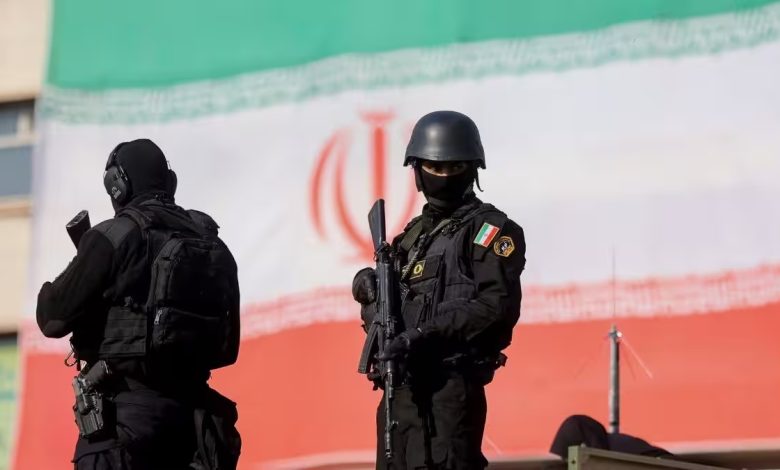
Iran’s Islamic Revolutionary Guard Corps (IRGC) has reportedly established covert new cells in Iraq to strike Gulf countries hosting American forces, according to eight Iraqi sources who spoke to Reuters.
The cells operate outside established militia networks, making them harder to detect and trace back to Tehran.
According to Reuters report, three or four cells, each made up of roughly 10 elite Iraqi Shi’ite fighters, launched at least seven drone attacks from desert areas near Basra and Samawa, targeting sites in Kuwait, Saudi Arabia and the UAE between 20 April and 17 May.
Although the Islamic Resistance in Iraq, an umbrella group of hardline Shi’ite factions, supplied some members, the new cells reportedly answer directly to the IRGC rather than to that group’s command structure.
A Shift in Tactics Amid Weakened Proxies
Moreover, five militia commanders told Reuters the move reflects changing IRGC strategy as Iran’s regional proxy network grows thinner and its military and economic resources come under strain. Indeed, several major Shi’ite factions in Iraq have signaled since last year that they are ready to disarm in order to avoid a wider confrontation with the administration of US President Donald Trump.
Two of these groups, Asaib Ahl al-Haq and the Imam Ali Brigades, confirmed this month that they would begin handing over weapons to state authorities.
Retired Iraqi army general Jasim Al-Bahadli said the newer groups appear smaller and more tightly controlled, noting they reflect Iran’s need to conserve resources amid economic strain. He added that Tehran now seems to favour a leaner approach, relying on fighters who prioritise loyalty and deniability over scale.
Notably, Washington and Tehran signed an interim agreement this week to end hostilities, though officials say Iran’s support for regional “resistance groups” remains off the table for negotiation. Meanwhile, the US State Department has reiterated its expectation that Baghdad dismantle all tools of Iranian “destabilising activities,” including IRGC-linked militias.
Strikes Test Iraq’s New Government
The attacks struck a range of targets, including Kuwait’s Ali Al Salem Air Base, where US troops are stationed, while Saudi and Emirati forces reportedly intercepted the strikes aimed at their countries.
Iraqi authorities are also investigating whether a 17 May drone attack that sparked a fire at the Barakah Nuclear Power Plant in the UAE was linked to the new cells. On the same day, Saudi Arabia said it intercepted three drones entering its airspace from Iraq.
Iraq’s new prime minister Ali Al-Zaidi, who took office last month, condemned both incidents as criminal acts and pledged a joint investigation with the two Gulf states.
Consequently, the strikes threaten to undo years of delicate diplomacy between Baghdad and its Gulf neighbours, ties that had only recently begun improving since the 1990 invasion of Kuwait.
Kuwait, Saudi Arabia and the UAE all summoned Iraqi envoys in April to formally protest the attacks. Iraq’s government communications offices, along with Kuwaiti and Emirati ministries, did not respond to requests for comment.