
Switzerland announced on Thursday that planned talks between US and Iranian negotiators would not go ahead, after Vice President JD Vance dropped plans to travel to the country. Consequently, the cancellation has deepened uncertainty over whether Washington and Tehran can still reach everlasting truce.
“The logistics of these negotiations have never been simple or predictable,” a White House spokesperson said in a statement, adding that Vance and the US delegation had been ready to depart once arrangements were finalised. Meanwhile, Switzerland’s foreign ministry confirmed the talks, scheduled for the mountaintop resort of Burgenstock, would not take place, though it offered no further details.
No Confirmation from Tehran
Iran had not issued an immediate response by Thursday night. Earlier, however, Iranian officials said they were ready to begin technical talks following Wednesday’s 14-point accord, which extended a fragile ceasefire by at least 60 days. Still, Iran’s negotiators reportedly wanted to see evidence of US implementation first, and the semi-official Tasnim news agency reported there was no confirmation that Iran’s delegation would travel to Switzerland at all.
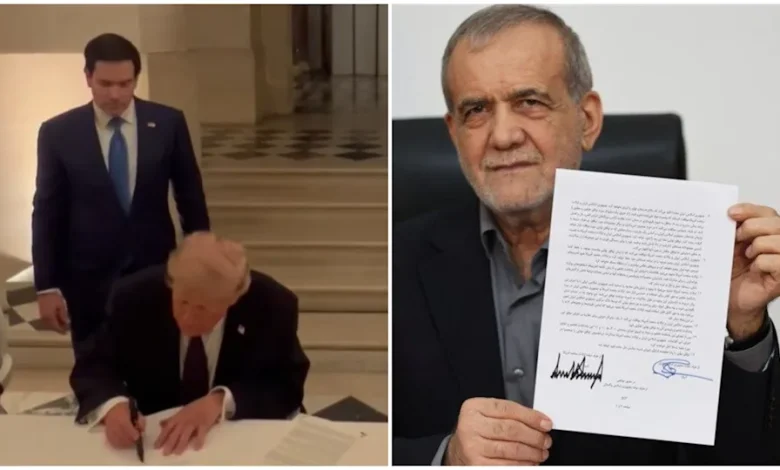
US officials had also planned a formal signing ceremony in Switzerland, but Iran’s foreign ministry questioned the need for one, since both countries’ presidents had already signed the pact.
The conflict, which began on 28 February with US and Israeli air strikes on Iran, has killed at least 7,000 people and pushed energy prices sharply higher. Israel, notably excluded from the talks, has distanced itself from the agreement and continued operations against Hezbollah in Lebanon, further complicating the truce’s prospects.
Sanctions Relief Replaces “Unconditional Surrender”
Although Trump had vowed to end the war only with Iran’s “unconditional surrender,” the signed memorandum instead delivers sanctions relief, unfreezes tens of billions of dollars in assets, and grants immediate US waivers for Iranian oil exports.
In response, Iran’s Supreme Leader Ayatollah Mojtaba Khamenei said Trump had signed the deal “out of desperation,” warning that nuclear talks would not be straightforward, “If the American side wants to be too demanding, we will not accept it.”
Under the agreement, negotiators now have 60 days to settle the status of Iran’s nuclear program, alongside a $300 billion reconstruction fund. Vance said Washington would additionally seek limits on Iran’s long-range missiles.
Iran reaffirmed it will not pursue nuclear weapons and agreed to onsite “down-blending” of enriched uranium under IAEA inspection, rejecting US calls to remove the material entirely. Critics argue Iran now negotiates from a position of strength, having withstood the attack and retained control over the Strait of Hormuz, where it plans new shipping fees once the 60-day talks conclude.