US President Donald Trump and his Iranian counterpart Masoud Pezeshkian signed a memorandum of understanding (MoU) on Wednesday to end the Middle East war, with Tehran committing to dilute its enriched uranium in exchange for sweeping economic relief from Washington.
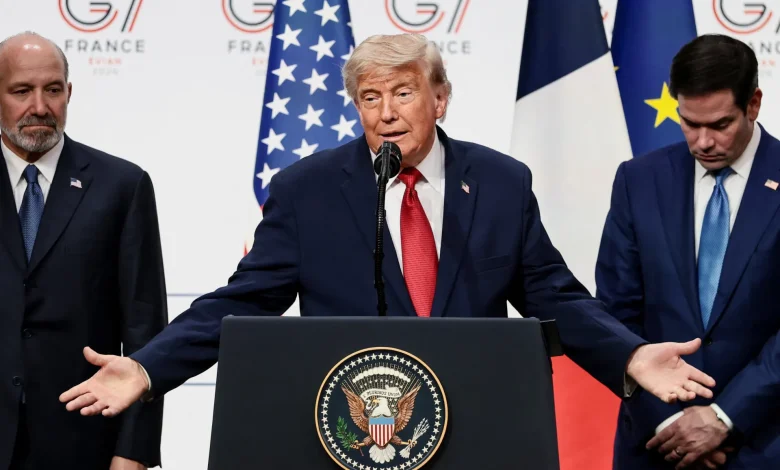
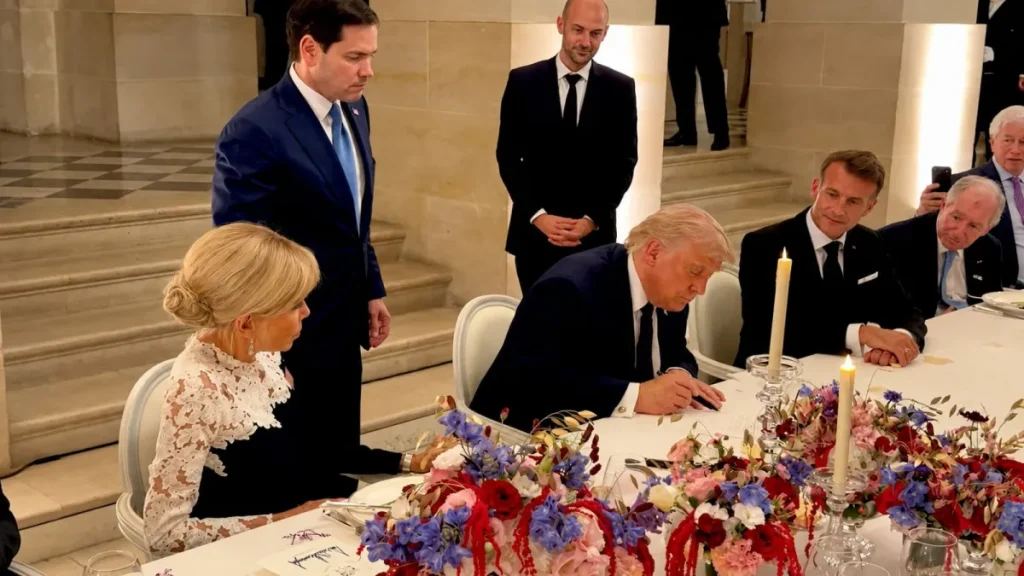
Trump signed the document during a candlelit dinner at the Palace of Versailles, hosted by French President Emmanuel Macron following the G7 summit in Evian, France.
“Just signed it,” Trump told reporters as he left the palace, as Iranian Foreign Ministry spokesman Esmaeil Baqaei confirmed that “the document was finalised with the signatures of the presidents.”
Pakistani Prime Minister Shehbaz Sharif, whose country mediated the agreement, announced on X that the deal “shall enter into force with immediate effect.” He added, “As a first step, the Islamic Republic of Iran will instantly reopen the Strait of Hormuz and the United States of America will immediately lift the naval blockade.”
Key terms of the agreement
The deal targets the conflict that erupted on 28 February, when the US and Israel launched military operations against Iran, prompting retaliatory missile and drone strikes across the region and the effective closure of the Strait of Hormuz, a chokepoint for roughly 20 per cent of global oil and LNG supplies.
Under the 14-point framework, Washington commits to immediately waiving oil sanctions on Tehran, allowing Iranian crude to re-enter international markets. Moreover, a $300 billion reconstruction fund, supported by regional partners, will follow a final nuclear settlement.
The agreement opens a 60-day negotiating window, extendable by mutual consent, to resolve the thornier issue of Iran’s long-term nuclear program. Meanwhile, a formal signing ceremony will take place in Switzerland on Friday.
Republican critics and regional reactions
Despite G7 leaders backing the accord, the deal faces sharp criticism at home. Republican Senator Bill Cassidy called it “the worst foreign policy blunder in decades,” arguing that Iran’s nuclear ambitions remain unchecked and that Tehran has learned that threatening the strait produces results. Notably, 13 US service members died during the conflict.
Iran, for its part, framed the agreement as a US failure. “People will see it and judge,” said parliament speaker Mohammad Bagher Ghalibaf. Hezbollah chief Naim Qassem, however, called it “a great victory” for Iran, thanking Tehran for securing a ceasefire that covers Lebanon.
Meanwhile, China urged all parties to “genuinely implement” their commitments, as Israeli strikes in south Lebanon killed at least five people after the deal’s announcement, underscoring the fragility of the truce ahead of the formal negotiations.