The Chairman of Sudan’s Transitional Sovereignty Council and Commander-in-Chief of the Sudanese Armed Forces (SAF), Abdel Fattah Al-Burhan, has pledged to defeat the Rapid Support Forces (RSF) and regain full control of the country.
The Sudanese army and the RSF have been fighting since April 2023, with SAF controlling 13 out of Sudan’s 18 states, consolidating its grip on Sudan’s south, north, east and center, including the capital Khartoum.
Meanwhile, the RSF holds all five states of the Darfur region in the west, except for some northern parts of North Darfur that remain under the SAF control, as well as West Kordofan state and several areas in South Kordofan, North Kordofan, and the Blue Nile region.
Recapturing Sudan
Addressing people in Ailafoun, located 30 km east of Khartoum state, Al-Burhan on Friday vowed to eliminate the paramilitary forces and reclaim control of all Sudanese territories, reported Sudan News Agency (SUNA).
Al-Burhan accused “external actors” of igniting the war in Sudan, expressing confidence in the Sudanese people’s determination to defeat enemy plots and navigate the current crisis.
Since the outbreak of the conflict, the Sudanese government and rights groups have repeatedly accused the UAE of supplying the RSF with weapons, mercenaries and political backing – allegations that Abu Dhabi consistently denies.
In May 2026, Sudan accused the UAE and Ethiopia of involvement in a drone attack targeting Khartoum International Airport, while stressing Sudan’s right to respond.
Sudan severed all diplomatic ties with the UAE in May 2025, designating the Gulf country as an “aggressor state” and withdrawing its ambassador from Abu Dhabi.
Fuel Crisis
In his speech, Al-Burhan noted that while the current fuel and electricity crises are severely impacting daily life, they are outweighed by the larger “hardships and setbacks” the nation has suffered since the war began.
The conflict has caused severe shortages in fuel and electricity supplies, further exacerbated by extensive damage to the country’s oil infrastructure and a sharp increase in the exchange rate of foreign currencies against the Sudanese pound.
In response, the Sudanese government announced plans to import petroleum derivatives in order to regulate the market and control the exchange rate. It also directed the security services to take all necessary measures to protect the national economy.
Humanitarian Hardships
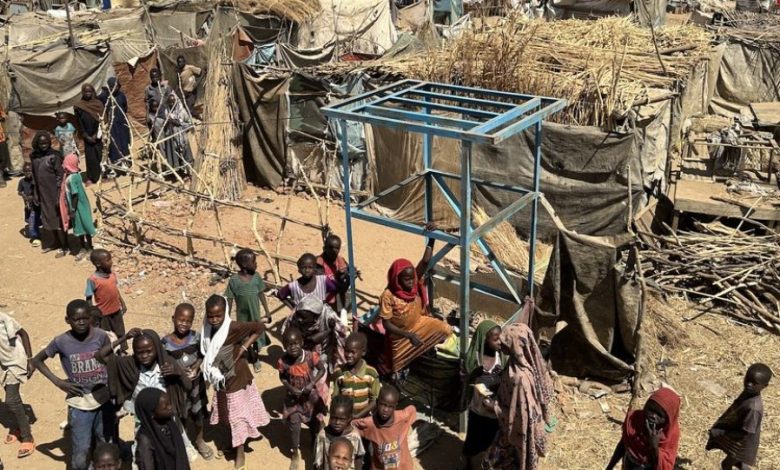
The war in Sudan has triggered what the UN labeled as the world’s largest humanitarian and displacement crisis.” The conflict has killed at least 59,000 people and left around 11,000 missing, in addition to displacing 14 million people in Sudan and neighboring countries.
In a statement on Friday, Sudan’s National Council for Child Welfare warned that the war has left around 71% of Sudanese children in hazardous living conditions, exposing them to the risks of economic exploitation, violence, and severe rights violations.
In April 2026, UNICEF said that more than 4,300 children have been killed or maimed during the war and more than 5,700 grave violations against children have been recorded.
Furthermore, the conflict has deprived over 8 million children – nearly half of Sudan’s 17 million school-aged children – of education amid the longest school shutdown, according to Save the Children.
The UN-backed Integrated Food Security Phase Classification (IPC) also said in its latest report that approximately 19.5 million Sudanese – representing 41% of the population – are facing high levels of acute food insecurity.
RSF Crimes
UN agencies concluded that the RSF committed “acts of genocide” and “widespread atrocities that amount to war crimes and possible crimes against humanity” during its takeover of El-Fasher, the capital city of North Darfur state.
Most recently, the Sudanese government accused the paramilitary group of operating extensive network detention facilities across Darfur, where detainees allegedly face severe starvation, torture, and are targeted by a transnational organ-trafficking network.
In a letter sent to the UN Security Council on June 12, Sudan claimed that the RSF is holding around 20,000 people at Daghris Prison in Nyala, South Darfur, in addition to hundreds more, including children, at Shala Prison in El-Fasher, North Darfur, reported Sudan Tribune.
Khartoum also alleged that the RSF is utilizing Colombian and Serbian medical personnel to harvest organs from civilian and military detainees inside the Nyala facility. The victims are then reportedly placed in clandestine graves to cover up the forensic evidence of the crimes.
Furthermore, the letter claimed that prisoners endure catastrophic conditions in both prisons, with dozens dying each week as a result of an outbreak of cholera and severe food shortages amid a total lack of medical care.