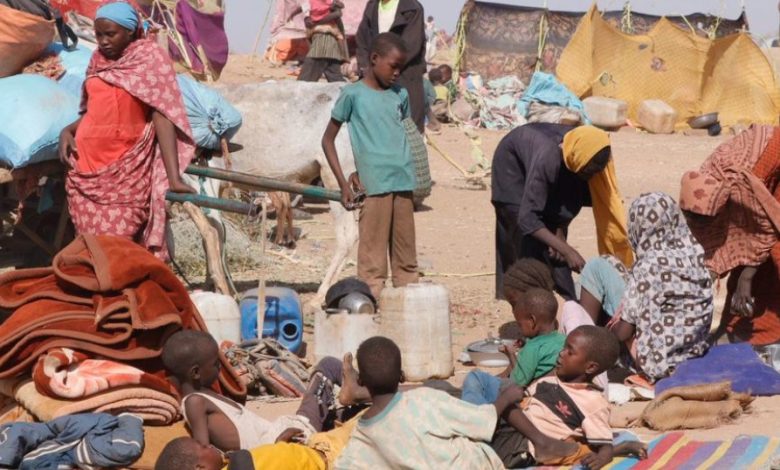
Around 20 million people in Sudan are enduring high levels of acute food insecurity, according to the UN-backed Integrated Food Security Phase Classification (IPC).
The war in Sudan broke out in April 2023 between the Sudanese Armed Forces (SAF) and the paramilitary Rapid Support Forces (RSF), triggering what the UN called “the world’s largest humanitarian and displacement crisis.”
So far, the conflict has killed at least 59,000 people and left around 11,000 people missing. It has also displaced 14 million people in Sudan and neighboring countries.
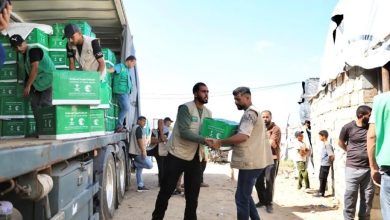
To accelerate aid delivery under these volatile conditions, the ICRC has begun operating aircraft from Jeddah to accelerate humanitarian access and bypass the logistical deadlocks hindering aid delivery.
Acute Hunger
In its latest report, the IPC said that approximately 19.5 million people – representing 41% of the population – are facing high levels of acute food insecurity.
The report showed that between February and May 2026, about 135,000 people endure catastrophic hunger levels, characterized by extreme food gaps, starvation, very high levels of malnutrition, and death due to disease or acute malnutrition.
Meanwhile, more than 5 million people face emergency levels, and an additional 14 million people are in crisis levels.
Moreover, the IPC report noted that 14 areas across North Darfur, South Darfur, and South Kordofan remain at risk of famine if fighting intensifies. These include El-Fasher, the capital city of North Darfur state, and Kadugli, the capital city of South Kordofan state. Both cities endured months-long sieges by the RSF.
Further Deterioration
The IPC report expected conditions to worsen further during the upcoming lean season, from June to September. The situation is complicated by fighting and displacement, as well as the rainy season, which disrupt markets, reduce agricultural production and hinder access to food and essential services.
Furthermore, the geopolitical tensions in the Middle East amid the war in Iran and the closure of the Strait of Hormuz threaten to compound the crisis, sparking a surge in the prices of food, fuel and fertilizers.
Also, the IPC report noted that an estimated 825,000 children under the age of five are at risk of facing severe acute malnutrition in 2026 amid lack of access to treatment and limited aid deliveries due to insecurity, access restrictions, and budget cuts.
Action Needed
The IPC urged for immediate action to prevent further catastrophe. “Ongoing hostilities – especially around major supply routes, such as Al-Obeid in North Kordofan – and the possibility of renewed siege‑like conditions continue to heighten risks,” it warned.
In light of this, the report called for ceasing hostilities, protecting civilians and infrastructure, ensuring safe and sustained humanitarian access, and scaling up humanitarian assistance.
Sudan Food Crisis
The war in Sudan has engulfed the country in a dire humanitarian situation. A recent assessment by the UN Food and Agriculture Organization (FAO) warned that a sharp decline in cereal production threatens to further exacerbate food insecurity across Sudan.
As a result, the assessment warned that 28.9 million people (about 61.7% of Sudan’s population) are facing acute food insecurity and are in urgent need of food and livelihood assistance.
This figure includes an estimated 10.2 million people enduring severe food insecurity, particularly in Greater Darfur and South Kordofan.
Furthermore, drone attacks exacerbate the crisis, targeting civilian infrastructure including markets, hospitals, and power stations.
The UN has warned against their increased use in the conflict. Since January, drones have killed at least 880 civilians, according to the UN’s human rights office.
The UN Office for the Coordination of Humanitarian Affairs (OCHA) said that drone attacks put civilians in grave risk and increase humanitarian needs in Sudan. It pointed to an increase in reported drone attacks in Dilling in South Kordofan and El Geneina and Nyala in Darfur.
Jeddah: A Logistical Hub
Amid regional tensions and disruption in shipping through the Strait of Hormuz, Jeddah – Saudi Arabia’s Red Sea city – has emerged as a critical logistical hub for facilitating aid operations in Sudan, given its strategic location one hour away from Port Sudan.
The International Committee of the Red Cross (ICRC) announced on Thursday it has begun operating its RED aircraft from King Abdulaziz International Airport in Jeddah, Saudi Arabia, to accelerate humanitarian access to Sudan.
“Operating from Jeddah significantly strengthens our ability to deploy teams rapidly, maintain a sustained operational presence close to affected communities, and continue delivering essential protection and assistance to those most affected by the conflict,” ICRC Regional Director for Africa Patrick Youssef said.
“We are deeply grateful to the authorities of the Kingdom of Saudi Arabia and the Republic of the Sudan for facilitating this arrangement, which enhances our ability to respond swiftly and effectively,” he added.