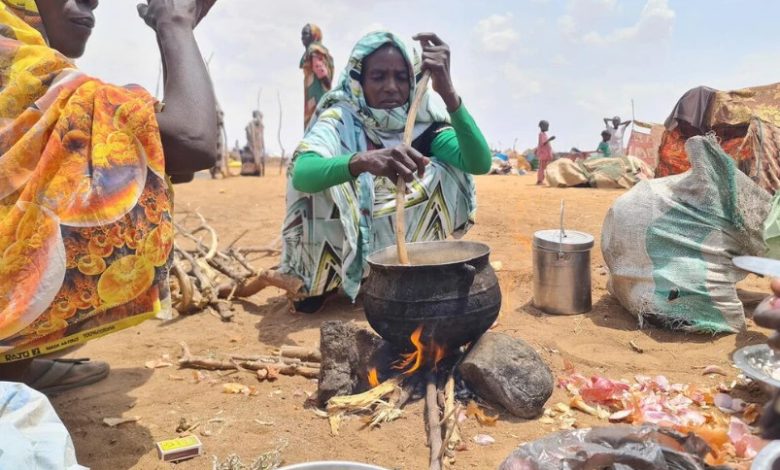
The humanitarian conditions in war-torn Sudan are rapidly deteriorating as famine spreads across the Darfur region and threatens the greater Kordofan region, a global hunger monitor warned on Thursday.
War has engulfed Sudan since April 2023, killing thousands and displacing over 15 million people. It has also pushed parts of the country into famine amid cholera outbreaks, triggering what the UN has labeled “the world’s largest humanitarian and displacement crisis.”
Famine Spreads in North Darfur
The UN-backed Integrated Food Security Phase Classification (IPC) found that levels of acute malnutrition have surpassed famine thresholds in two areas of North Darfur, it said in a statement on Thursday.
According to assessments conducted in December 2025, about 53% of children between aged between 6 months and nearly 5 years suffered from acute malnutrition in Umm Baru, while 32% of children in Kernoi endure the same conditions.
“This signals a serious risk of excess mortality and suggests surrounding areas may be experiencing similarly catastrophic conditions,” the IPC warned.
In November 2025, the IPC declared famine in El-Fasher, the capital city of North Darfur state, following its fall to the paramilitary Rapid Support Forces (RSF) after a brutal 18-month siege.
The widespread atrocities drove people out of the city to surrounding areas in North Darfur, exacerbating acute food insecurity and malnutrition.
Kordofan at Risk
The IPC report raised alarm about the situation in the Kordofan region. “In Greater Kordofan, the intensifying conflict is driving a rapid deterioration in food security, with more people likely to face extreme hunger, acute malnutrition, and rising hunger‑related deaths,” the report warned.
In November, the IPC said that the city of Kadugli in South Kordofan was enduring famine, warning that 20 other areas across Sudan were at risk of famine.
Since the RSF captured El-Fasher in late October 2025, conflict has intensified across the Kordofan region, which serves as a vital strategic bridge, linking Darfur to central Sudan and providing a key route toward Khartoum.
Breaking Kadugli Siege
The Sudanese Armed Forces (SAF) has made significant advances in the Kordofan region. On Tuesday, the Sudanese army announced it had broken the RSF’s siege of Kadugli, the capital city of South Kordofan state, opening a critical road between Kadugli and the neighboring town of Dilling.
In response, the RSF targeted a medical center in Kadugli with drones, killing 15 people including seven children, the Sudan Doctors Network said. The medical group noted that the attack was “part of a series of attacks that have plagued South Kordofan” and have left “several hospitals inoperable.”
In late January, the SAF also ended the siege of Dilling, the state’s second largest city, after decisive military battles with the RSF and their local allies.
Ceasefire Needed
The IPC expected that acute malnutrition would deteriorate further throughout 2026, with nearly 4.2 million estimated cases, affecting children under five and pregnant and breastfeeding women.
In light of this, the food monitoring group urged immediate action to end the suffering of the Sudanese people. “Only by supporting mutual aid, strengthening communities’ coping capacities, and ensuring unimpeded, large‑scale humanitarian response can we prevent further loss of life and halt the spread of famine and human suffering,” it said.
Ramping Up Aid Efforts
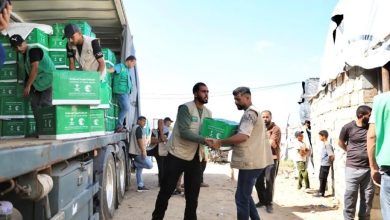
The US and the UN have recently launched the Sudan Humanitarian Fund, a $1.5-billion initiative to support aid efforts in the war-torn country. The fund secured $500 million commitment from the UAE and $200 million from the US. Saudi Arabia and several other countries supported efforts and made pledges, without specifying amounts.
Moreover, the US Senior Adviser for Arab and African Affairs, Massad Boulos, announced progress toward finalizing the text of a peace plan to end the Sudan war. Once the SAF and the RSF approve the plan, the US will submit it to the UN Security Council and Trump’s newly-formed Board of Peace.
The five-pillar plan centers on resolving the humanitarian crisis, protecting civilians and their safe return, and transitioning to a permanent ceasefire, establishing a civilian-led government and creating a dedicated fund for national reconstruction.