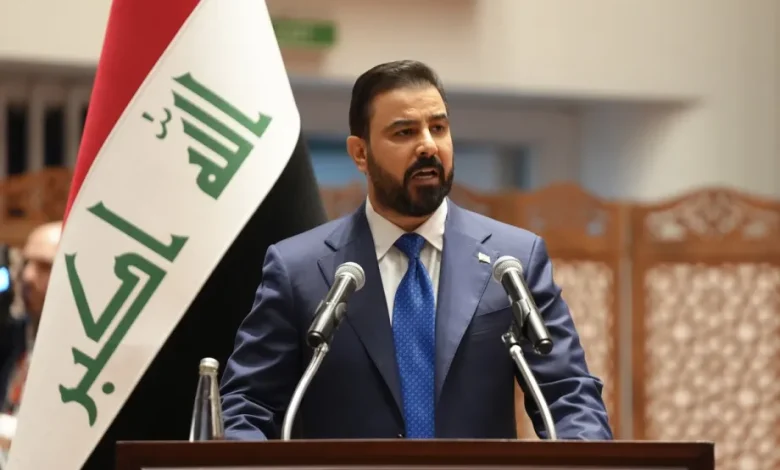
Iraqi Prime Minister Ali Al-Zaidi will visit Saudi Arabia as part of a wider regional tour, he told Saudi news network Al Arabiya, signaling Baghdad’s push to deepen Gulf partnerships.
Why it matters: The visit positions Saudi Arabia at the center of Iraq’s foreign policy pivot toward economic partnership, as Al-Zaidi’s government works to attract Gulf investment and stabilize the country after years of conflict and instability.
Al-Zaidi confirmed the Saudi Arabia trip alongside stops in Turkey and Iran, all following a planned visit to Washington this month. France, the United Kingdom and Germany have also extended invitations, but Al-Zaidi made clear that regional cooperation remains his priority right now.
What they’re saying: Al-Zaidi has already invited Saudi Arabia to help finance Iraq’s newly proposed Energy and Development Fund.
“We are proceeding with the establishment of the energy and development fund, which will be subscribed by the Central Bank of Iraq and will be offered for public subscription. We will also invite Saudi Arabia, the UAE, and Qatar to contribute to this fund,” Al-Zaidi said in comments released by his office.
Deepening Strategic Depth and Trade
Driving the news: Baghdad wants to build a robust economic partnership with Riyadh. During his Al Arabiya interview, Al-Zaidi described Saudi Arabia as Iraq’s “strategic depth.” Concurrently, he noted that Iraq represents strategic depth for the Kingdom. The upcoming bilateral discussions will likely focus on major infrastructure projects. Specifically, the two nations intend to develop vital oil and trade routes. These initiatives aim to mitigate regional maritime vulnerabilities following recent shipping crises. Consequently, Baghdad seeks to connect pipeline networks and land transportation links directly through Saudi Arabian territory.
Talks in Riyadh are expected to focus on four main areas:
- Saudi investment in energy, agriculture, industry and infrastructure
- Electricity interconnection between the two countries
- Renewable energy cooperation
- Iraq’s Energy and Development Fund, which could draw Saudi, Emirati and Qatari capital
Furthermore, Al-Zaidi reaffirmed Iraq’s commitment to the global energy market. He confirmed that Iraq will remain a core member of OPEC. However, Baghdad will continue to negotiate for a fair and equitable oil production quota. Stronger ties with Riyadh, OPEC’s largest producer, will help Iraq navigate these energy discussions smoothly.
By the numbers: Saudi Arabia already ranks among the largest Arab investors in Iraq. That footprint is set to grow further, building on a series of economic and investment agreements signed in recent years.
Gulf officials have welcomed Al-Zaidi’s reform agenda since he took office in May. The GCC’s secretary-general recently praised Baghdad’s progress on economic reform, anti-corruption efforts and outreach to Gulf Arab states, signaling readiness to expand the partnership further.
Meanwhile, Al-Zaidi’s government is working in parallel to restrict weapons to state control and reposition Iraq’s foreign policy away from security dependency and toward economic cooperation. That shift makes the Saudi visit a test case for whether reform translates into real investment.
Securing Borders and Curbing Militias
Between the lines: Security guarantees form the second pillar of the upcoming diplomatic visit. Regional neighbors frequently express concerns regarding unstable armed factions inside Iraq.
To address these fears, Al-Zaidi has enacted decisive domestic policies ahead of his tour. He recently ordered Iraqi special forces to prevent any attacks on neighboring countries from Iraqi soil. Additionally, his administration set a strict September 30 deadline for all independent armed groups to disarm, as he intends to bring all weapons under exclusive state control.
Meanwhile, Al-Zaidi continues a sweeping anti-corruption campaign at home, as this domestic crackdown demonstrates his commitment to institutional stability. He stated that those involved in corruption “have no option but to return the stolen funds.”
The bottom line: By prioritizing Saudi Arabia early in his regional tour, Al-Zaidi is betting that closer economic ties with Riyadh can help stabilize Iraq’s economy and cement its role as a credible investment destination. Officials on both sides are expected to push for concrete frameworks rather than symbolic gestures, given the momentum already built through recent bilateral deals.