Saudi Arabia is rapidly transforming into a global aviation hub. A recent Bloomberg report revealed that US planemaker Boeing projects massive growth for the Kingdom’s aviation sector over the next two decades. The forecast aligns closely with Vision 2030, the nation’s economic diversification plan.
The big picture: The report highlights that Gulf airlines are currently negotiating with manufacturers to snap up early delivery slots. Specifically, they seek slots for 2029 and 2030 that other global airlines might defer. This strategic move directly supports the national plan to establish a world-class aviation network.
Why it matters: Boeing’s outlook signals growing confidence in Saudi Arabia’s aviation ambitions. It also reinforces the Kingdom’s push to become a global connector linking Asia, Europe and Africa.
Asaad Aljomoai, president of Boeing Saudi Arabia, noted the rapid momentum. “The Kingdom is now one of the world’s fastest-growing aviation markets,” Aljomoai stated. He added that major investments in infrastructure and logistics power this growth.
Furthermore, Aljomoai emphasized that the country’s unique geographic position provides a strategic advantage to link Asia, Europe, and Africa.
A Partnership Rooted in History, Aimed at the Future
Boeing’s ties to the Kingdom run deep, as Aljomoai noted that the relationship spans more than eight decades, dating back to the early days of commercial aviation in Saudi Arabia. Today, that legacy is entering a new phase.
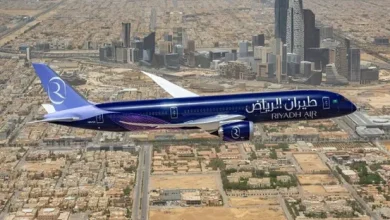
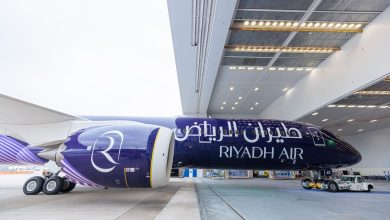
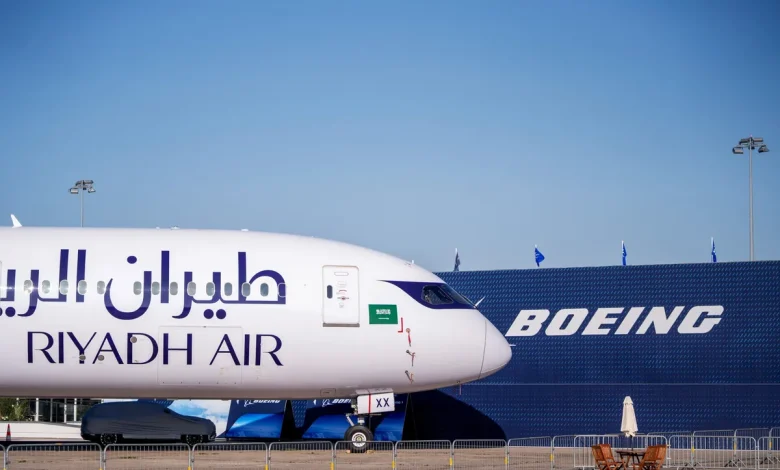
State of play: The launch of Riyadh Air, the Kingdom’s second national carrier, illustrates this shift clearly. Aljomoai highlighted the Boeing 787 Dreamliner as central to the airline’s strategy. He explained that the aircraft will support Riyadh Air’s goal of serving more than 100 global destinations by 2030. Notably, the Dreamliner combines long-haul efficiency with lower fuel consumption and an upgraded passenger experience.
Boeing expects steady momentum across passenger traffic, fleet size and international routes. Aljomoai also pointed to Saudi Arabia’s geography as a lasting advantage, since it connects Asia, Europe and Africa efficiently.
Record Orders Signal Confidence in the Kingdom’s Ambitions
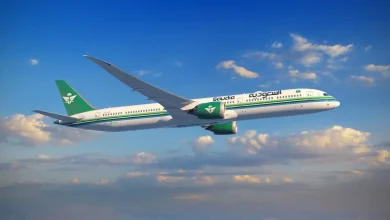
By the numbers: This optimism is already producing results. Saudia, the Kingdom’s flagship carrier, is reportedly in early talks with Boeing and Airbus for what could become its largest aircraft purchase yet. Bloomberg reports that Saudia wants to buy at least 150 narrowbody and widebody jets.
This scale of investment mirrors Vision 2030’s broader tourism and connectivity goals. The government aims to attract 150 million annual visitors by 2030, and aviation remains central to that target. As a result, both Saudia and Riyadh Air continue expanding their fleets to meet rising passenger demand.
Boeing’s confidence extends beyond commercial aviation, too. Earlier this year, the company signed a memorandum of understanding with Saudi Arabia’s General Authority of Civil Aviation to explore advanced air mobility. This includes autonomous flight technologies designed to modernize the Kingdom’s airspace long-term.
Bottom line: Saudi Arabia continues investing in airports, carriers and next-generation technology. In turn, global manufacturers like Boeing are positioning themselves as long-term partners in that transformation. The Kingdom’s skies appear set for a decade of rapid, sustained growth.