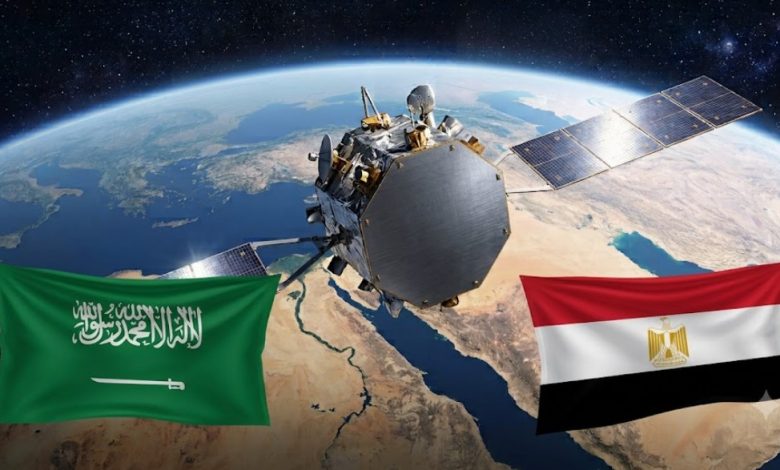
Saudi Arabia and Egypt will join forces to establish their first joint satellite, marking a new era of Arab cooperation in the space domain.
The newly announced project is set to achieve regional tech independence, drawing on the combined technical expertise of both nations to foster localized innovation, secure sovereign data, and reduce reliance on foreign space infrastructure.
Saudi-Egyptian Satellite: Significant Milestone
Chaired by the Custodian of the Two Holy Mosques, King Salman bin Abdulaziz Al Saud, Saudi Arabia’s Cabinet in late June 2026 approved an initiative to design and build the first joint Saudi-Egyptian satellite.
The initiative will feature collaboration between the Saudi Space Agency (SSA) and the Egyptian Space Agency (EGSA), building on a memorandum of understanding (MoU) signed in Riyadh in December 2023.
The agreement set a framework for cooperation in peaceful space exploration, research and development, the exchange of information and technology, capacity building, and the localization of space tech-related industries.
Under the new satellite project, the agreement will materialize into a practical industrial cooperation, utilizing local experts from both countries.
As part of this project, the SSA and EGSA will team up from development through to deployment, focusing their efforts on satellite manufacturing, orbital operations, imaging and commercialization, prioritizing remote sensing and Earth observation technologies.
Space Technologies as Strategic Assets
The joint satellite marks the first space project between Riyadh and Cairo, underscoring a growing momentum to expand capabilities, drive regional cooperation in the space sector, and reduce reliance on foreign technologies.
From communications to environmental monitoring, resource management, infrastructure planning and national development strategies, the extensive applications of space technologies have made them strategic assets.
Recognizing this, countries across the world invest heavily in domestic satellite capabilities, alongside AI, digital infrastructure, cybersecurity and advanced manufacturing.
Advancing Arab Space Collaboration
The Saudi-Egyptian satellite project will lay the groundwork for a comprehensive Arab space ecosystem, integrating regional research hubs, localized manufacturing plants, engineering talent, and dedicated supply chains.
Furthermore, it promises to foster a new generation of Arab aerospace professionals while unlocking lucrative commercial markets in satellite services and the broader space economy.
How Riyadh and Cairo Power the Project
Saudi Arabia and Egypt each bring unique, complementary strengths to the space domain. Riyadh provides substantial strategic capital, global tech partnerships, and high-visibility astronaut programs. Meanwhile, Cairo contributes established testing facilities, a historically rooted technical workforce, and localized manufacturing capacity.
The Saudi Space Strategy: A Vision 2030 Pillar
Under its revolutionary Vision 2030, Saudi Arabia has placed the space sector as the key engine of national development, leveraging cutting-edge space and satellite innovation to cement the Kingdom’s status as a global hub connecting three continents.
The Kingdom views the space sector as a core driver of economic diversification. Hence, it established the SSA in 2018 to centralize space policy, satellite programs, human spaceflight, and the commercial space economy.
To maximize efficiency, the Saudi space ecosystem operates under a three-tiered structure:
- The Supreme Space Council: Chaired by Saudi Crown Prince and Prime Minister Mohammed bin Salman, this high-level council acts as the ultimate policymaker, setting the core strategies and ensuring space goals align directly with national security and socioeconomic needs.
- The Saudi Space Agency (SSA): Serving as the executive arm, the SSA focuses on execution, localization, and talent development, physically advancing space sciences and peaceful industries on the ground.
- The Communications, Space, and Technology Commission (CST): Acting as the independent regulator, the CST oversees market activities, ensures fair competition, and establishes the operational guardrails needed to empower public and private sector investments.
In 2024, the Public Investment Fund (PIF) established the Neo Space Group (NSG) to secure operational sovereignty and drive commercial growth through targeted investments in satellite communications, Earth observation, and remote sensing startups.
Saudi Arabia: Rapid Acceleration & Space Milestones
Spearheaded by the SSA, the Kingdom’s space program is distinguished by rapid acceleration, substantial financing, and deep integration into the global space economy.
Under programs like the National Industrial Development and Logistics Program (NIDLP) and the PIF, Saudi Arabia can fully finance massive satellite constellations, invest in global aerospace startups, and jumpstart local commercial space tracks.
Additionally, Saudi Arabia has achieved significant milestones in human spaceflight. Following the historic Axiom AX-2 mission in 2023 – which sent Rayyanah Barnawi (the first Arab woman in space) and Ali Al-Qarni to the ISS – the Kingdom has institutionalized a permanent astronaut corps.
Moreover, the SSA signed a major executive agreement with NASA to deploy its first deep-space climate satellite (SHMS) – a cutting-edge space weather probe launched aboard the historic Artemis II mission.
With this achievement, Saudi Arabia became the first Arab nation to launch a space mission under the Artemis program, designed to accelerate space science and innovation and build global partnerships to shape the future of space exploration.
The Kingdom also continues to act as a pivotal regional bridge for high-tech transfer, with bilateral space agreements with NASA, European agencies, and major commercial operators like Axiom and Aramco Digital.
Fueling Saudi Arabia’s Digital Future
The realization of the Saudi-Egyptian satellite comes at a pivotal moment for the Kingdom’s tech landscape. As the Kingdom celebrates 2026 as the “Year of Artificial Intelligence,” the data collected by this satellite will provide a massive boost to local AI projects, helping with everything from smart city planning to environmental protection.
Furthermore, by building this advanced technology within the Arab world, the project directly supports the national momentum that recently pushed Saudi Arabia to an impressive 13th place globally in the World Competitiveness 2026 rankings.
Egypt: Industrial Legacy & Regional Infrastructure
As home to one of the longest-standing aerospace and satellite broadcasting heritages in the Middle East, Egypt has evolved into a key regional developer under the EGSA.
Most recently, it has launched a massive “Space City” – a 100-acre state-of-the-art tech hub located near the New Administrative Capital, serving as the headquarters for the EGSA and the newly inaugurated African Space Agency.
The Space City promises to position Egypt as a regional hub for satellite manufacturing, aerospace education, and continental space policy.
It features state-of-the-art Assembly, Integration, and Testing (AIT) Center for domestic satellite manufacturing; Spacecraft Centers for design and orbital monitoring; and Education facilities featuring an Egyptian Space Academy.
Furthermore, Egypt has successfully engineered and operated a large fleet of remote sensing satellites including the Horus-1, Horus-2, NEXSAT-1, and MisrSat-2 series. Egyptian scientists also possess decades of specialized experience in analyzing satellite data for agriculture along the Nile, desert management, and climate tracing.