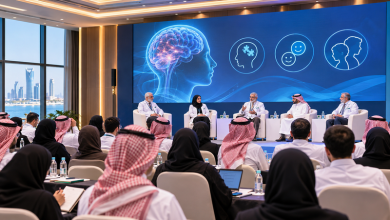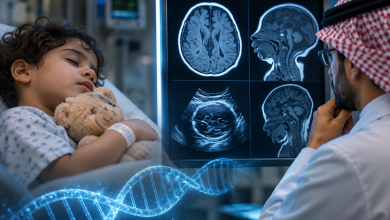


In a landmark achievement, the Saudi Space Agency (SSA) has announced a significant scientific breakthrough that builds on the Kingdom’s pioneering human spaceflight program and carries profound implications for global health research.
As part of the “Saudi Arabia Toward Space” mission, Saudi astronauts conducted 19 scientific experiments aboard the International Space Station (ISS), representing one of the most comprehensive research initiatives undertaken by the Kingdom in orbit, particularly focusing on areas that directly benefit life on Earth, such as human health and biomedical science.
Breakthrough in Cartilage Repair
The world’s first successful production of a specialized nanomaterial designed to repair cartilage in microgravity marked a significant milestone in space-enabled biomedical research and underscored the unique advantages of conducting advanced manufacturing in orbit.
The research was led by scientists Yuping Chen and Mari Ann Snow through an international collaboration aimed at developing next-generation biomaterials for tissue engineering, with Saudi astronaut Rayyanah Barnawi playing a crucial role in carrying out the experiment aboard the ISS, supervising the manufacturing process in microgravity, and collecting critical data during the mission.

The project progressed from initial material preparation on Earth to in-orbit fabrication, with samples later returned for detailed comparison with materials produced under normal gravity conditions, showing that microgravity conditions substantially improved the precision, quality, and efficiency of nanomaterial production related to cartilage repair, as published in the journal Nature.
Collaboration and Future Implications
Barnawi stated that conducting the experiment in space enabled the creation of an advanced nanomaterial and produced high-quality data that supports research aimed at improving human health.
The Saudi Space Agency added that the findings demonstrate the close collaboration between scientists and astronauts, opening new avenues for the development of advanced medicines and regenerative therapies in space.
Beyond its importance for future space missions, experts expect this breakthrough to support progress in regenerative medicine and organ transplantation, with benefits extending well beyond space exploration and into healthcare systems on Earth.