Wasel Al-Haram: Inside Saudi Arabia’s Plan to Transform Makkah’s Transport Network
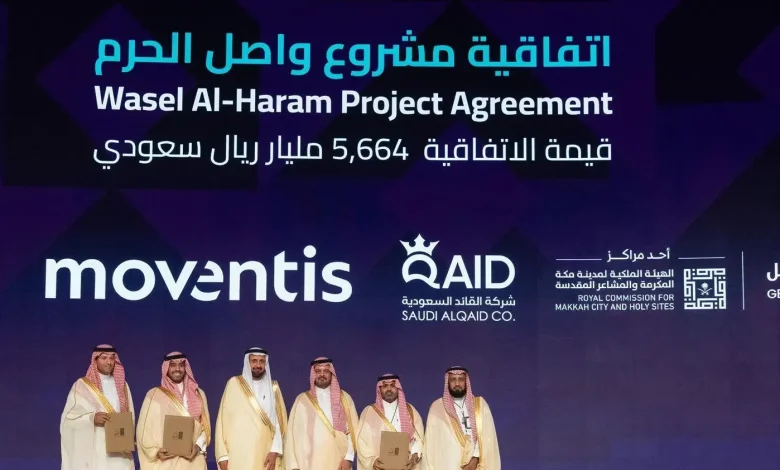
Saudi Arabia is boldly advancing plans to redefine mobility in Makkah through the Wasel Al-Haram project, a major transport initiative supported by SAR5.664 billion in agreements with private-sector partners.
A New Mobility Vision for Makkah
Signed by the General Transport Center, the executive arm of the Royal Commission for Makkah City and Holy Sites, the agreements were announced during the opening ceremony of the sixth Hajj Conference and Exhibition in Jeddah.
The project seeks to develop transport infrastructure across the holy city, with a particular focus on its central area and access to the Grand Mosque.
It features an integrated transport network combining parking facilities, stations, and mobility corridors to facilitate movement across Makkah.
By prioritizing efficiency, capacity, and sustainability, the project forms part of the Kingdom’s broader push under Saudi Vision 2030 to modernize urban infrastructure and improve the experience of those living in and visiting the holy city.
How Will Makkah Become More Connected?
Remarkably, Wasel Al-Haram forms part of Saudi Arabia’s wider efforts to transform Makkah into a more connected urban center, building on previous investments in the expansion of the Grand Mosque, the Haramain High-Speed Railway, along with the city’s road infrastructure.
Enriching this momentum, the project adds another layer to these developments through an integrated transport system combining bus services, parking facilities, and pedestrian routes.
Its reliance on public-private partnerships (PPPs) also reflects an approach that brings private investment and operational expertise into major infrastructure projects.
By involving private-sector partners in financing and delivery, the Kingdom aims to accelerate development while making use of resources and capabilities beyond the public sector.
Who Are the Key Investment Partners?
The project takes shape through three investment packages, bringing several private-sector companies into Makkah’s transport development plans.
Saudi Alqaid Co., Moventis, and Waskita form the consortium responsible for the first and third packages, while the second has been awarded to the Mawgif consortium.
The agreements hinge on a public-private partnership model based on full private-sector financing, allowing the companies to fund the project packages while the public sector maintains oversight.
This model brings together local and international expertise, with the participating companies contributing experience across infrastructure, transport operations, and construction.
Bringing Millions Closer to the Grand Mosque
More boldly, the Wasel Al-Haram network will span 3.1 million square meters, incorporating 19 stations and parking facilities across seven corridors.
Its operations will boast 3,200 buses, creating a transport network designed to handle substantial passenger volumes and connect different parts of Makkah with its central area.
With an expected annual capacity of 205 million passengers across the three packages, the project addresses one of the city’s central infrastructure demands: moving large numbers of pilgrims efficiently.
Expanding public transport options and improving connections to the Grand Mosque will effectively help ease congestion and make journeys more convenient for worshippers and visitors.
Related Topics:
Saudi Arabia Translates Hajj Experience into Global Opportunities
From Makkah to the World: Jeddah Launches Sixth Hajj Conference to Sharpen 2027 Readiness
Hajj Conference and Exhibition Advances Preparations for Hajj 1448