Driving the news: Saudi Arabia’s Cabinet approved the National Space Policy on Tuesday, giving the Kingdom’s space ambitions a formal national framework.
Why it matters: Space now drives communications, navigation, agriculture and energy. The policy therefore positions Saudi Arabia to compete for a share of a fast-growing global market. The Communications, Space and Technology Commission (CST) projects that the Kingdom’s space economy will reach SAR 119 billion ($31.7 billion) by 2035.
The big picture: Crown Prince Mohammed bin Salman, who also serves as prime minister, chaired the session in Riyadh. The Cabinet also approved rules for the financial oversight of endowment accounts that government entities manage. Early reports do not detail the policy’s provisions. However, they place the decision within a wider push to build a national space ecosystem.
Three Institutions Share the Space Mandate
Saudi Arabia has built a clear institutional structure for the sector. First, the Supreme Space Council, which the Crown Prince chairs, approves space policies and national strategies, signs off on annual plans and monitors their implementation. The Cabinet created the Council in November 2022.
Second, the Saudi Space Agency develops and localizes space science and technology. It also backs the peaceful use of space and builds national talent. The Cabinet upgraded the former Saudi Space Commission into an agency in June 2023. Vice Chairman Dr. Mohammed Al-Tamimi called that move “a quantum leap” for the sector.
Third, the CST regulates the industry. It also works to ensure fair competition and a supportive regulatory environment.
Zoom in: Regulation has moved in step with policy. Before the Cabinet vote, the CST released “Space Sector Regulations and Guidelines” for public consultation. The document covers the operation of space objects, crewed and uncrewed flights, spaceports and space resources. It also addresses tracking, a national registry of space objects, licensing, insurance and sustainability. As a result, investors gain clearer rules, and the regulator aims to boost transparency.
By the numbers:
- SAR 33 billion ($8.8 billion): Size of Saudi Arabia’s space economy in 2024, including all value-generating space activities.
- SAR 7.1 billion ($1.9 billion): Size of the space market itself in 2024.
- SAR 119 billion ($31.7 billion): Projected space economy by 2035.
- 12%: Compound annual growth rate the CST forecasts for the space economy.
- SAR 21 billion ($5.6 billion): Projected domestic space market by 2035.
- SAR 6.7 trillion ($1.79 trillion): Projected global space economy by 2035.
- 14 success stories, 25+ entities: Scope of the CST’s August 2026 sustainability report on space and Earth observation projects.
A Growing Footprint Beyond the Kingdom’s Borders
The bigger picture: The new policy builds on a string of milestones. In 2023, Saudi astronauts Rayyanah Barnawi and Ali Al-Qarni took part in the Axiom-2 mission to the International Space Station. Then, in April 2026, the Saudi Space Agency announced the successful launch of its Shams satellite aboard NASA’s Space Launch System on the Artemis II mission. The small CubeSat travelled with NASA astronauts as they circled the Moon.
Student talent has also made its mark. Two satellites that students from Umm Al-Qura University and Prince Sultan University designed launched on an international mission under the “SARI” small-satellite competition.
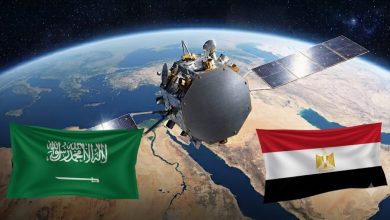
International partnerships are expanding as well. In November 2024, the Cabinet approved a cooperation agreement with the United States on the use of outer space for peaceful purposes. In June 2026, the Cabinet approved plans to design and build the Kingdom’s first jointly developed satellite with Egypt. Few technical details have emerged. Nevertheless, the project signals deeper Arab cooperation in space technology.
Meanwhile, Riyadh is raising its profile as a convening hub. The Saudi Space Agency launched its Space Debris Conference in 2024, and the second edition ran on Jan. 26-27, 2026. Officials now describe space as a pillar of the knowledge-based economy under Vision 2030.
Where the Investment Opportunities Lie
The CST’s market report points to several promising segments. These include satellite communications, space navigation, Earth observation and remote-sensing data analytics. Small satellites, ground infrastructure and integrated systems also stand out. In addition, the report flags rocket manufacturing and launch services as future opportunities, because private companies play a bigger role worldwide and demand for satellite-based services keeps rising.
These applications reach well beyond exploration. They touch transport, energy, agriculture and natural resource management. For example, the CST’s August 2026 sustainability report highlighted a new platform for Earth observation and the Shams satellite, which monitors space weather. Those 14 national projects use artificial intelligence, space technology and satellite imagery to tackle environmental, economic and social challenges. Furthermore, the CST’s August 2026 report on digital and space sustainability anticipates investment across communication satellites and Earth observation.
What’s next: Attention now turns to implementation. Watch for the policy’s published provisions, the final CST regulations after consultation, and new private-sector entrants. If the 12% annual growth path holds, space could become a meaningful non-oil pillar of the Saudi economy by 2035.