From Riyadh to Orbit: Saudi Arabia Sends First Middle Eastern Biological Samples to Space
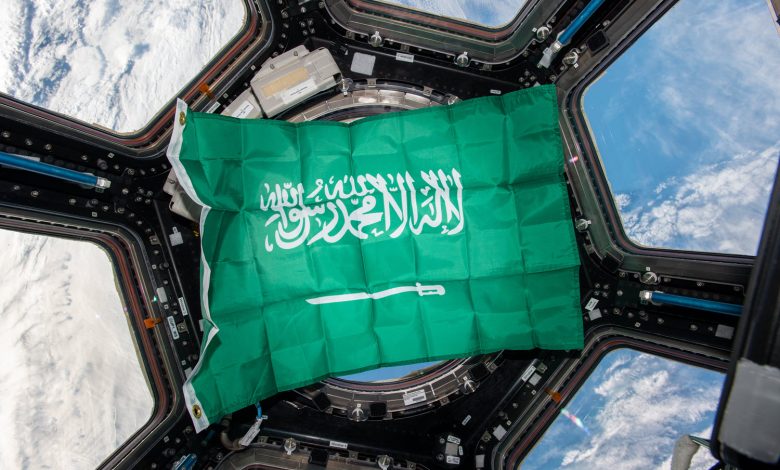
Driving the news: The Saudi Space Agency (SSA) and King Abdullah University of Science and Technology (KAUST) launched the samples on the Biogravity-1 mission, the Saudi Press Agency (SPA) reported on Thursday. The samples rode aboard SpaceX CRS-35 to the International Space Station (ISS). NASA supports the effort.
Why it matters: The launch starts a long-term research program against Alzheimer’s disease and multiple sclerosis (MS). It also shows how the Kingdom now uses space science to serve human health.
Three Missions, One Goal: Understanding Brain Disease
The program runs through three linked missions. First, researchers send reference samples from healthy donors to build a scientific baseline. Next, they study models derived from Alzheimer’s and MS patients. Finally, they test treatment responses and explore possible drug targets in microgravity.
The current mission covers phase one. KAUST developed two biological experiments for it, named SSA-1 and SSA-2. Scientists will use the unique conditions of microgravity to study cell changes linked to ageing and neurodegenerative disease.
An international partnership drives the work. The US National Stem Cell Foundation (NSCF), NASA and Axiom Space join the Saudi Space Agency and KAUST. Together, they link national capabilities with the global research system.
Saudi astronaut Rayyanah Barnawi, who oversees microgravity research at the Saudi Space Agency, called the launch an important scientific step. “The launch of these samples is an important scientific step in using the space environment to serve human health, and it reflects the development of national capabilities and their readiness to take part in advanced research,” she said. “Through the Biogravity program, we aim to turn knowledge gained in orbit into research opportunities that deepen our understanding of diseases and support future therapeutic solutions.”
Prof. Emad Ghulozi, KAUST’s bioscience professor and the project’s principal scientist, said the mission lets researchers test disease models in an environment that Earth cannot replicate. Moreover, he said, it strengthens the university’s contribution to discoveries that serve patients in the Kingdom and worldwide.
A “Clinical Trial in a Lab Dish”
Dr. Pinar Mesci, NSCF’s scientific adviser and Axiom Space’s global head of biomanufacturing and biotechnology, shared her enthusiasm. “I am particularly excited about this mission,” she said. Her team will test the “Brain Organoid Village” concept in microgravity for the first time.
The concept merges several individual cell lines into one organoid. As a result, scientists can run population-level studies and what they describe as “clinical trials in a lab dish.” This mission also includes samples from Saudi Arabia.
By the numbers:
- 3: linked missions in the program, covering healthy reference samples, patient-derived models and treatment response.
- 2: KAUST experiments on this flight, SSA-1 and SSA-2.
- 2: target diseases, Alzheimer’s and MS.
- 19: experiments the Kingdom’s 2023 SSA-HSF1 mission completed aboard the ISS across three tracks.
- 11 papers and 1 patent: early results from that 2023 mission, according to the Saudi Space Agency.
- 39,000: direct jobs PIF’s Neo Space Group targets by 2030.
- SAR 34.9 billion ($9.3 billion): direct non-oil GDP contribution the same group targets by 2030.
- SAR 1.74 trillion ($464 billion) to SAR 2.77 trillion ($738 billion): the global space economy’s growth from 2022 to a 2030 forecast, according to the Space Foundation.
Saudi Arabia’s Space Push Gathers Pace
This launch builds on years of steady progress. The Kingdom set up the Saudi Space Commission in 2018, and it now operates as the Saudi Space Agency. Since then, the Kingdom has moved from planning to flying its own experiments.
In 2023, Saudi Arabia sent its first two astronauts, Rayyanah Barnawi and Ali Al-Qarni, to the ISS. Barnawi became the first Arab Muslim woman astronaut. That mission has already paid off scientifically. Researchers measured blood-based biomarkers in space, made a high-precision nanomaterial for cartilage repair and ran the first stem-cell gene-transfer experiment in orbit. The agency says work continues on the remaining experiments.
The Biogravity initiative now anchors the Kingdom’s biomedical ambitions. The Saudi Space Agency launched it to help scientists develop microgravity research and to build a specialized research community. Its tracks include an Astronaut-Researchers Program, a Biotech from Bench to Space Track and a BioGravity Research Hub. Together, these programs train a new generation of space bioscientists and help local companies prepare their technologies for orbit.
The commercial side is growing as well. In 2024, the Public Investment Fund (PIF) launched Neo Space Group, its first investment focused on the space industry. The group aims to become a national champion in the satellite and space sector. Consequently, scientific research and industrial growth now move forward together.
The big picture: The program supports Vision 2030 goals. It builds national research capacity, widens international partnerships and strengthens the knowledge economy. It also raises the Kingdom’s profile in a field where global competition keeps growing.
What’s next: The second mission will study models from Alzheimer’s and MS patients. The third will test treatment responses and potential drug targets. In short, Saudi scientists now have a clear route from healthy baselines to possible therapies.