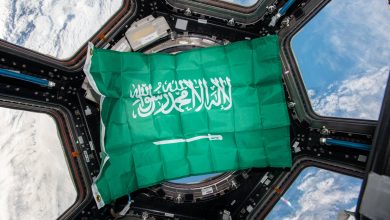
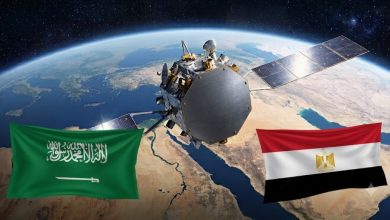
Saudi Arabia and Japan have laid the foundations of a futuristic technological partnership grounded in peaceful space ambitions.
Through a new cooperation agreement, Riyadh and Tokyo advance the Saudi-Japan Vision 2030 framework, expanding bilateral ties beyond oil and green hydrogen into high-tech space science and human capital development.
For a Safer Outer Space
Driving the News: The Saudi Space Agency (SSA) signed a memorandum of cooperation (MoC) with the Japan Aerospace Exploration Agency (JAXA) on Saturday, October 17, 2026, reported the Saudi Press Agency (SPA).
The Big Picture: The agreement, signed by SSA Acting CEO Dr. Mohammed bin Saud Al-Tamimi and JAXA President Dr. Hiroshi Yamakawa, focuses on fostering cooperation in space activities and the peaceful use of outer space.
Why It Matters: The agreement builds on Saudi Arabia’s efforts to strengthen international partnerships in the space sector, including space science and technology, capacity building, and expertise exchange, to chart a global ecosystem supportive of research and innovation to serve humanity.
Strategic Areas of Cooperation
State of Play: The MoC aims to boost Saudi-Japanese cooperation in multiple areas, such as space applications, the use of the space environment, space science and exploration, space transportation, research and development, the advancement of space industries, education and awareness, human capital development, and training.
Zoom In: JAXA has proven capabilities in launch vehicles, deep-space robotics, Earth observation, human spaceflight research, and aeronautical testing, positioning it among the world’s most prominent space agencies with a robust track record in peaceful space applications.
Saudi-Japanese Space Synergy
Flashback: On the sidelines of the Saudi-Japan Ministerial Investment Forum in January 2026, the SSA signed an MoC with the Japanese government on the peaceful use of outer space, leveraging Japan‘s advanced space programs to support Saudi Arabia’s space ambitions.
Between the Lines: Spearheaded by the SSA, Saudi Arabia’s space program is marked by rapid acceleration, substantial financing, and deep integration into the global space economy.
Under programs like the National Industrial Development and Logistics Program (NIDLP) and the Public Investment Fund (PIF), Saudi Arabia can fully finance massive satellite constellations, invest in global aerospace startups, and jumpstart local commercial space tracks, offering Japan a growing market for space-related services.
The Catalyst: The space synergy between Riyadh and Tokyo is anchored in the Saudi-Japan Vision 2030 – a bilateral strategic framework signed in 2017, aligning Saudi Vision 2030 and Japan’s New Growth Strategy.
It aims to broaden partnership across many fields, targeting nine key sectors:
- Food and agricultural security.
- Media and entertainment.
- Medical care.
- High-quality infrastructure.
- Finance and investment.
- Competitive industries.
- Energy.
- SMEs construction.
- Culture, sport, and education.
Saudi Space Sector Under Vision 2030
Go Deeper: Launched in 2016, Saudi Vision 2030 places strong emphasis on the space sector as a powerful engine of national development, leveraging cutting-edge space and satellite innovation to cement the Kingdom’s status as a global hub connecting three continents.
To this end, Saudi Arabia established a multi-layered space ecosystem to develop the Kingdom’s space policy and drive the commercial space economy.
The Supreme Space Council:
Chaired by Saudi Crown Prince and Prime Minister Mohammed bin Salman, this high-level council acts as the ultimate policymaker, setting the core strategies and ensuring space goals align directly with national security and socioeconomic needs.
The Saudi Space Agency (SSA):
Serving as the executive arm, the SSA focuses on execution, localization, and talent development, advancing space sciences and peaceful industries on the ground.
The Communications, Space, and Technology Commission (CST):
Acting as the independent regulator, the CST oversees market activities, ensures fair competition, and establishes the operational guardrails needed to empower public and private sector investments.
The Neo Space Group (NSG):
Launched by the PIF in 2024, the NSG aims to secure operational sovereignty and drive commercial growth through targeted investments in satellite communications, Earth observation, and remote sensing startups.
Saudi Arabia’s Expanding Space Footprint
The Context: The JAXA agreement builds on a series of historic milestones for the SSA. Following the historic Axiom AX-2 mission in 2023 – which sent Rayyanah Barnawi (the first Arab woman in space) and Ali Al-Qarni to the International Space Station (ISS) – the Kingdom has institutionalized a permanent astronaut corps.
Furthermore, through its deployment of the SHAMS space-weather probe aboard NASA’s Artemis II mission, Saudi Arabia became the first Arab nation to launch a space mission under the Artemis program.
New Space Momentum: Saudi Arabia has extended its space strategy into pioneering biotechnology. The BioGravity-1 mission – a collaboration between the SSA and KAUST – launched the Middle East’s first biological samples to the ISS to study microgravity’s effects on cellular aging, Alzheimer’s, and neurodegenerative disorders.
The Bottom Line: The SSA-JAXA MoC emphasizes a futuristic Saudi-Japanese scientific alliance, anchoring the Kingdom as a regional hub for space innovation in line with the objectives of Vision 2030.