‘Egypt Will Defend Saudi Arabia’: Al-Sisi Operationalizes Pledge to Protect the Kingdom
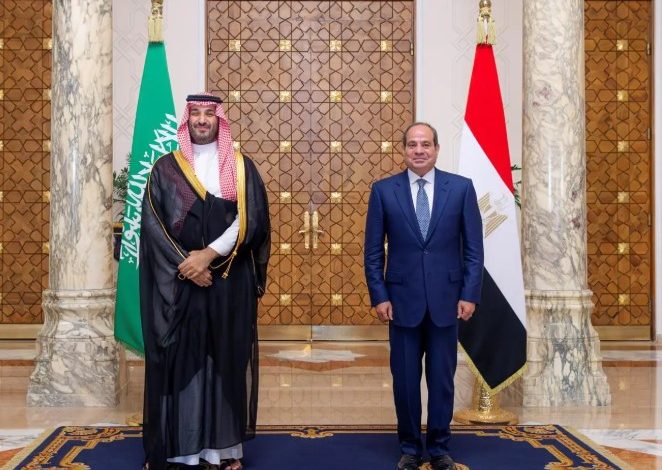
Beyond political rhetoric, Egypt is taking concrete steps to establish full operational readiness and joint defense coordination in support of Saudi sovereignty and security.
A landmark declaration by Egyptian President Abdel Fattah Al-Sisi highlights the depth of relations between Riyadh and Cairo, reflecting a shared destiny and a unified front against emerging geopolitical challenges. Egypt has committed its defense resources to help protect the Kingdom, sending a strong message of solidarity and partnership.
A Pledge of Solidarity
Driving the News: Speaking at a graduation ceremony at the Egyptian Military Academy in Cairo on Saturday, October 17, 2026, Al-Sisi called for an emergency parliamentary session to authorize the Egyptian Armed Forces to act in support of Saudi Arabia, should the Kingdom request it.
The Big Picture: Al-Sisi reiterated that Egypt would take any action to protect and defend Saudi Arabia, in accordance with guidance from the Custodian of the Two Holy Mosques, King Salman bin Abdulaziz, and the Saudi Crown Prince and Prime Minister, Mohammed bin Salman. The Egyptian President emphasized that any action would be purely defensive and not aimed at waging war or attacking any party.
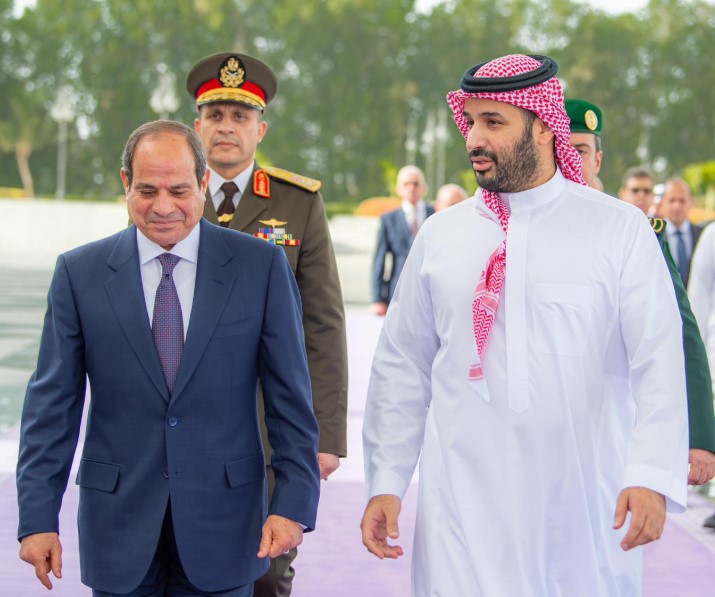
What to Watch: The Egyptian state media announced that the parliament would hold an emergency session at 1:00 pm on Sunday, October 18, at the President’s request.
In His Words: “It is inconceivable that we would allow Saudi Arabia, its security, or stability to be harmed. Egypt will carry out any measure to protect you or defend you.” – Abdel Fattah Al-Sisi, Egypt’s President.
The Indivisible Bond
State of Play: Al-Sisi stressed that Egypt’s commitment to protecting brotherly Gulf nations remains unchanged. The Egyptian President expressed gratitude for the historic support provided by Gulf countries, particularly Saudi Arabia, to Egypt during economic crises. He cited financial and economic assistance to Egypt in 2011 and 2013, including oil, gas, and wheat supplies. Al-Sisi asked the ceremony attendees to stand and give a military salute to Gulf states in recognition of their unwavering support for Egypt.
The Deep Dive: Saudi Arabia and Egypt share a longstanding partnership where each country has mobilized its resources to support the other in difficult times. Al-Sisi’s recent declaration mirrors decades of decisive Saudi political, financial, and military backing for Egypt.
The Tripartite Aggression
In 1956, Saudi Arabia supported Egypt during the British–French–Israeli invasion, known as the Suez Crisis. At the time, King Saud bin Abdulaziz provided political, military, and economic support to Egyptian President Gamal Abdel Nasser. This included imposing an oil embargo on Britain and France, sending roughly 95,000 tons of oil on Saudi-flagged tankers directly to Egypt, and housing Egyptian warplanes on Saudi soil to protect them from Allied airstrikes.
King Saud also deposited $10 million into Egyptian banks to bolster Egypt’s foreign currency reserves, and earlier in August 1956 provided $100 million in financial support after Western powers withdrew funding for the Aswan High Dam.
Moreover, King Saud announced a general mobilization and opened volunteer registration centers across Saudi Arabia. Several princes, including Princes Fahd, Sultan, Salman, and Faisal, volunteered to defend Egypt.
The Six-Day War
After the Arab armies defeat in 1967, Saudi Arabia, led by King Faisal bin Abdulaziz, suspended oil exports to the UK and the US for two months, due to their support for Israel. King Faisal also mobilized support for Egypt and other Arab countries to rebuild their capabilities, donating £50 million (around $140 million at the time) during the fourth Arab League summit in Khartoum.
The October 1973 War
King Faisal’s steadfast support for Egypt continued until the decisive moment of October 6, 1973, known as Operation Badr, when the Egyptian and Syrian forces launched a coordinated attack to reclaim their occupied lands from Israel.
King Faisal spearheaded an oil embargo on the US and other Western nations supporting Israel, unshaken by Washington’s threats and mounting pressures to lift the ban. He also engaged in extensive diplomatic exchanges, alongside Egyptian President Anwar Sadat, with US leadership, culminating in an Egyptian-Israeli agreement on disengagement of forces in January 1974.
Egypt’s Commitment to Saudi Security
The Backstory: The Houthi militia ended a four-year period of de-escalation in mid-July, targeting Saudi civilians and civilian infrastructure with drone and missile attacks. Their terrorist attacks have hit energy facilities, civilian buildings, and airports across several Saudi cities, including Riyadh, Dammam, Taif, Abha, Khamis Mushait, Jazan, and Najran, killing dozens of civilians and injuring hundreds. The Iranian-backed militia also attempted to target the holy cities of Makkah and Madinah.
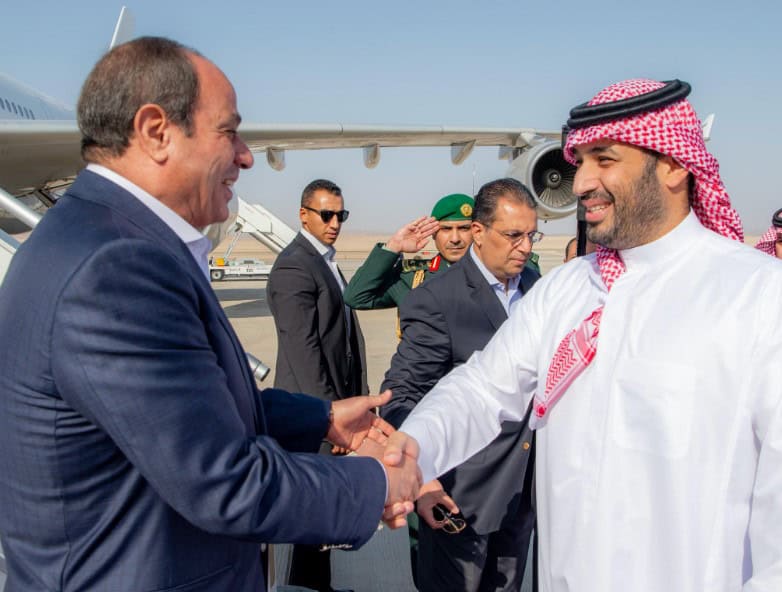
Between the Lines: Egypt has voiced its unequivocal support for Saudi Arabia against the ongoing Houthi attacks. Over the past week, Cairo has elevated its solidarity from diplomatic messages to a clear, strong pledge of unlimited defensive support.
- October 11: Egypt, alongside Saudi Arabia, Türkiye, and Pakistan, collectively known as the Regional Four (R-4) group, strongly condemned the continued Houthi attacks on the Kingdom, reaffirming unwavering support for Riyadh and any measures it takes to counter this aggression.
- October 13: Egyptian Foreign Minister Badr Abdelatty stressed Cairo’s full readiness to provide “any kind” of support to Riyadh “without any reservation,” emphasizing that Saudi Arabia’s national security is an integral part of Egypt’s national security.
- October 14: Egypt’s President Al-Sisi reaffirmed that Gulf security is integral to Egypt’s national security, expressing Cairo’s readiness to do whatever necessary to lower tensions, ensure safe maritime navigation and restore regional stability.
- October 15: Al-Sisi described Egypt and Saudi Arabia as the “heart of the Arab and Islamic nations,” noting that harm to either country would affect the other. He stressed that Cairo would not accept threats to the kingdom’s security or borders.
The Anchors of Regional Stability
Zoom In: Saudi Arabia and Egypt are strong advocates for regional security and stability. Since the outbreak of the US-Iran conflict in late February 2026, Riyadh and Cairo have utilized high-level diplomatic channels to de-escalate tensions; mitigate implications on energy security, supply chains, and regional and international trade; and prevent the conflict from spiraling into an all-out regional war.
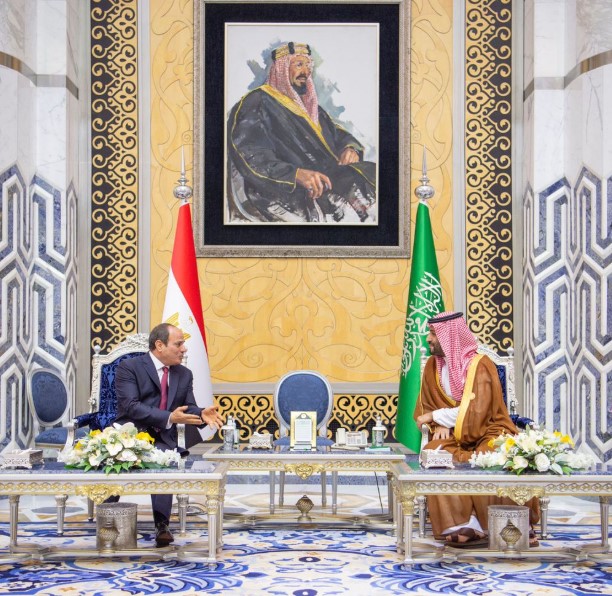
The Context: The recent military escalation in the Middle East has caused maritime disruption to shipping in the Strait of Hormuz, which links the Arabian Gulf with the Gulf of Oman and the Arabian Sea. These disruptions have also extended to the Bab al-Mandab Strait, which connects the Gulf countries to Europe via the Suez Canal, and to Asia through Saudi ports.
Catch Up Quick: Maritime traffic in the Suez Canal has been severely impacted by the escalation in Houthi threats against Saudi ports and energy facilities, as ships detour away from the Red Sea. President Al-Sisi recently noted that net revenue losses have exceeded $20 billion.
The Bottom Line: Egypt’s operational readiness transforms decades of alliance into an active, impenetrable defense partnership. Cairo stands fully prepared to back Saudi Arabia, setting a model for Arab collective action and anchoring regional stability.