
R-4 Backs Saudi Arabia: Egypt, Pakistan, Türkiye Reject Houthi ‘Dangerous’ Escalation
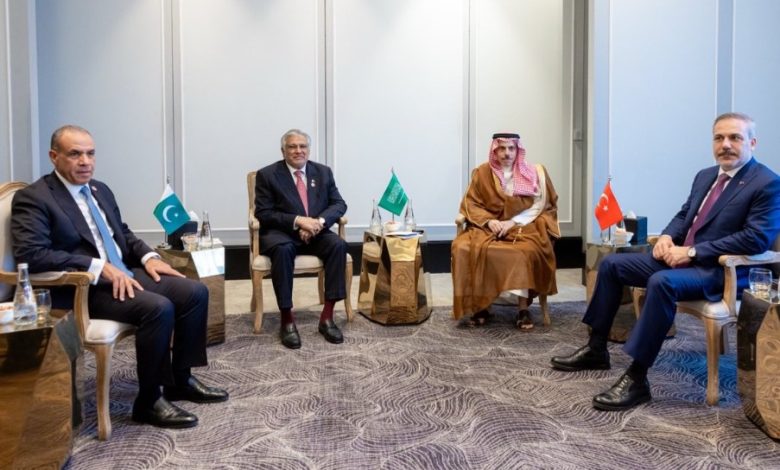
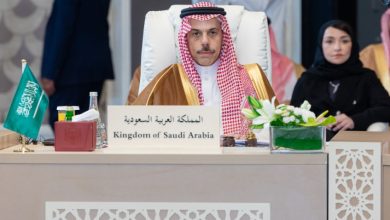
The Regional Four (R-4) group, comprising Saudi Arabia, Egypt, Pakistan, and Türkiye, have reaffirmed their steadfast support for the Kingdom in the face of continued Houthi aggression, demanding an immediate halt to these attacks.
The group described the attacks as a “dangerous escalation” that threatens regional and international peace and security, holding the Iranian-backed militia fully accountable for the repercussions of these hostilities.
Rejecting Houthi Escalation
Driving the News: In a joint statement on Sunday, October 11, 2026, the R-4 group strongly condemned the ongoing Houthi attacks against Saudi Arabia, including the targeting of King Khalid International Airport in Riyadh.
The Big Picture: In the statement, the group noted that the Houthi attacks constitute a flagrant violation of Saudi Arabia’s sovereignty and territorial integrity that directly threatens the Kingdom’s security, stability, and civilian safety. The four countries added that these attacks are a dangerous escalation that cannot be justified or accepted under any pretext.
The Backstory: After four years of relative calm, the Iranian-backed Houthi militia escalated attacks against the Kingdom, targeting its civilians and civilian infrastructure with drone and ballistic missiles. Since July 2026, the terrorist militia has attacked Riyadh, Taif, Abha, Khamis Mushait, Jazan, and Najran. It also attempted to target the holy cities of Makkah and Madinah.
Most recently, the Houthis have repeatedly targeted Saudi Arabia’s airports, including King Khalid Airport in Riyadh, King Fahd Airport in Dammam, as well as Abha, Jazan, and Najran airports.
R-4 Support for Saudi Arabia
State of Play: The R-4 reiterated their unwavering support for Saudi Arabia and for all measures the Kingdom takes to counter Houthi attacks, deter the sources from which they originate, and prevent their recurrence, in accordance with the UN Charter and international law.
What to Watch: In their statement, the R-4 held the Houthis accountable for these attacks and their implications for regional and international security, demanding the immediate and unconditional halt of these assaults.
A Unified Regional Stance
Why It Matters: Pakistan and Türkiye, alongside Saudi Arabia, are parties to the Makkah Defense Alliance – a joint defense pact signed on August 7, which establishes that an attack against any one of the three countries will be considered an attack against all three, laying the ground for collective deterrence, joint readiness, and coordinated military response.
Most recently, the alliance activated the collective deterrence measures, including the rapid deployment of the agreed military forces and capabilities in the Kingdom, in response to the Houthi threat.
Furthermore, Egypt is a pivotal ally and partner in maritime security, as Riyadh and Cairo have shared interests in safeguarding freedom of navigation and security in the Bab al-Mandab Strait and the Red Sea. Importantly, Egypt serves as a critical route for Saudi oil exports from Red Sea ports to Europe through the Suez Canal.
Zoom In: Egypt, Pakistan, and Türkiye are founding members in the Multinational Maritime Defense Coalition, launched by Saudi Arabia in late July 2026 to address and deter the growing threats to maritime security, including attacks against commercial vessels, energy tankers, and naval infrastructure in the Bab al-Mandab Strait, the Red Sea, and the Gulf of Aden. Moreover, Egypt is a potential candidate to join the Makkah Defense Alliance.
R-4 Collective Power
Between the Lines: According to analysts, the R-4 member states enjoy massive potentials on the diplomatic, economic, and military fronts.
- Saudi Arabiais a political and economic heavyweight, with expansive diplomatic clout and vast financial and investment capabilities. The Kingdom boasts modern, advanced armed forces and a geographical location that provides a strategic depth to the Arab Gulf States. It also stands as the cornerstone of global energy security.
- Egypt possesses advanced armed forces that stand as the largest in the Arab world in terms of size and operational experience, bolstered by a young, massive workforce. It holds sovereign control over the Suez Canal, a vital global maritime artery, and serves as a vital strategic depth for the Arab states, further complemented by its influential diplomatic ties across the Middle East and Africa.
- Türkiye is a prominent NATO member with the largest standing military in Europe. It has built a sophisticated defense industrial base, particularly in advanced drone technology. It also boasts a strategic location fronting the Black Sea and the Mediterranean.
- Pakistan has a highly professional military with extensive, long-term experience in counter-terrorism and advanced nuclear and missile capabilities. It has successfully built a defense industrial base and is part of the Greater Middle East.
The R-4: A Political Framework for Mideast Stability
The Context: The Regional Four is a quadrilateral consultative framework established in response to the US-Iran conflict with the aim of fostering closer coordination and consultation to navigate the crisis. It focuses on boosting joint coordination and unifying positions in the face of the rapidly evolving developments and dangerous military escalation in the Middle East.
The R-4 held its first meeting in Riyadh on March 18. The second meeting took place in Islamabad on March 29, the third in Antalya on April 17, the fourth in Cairo on June 21, the fifth in Amman on August 5, and the sixth in New York on September 21.
The Takeaway: Bound by a shared interest in a stable and secure Middle East, Egypt, Pakistan, and Türkiye remain committed to the security and sovereignty of Saudi Arabia. Through political and defensive frameworks, the four countries advocate for regional de-escalation while reinforcing deterrence and collective action against threats.