King Khalid Airport: How International Law Defines Attacks on Saudi Arabia’s Aviation Hub

The world has been appalled by the recent Houthi attacks against Saudi Arabia’s civilian facilities and energy infrastructure, during which the Iranian-backed militia have targeted civilian buildings and airports across the Kingdom.
King Khalid International Airport (KKIA) in Riyadh – the Kingdom’s global gateway – has been the subject of repeated attacks over the past few days, resulting in civilian losses and casualties. These attacks have raised serious questions over violations of international law, which clearly prohibits the targeting of civilian infrastructure during conflicts.
King Khalid Airport: Saudi Gateway to the World
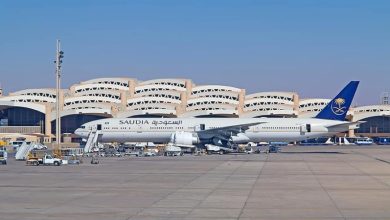
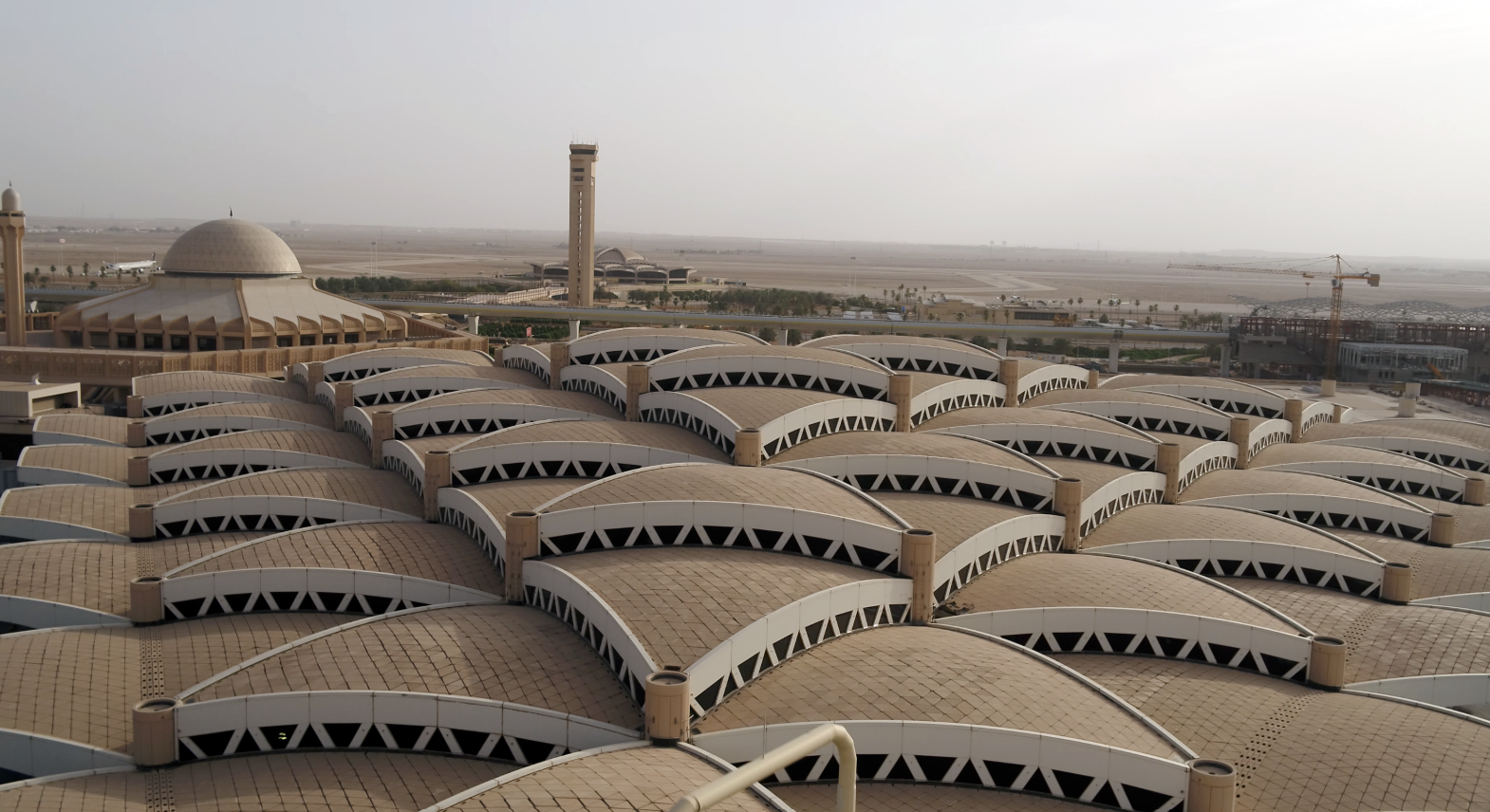
The Big Picture: Starting operations in late 1983, King Khalid International Airport is a premier aviation hub and one of the Middle East’s busiest airports, connecting Riyadh to major capitals across the globe. The airport is located 35 km north of Riyadh, spanning an area of 225 square km.
As the home base for flagship carriers, such as Saudia and Riyadh Air, KKIA facilitates regional mobility, international commerce, diplomatic missions, and pilgrimage transport, establishing itself as a crucial logistics hub for the Kingdom and the wider region.
By the Numbers:
- Terminals: 5 main terminals, 1 royal terminal, and 2 private terminals.
- Destinations: Over 121 destinations worldwide.
- Airlines: 64 domestic and international destinations.
- Annual operations: 299,000 flights and over 40 million passengers.
- Facilities: 40 air boarding bridges, parking spaces for over 11,600 vehicles, and 1 mosque.
Global Recognition: Operated by Riyadh Airports Company, King Khalid International Airport has carved its name among the world’s top airports, securing several prestigious awards. In 2026, it was named the World’s Most Improved Airport and ranked 14th globally in the Skytrax 2026 World Airport Awards. It also won the Best Airport Award for the 30-40 million category, and ranked second in the Best Airport Staff in the Middle East.
In 2025, the airport secured two gold awards for excellence in communications and marketing from the MarCom Awards. Moreover, it received three awards from the Future Aviation Forum in 2022, including Best International Airport (15 million+ passengers), Best Security Inspection Area, and Best Customs Inspection Area.
The Humanitarian Corridor
The Context: In addition to facilitating regular air traffic, KKIA plays a pivotal role in streamlining humanitarian aid, serving as a launchpad for multiple relief air bridges to countries in need. From food to medical and shelter supplies, King Khalid International Airport operates dozens of humanitarian flights to several countries, including Syria, Lebanon, Pakistan, and Türkiye, as well as to Egypt – to be transported to Gaza.
Go Deeper: According to Al-Arabiya, KKIA operated several humanitarian aid flights to Chad, Indonesia, and Pakistan, from 2003 to 2022, carrying essential relief supplies to areas impacted by natural crises, including floods and landslides.
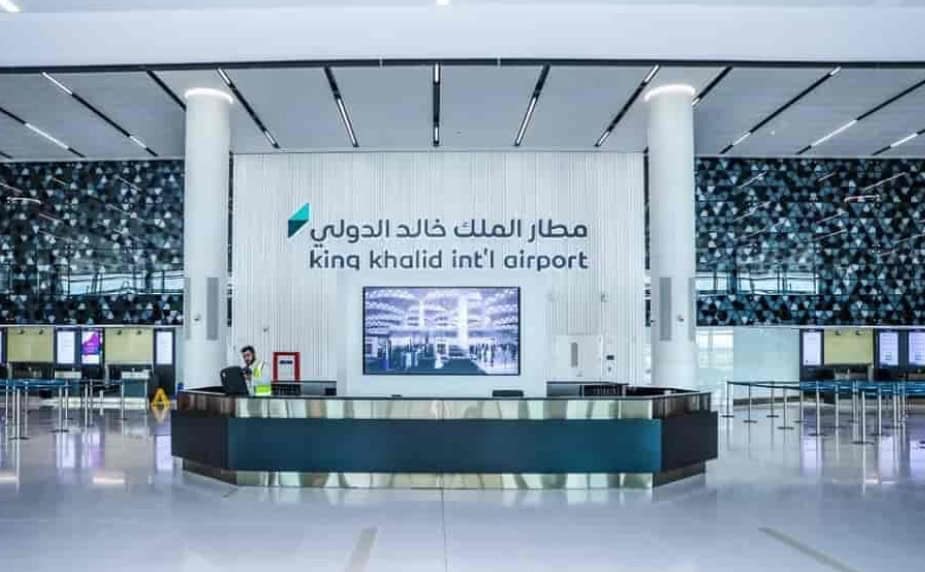
In February 2023, the airport handled Saudi Arabia’s air bridge to Türkiye and Syria following a massive earthquake that hit the two countries. It included food, medical, and shelter supplies, along with search and rescue teams and equipment.
In the same year, after the outbreak of the Gaza war, KKIA started aid flights to Egypt’s Al-Arish Airport, carrying tons of humanitarian aid to help the war-impacted Palestinians in the Gaza Strip.
Moreover, the airport serves as the logistics stop for medical evacuations, receiving cases from the wider region and the world to receive medical treatment and proper care.
The Houthi Blatant Crime
State of Play: Since mid-July 2026, the Iranian-affiliated Houthi militia has escalated its attacks against Saudi Arabia after four years of relative calm, deliberately targeting civilians and civilian infrastructure across the Kingdom. Over the past week, King Khalid International Airport, in particular, has been repeatedly targeted by the militia.
On Sunday, October 11, a new attack hit KKIA’s Passenger Terminal 4, killing one Pakistani resident and injuring 11 others, according to the Saudi General Authority of Civil Aviation (GACA). It followed a series of attacks which killed more than 12 people and injured over 309 others. The victims included a Saudia pilot, four Saudi citizens, two Bangladeshi residents, one American, one Egyptian, one Jordanian, one Syrian, one Palestinian, and one Sudanese.
The Backstory: In addition to King Khalid Aiport, the Houthi militia has targeted King Fahd Airport in Dammam, as well as Abha, Jazan, and Najran airports. The terrorist group’s missiles and drones have also targeted several Saudi cities, such as Riyadh, Taif, Abha, Khamis Mushait, Jazan, and Najran, alongside attempted attacks on the holy cities of Makkah and Madinah.
In His Words: “It is a heinous act that contradicts all principles, values, and ethics. Therefore, the Joint Forces Command of the Coalition will respond decisively to this terrorist attack in accordance with international humanitarian law and its customary rules.” – Maj. Gen. Turki Al-Malki, Spokesperson for the Saudi-led Arab Coalition to Restore Legitimacy in Yemen.
Through the Lens of International Law
Between the Lines: The repeated attacks on King Khalid International Airport and other civilian facilities in Saudi Arabia have sparked global outcry, with countries and world leaders strongly condemning this aggression as a flagrant violation of international humanitarian law that may amount to a war crime.
International Law Perspective: International humanitarian law views civilian airports as protected civilian infrastructure, explicitly prohibiting the targeting of civilian infrastructure during conflicts.
Geneva Conventions
The Geneva Conventions 1949 and Additional Protocol 1 of 1977 require the protection of civilian objects and forbid attacks that may cause unjustified harm to civilians or civilian infrastructure. They require parties to a conflict to distinguish between civilian objects and military objectives, defining civilian infrastructure as all objects which are not military objectives and which are normally dedicated to civilian purposes. These include facilities that support day-to-day lives, such as roads, bridges, airports, railways, and hospitals.
Rome Statute
The Rome Statute of the International Criminal Court (ICC) in its Article 8 states that deliberate attacks against civilian populations or civilian objects are classified as a war crime.
Chicago Convention
The Convention on International Civil Aviation, known as the Chicago Convention 1944, explicitly obliges states to protect civil aircraft and passengers in flight, refrain from the use of force against civil aircraft, and coordinate and communicate any activities potentially hazardous to civil aviation.
Montreal Convention
The Convention for the Suppression of Unlawful Acts against the Safety of Civil Aviation (Montreal Convention 1971) and the 1988 Protocol prohibit and punish unlawful acts against civil aviation. These acts include destroying an aircraft in service, performing acts of violence against people on board an aircraft in flight that endanger safety, placing dangerous devices or substances on an aircraft that are likely to destroy or damage it, destroying or damaging air navigation facilities or interfering with their operation.
What He Said: “Attacks on civilians and civilian infrastructure are a violation of international law. These attacks must cease immediately.” – António Guterres, UN Secretary-General, noted about the Houthi attacks on King Khalid International Airport.
The Bottom Line: King Khalid International Airport is a vital logistics and humanitarian gateway connecting Saudi Arabia to the world. In defiance of international humanitarian law and established aviation conventions and protocols, the Houthis continue their blatant aggression against the airport, in what constitutes a potential war crime. Nonetheless, Saudi skies remain safeguarded by high defense readiness and international law.