Houthi Airport Attacks on Saudi Arabia Trigger Wave of International Condemnation
Governments across the Arab world, Europe and the United States have condemned deadly Houthi attacks on two Saudi airports.
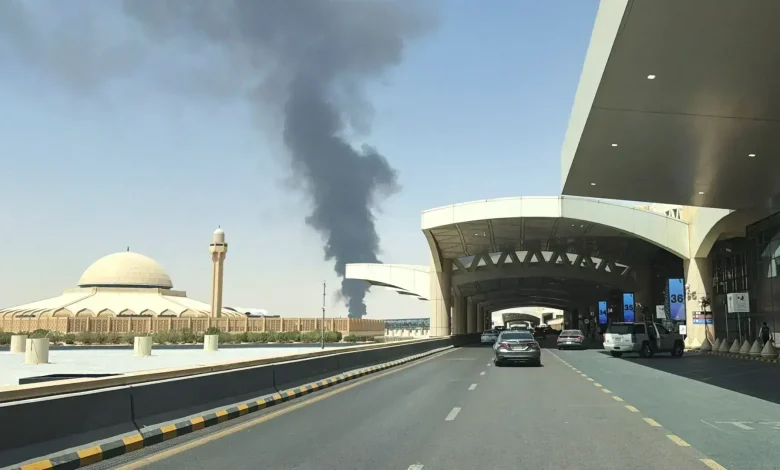
Driving the news: The strikes hit Abha International Airport and Riyadh’s King Khalid International Airport on Wednesday. They killed three people and injured 36, according to Saudi Arabia’s General Authority of Civil Aviation (GACA).
Why it matters: The attacks targeted travelers and airport workers. They also show a Houthi threat that now reaches from Yemen’s front lines to Saudi aviation hubs and Red Sea shipping lanes.
Zoom in: GACA said the attacks hit airport facilities and, in one case, a Saudia aircraft. At Abha, a Moroccan woman and an Algerian woman died, and 28 people suffered injuries. At King Khalid, a Sudanese resident died, and eight people suffered injuries. Those hurt in Riyadh included five Saudis, two Egyptians and a Pakistani. Medical teams treated the casualties immediately and moved them to hospitals.
The Houthis claimed they fired a ballistic missile and several drones at the Riyadh airport. The Saudi-led coalition said its forces intercepted and destroyed a ballistic missile north of Riyadh on Wednesday. A day earlier, they stopped another missile aimed at Khamis Mushait in the south.
World Rallies Behind Riyadh
Condemnation came quickly and from every direction. The United Nations led the response. Spokesman Stéphane Dujarric said international humanitarian law bans attacks on civilians and civilian infrastructure. He urged maximum restraint and full protection for civilians.
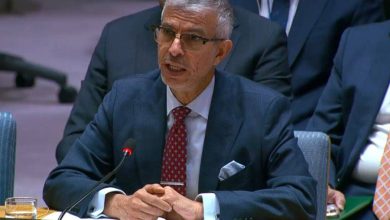
Washington backed Riyadh directly. Mike Waltz, the US envoy at the Security Council, said America supports Saudi Arabia and the Yemeni government as they defend themselves. He also urged Iran to stop backing the Houthis.
Regional bodies spoke with one voice. GCC Secretary-General Jassim Al-Budaiwi called for “serious” international action and decisive measures to deter the group. He stressed that Saudi security forms an inseparable part of Gulf security. The Muslim World League condemned the “treacherous terrorist attacks.” It said they violate religious values and international norms. Al-Azhar added that terrorizing civilians is a crime under Islamic law. It warned that the escalation endangers the whole region.
Pakistan’s Prime Minister Shehbaz Sharif pledged lasting support. “Our commitment to the Kingdom’s sovereignty, territorial integrity and security is firm and unwavering,” he said on Friday. Yemen’s Prime Minister Shaya Al-Zindani said the attacks reveal the Houthis’ “bankruptcy.” He argued they cannot break the resolve of Yemenis or their armed forces.
Kuwait, Bahrain, Egypt, Syria, Jordan, the UAE and Qatar also condemned the strikes. Several called them a violation of Saudi sovereignty. The Arab League and the Council of Arab Interior Ministers warned against targeting vital sites, especially airports.
Moreover, European capitals joined in, with France expressing full solidarity and demanded an immediate halt to the attacks. The United Kingdom pledged to stand with the Kingdom against “reckless” assaults. European Commission President Ursula von der Leyen said civilian infrastructure is never an acceptable target. She added that Iran’s proxies must end their “reckless and violent actions.”
Escalating Houthi Threats and Regional Security
The big picture: These strikes do not stand alone. Yemen’s conflict has escalated since July, after a period of relative calm that followed the UN-brokered truce of April 2022.
The Red Sea has become a second front. In late July, the Houthis claimed attacks on two Saudi ships. Saudi Arabia confirmed that a missile struck the Saudi-owned vessel NCC MASA and caused minor hull damage. The coalition then hit Houthi sites in Hodeidah. The UAE has also condemned continued Houthi targeting of Saudi vessels in the southern Red Sea and the Bab al-Mandab Strait.
That pressure matters for energy markets. Disruption in the Strait of Hormuz has raised the importance of the Red Sea route. According to Kpler data, all Saudi seaborne crude exports left through Yanbu in April and May.
Meanwhile, the ground war has intensified. Saudi forces and Yemeni government troops have launched a major air and ground offensive. They aim to retake territory along Yemen’s western Red Sea coast and near Bab al-Mandab. Houthi supporters, for their part, rallied in Sanaa on Oct. 7 to recruit more fighters.
The coalition has answered firmly. It destroyed 82 Houthi military targets across Saada, Hodeidah, Al-Jawf and Marib. Spokesman Maj. Gen. Turki Al-Malki said the Houthi attacks “will not go unpunished.” He added that forces also destroyed a ballistic missile launch platform in Sanaa, which the group had prepared for an imminent strike.
What’s next: Security analysts emphasize that Houthi operations require robust deterrence frameworks. Furthermore, international pressure must focus on cutting off illegal weapon supply chains. Additionally, regional defense cooperation safeguards civil aviation against asymmetrical warfare tactics. Consequently, policymakers continue drafting stricter sanctions to neutralize ongoing threats and secure maritime and aerial gateways across the Middle East.
Additionally, Riyadh has signaled that more deterrence will follow. Diplomats expect fresh pressure at the UN Security Council and in Gulf capitals. The coalition says it will keep backing Yemeni forces while it defends Saudi airports, ports and shipping.