
Made in Riyadh: How SKYWASP Drone Production Accelerates Saudi Defense Localization
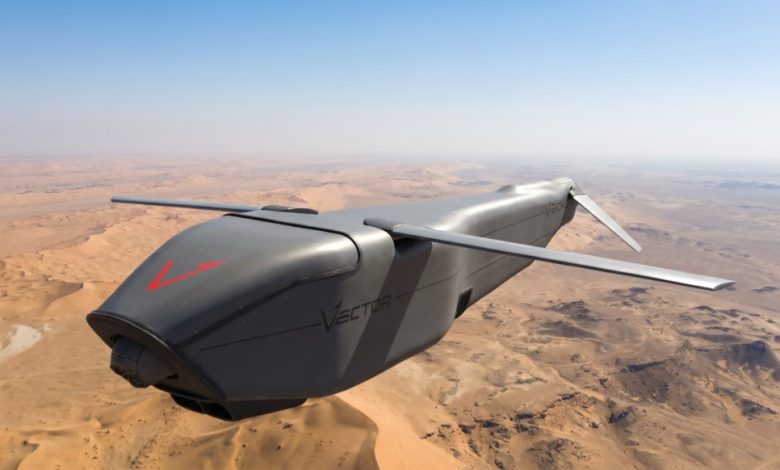
Saudi Arabia’s defense localization push has made a major leap, following the US drone maker Vector’s unveiling of BOMBARD – a pulse-jet long-range attack drone slated for domestic production in Riyadh under the Saudi designation SKYWASP.
This announcement marks a major milestone in Saudi defense production, transforming the Kingdom from an importer into a sovereign manufacturer in line with Vision 2030’s goal of localizing 50% of military spending.
Localizing Drone Production
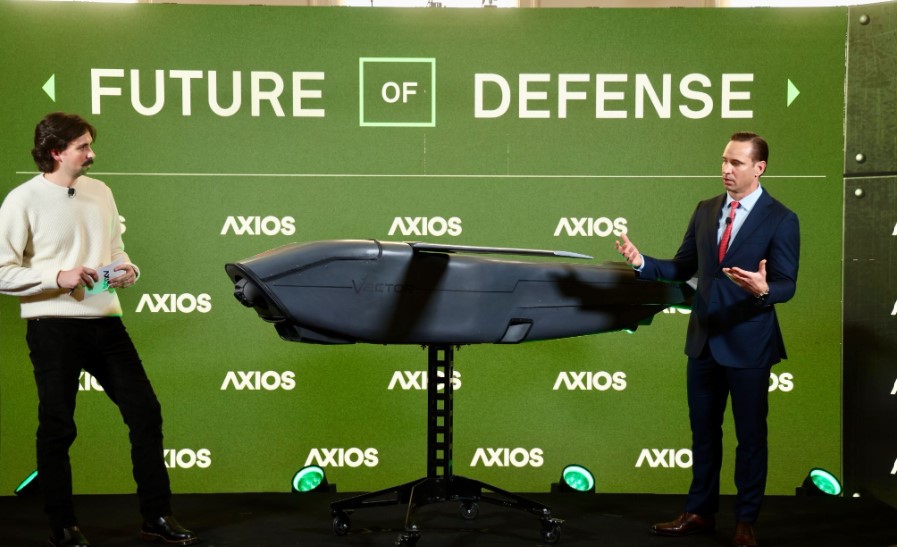
Driving the News: During the Axios Future of Defense Summit in the US, Vector announced the BOMBARD, a new jet-powered, long-range precision strike system designed to respond to the rapidly evolving requirements of the modern battlefield.
The Big Picture: The attack drone will be manufactured locally and marketed under the name SKYWASP through SR2Vector – a joint venture between Utah-based Vector and Saudi private defense company SR2 Defense Systems.
Why It Matters: SKYWASP marks a major stride for Saudi Arabia’s Vision 2030 defense industrialization push, pairing private-sector technology transfer with large-scale sovereign deterrence to tap into a $13 billion global drone market.
SKYWASP: The Saudi-Made Drone
State of Play: Vector is marketing the one-way attack drone SKYWASP as an affordable strike system designed to support scalable, high-volume domestic production while minimizing sustainment requirements. The project draws on military feedback and observations from Ukraine and other modern battlefields.
Technical Specifications:
- Maximum Range: 1,100 km
- Cruise Speed: 378 km/h
- Maximum Takeoff Weight: 127.5 kg
- Payload Capacity: 50 kg
- Architecture and Payload: Modular architecture with a Modular Payload Interface to support varied mission requirements
- Autonomy and Navigation: Autonomous flight from launch through terminal engagement, paired with GPS-denied navigation
- Command and Control: Open C2 integration
Go Deeper: SKYWASP joins a lineup of domestic drones planned for the SR2Vector Riyadh facility, including the HAMMER first-person view (FPV) strike drone and the tactical unmanned aerial system (UAS) DAGGER.
Flashback: Collaboration between SR2 and Vector dates back to March 2026, when the two companies signed a memorandum of understanding (MoU) on the sidelines of the World Defense Show (WDS) in Riyadh to explore localized manufacturing, assembly, and sustainment of Vector’s attritable defense systems in the Kingdom.
Vision 2030 Localization Strategy
The Context: A core objective of Saudi Vision 2030 is to localize over 50% of military spending by the end of the decade by reducing equipment imports and bolstering national security and defense sovereignty.
The Catalyst: The Kingdom’s defense localization ambitions are spearheaded by three primary authorities that complement each other to create an autonomous defense ecosystem.
- General Authority for Military Industries (GAMI): The regulatory, licensing, and procurement authority.
- Saudi Arabian Military Industries (SAMI): The commercial and manufacturing champion driving local production.
- General Authority for Defense Development (GADD): The R&D engine producing indigenous intellectual property (IP) and tech breakthroughs.
The Impact: Saudi Arabia’s localization rate of military spending has surged from 4% in 2018 to 27.3% by the end of 2025.
Saudi-US Defense Partnership
The Deep Dive: Grounded in over 80 years of bilateral ties, the US remains Saudi Arabia’s main defense partner. Riyadh and Washington have deepened their defense cooperation through major arms acquisitions and localized industrial partnerships aimed at bolstering the Kingdom’s deterrence and domestic capabilities.
Key Milestones:
- 2021: SAMI and Lockheed Martin established a 51% Saudi-owned joint venture at IDEX in Abu Dhabi, focusing on technology transfer, localized defense manufacturing, and workforce training.
- 2024: Agreements signed to localize key sub-components, including missile canisters and launcher structures, for Saudi Arabia’s seven-battery THAAD system (comprising 44 launchers, 360 interceptors, seven AN/TPY-2 radars, and 16 mobile fire control units).
- May 2025: The first domestically manufactured THAAD missile defense launcher components were completed in Jeddah.
- July 2025: The Royal Saudi Air Defense Forces officially inaugurated their first THAAD unit in Jeddah.
- November 2025: Following the signing of the Saudi-US Strategic Defense Agreement, the US formally designated Saudi Arabia as a major non-NATO ally.
- January 2026: SAMI Advanced Electronics Company (SAMI-AEC) and Lockheed Martin launched a state-of-the-art software factory in Riyadh for local teams to prototype, test, and deploy digital command-and-control software.
Saudi Arabia as a Regional Drone Hub
Between the Lines: Amid surging demand, the SR2Vector factory in northern Riyadh is set to position Saudi Arabia as a major regional hub for drone manufacturing.
Reality Check: Over the past three years, the long-range, deep-strike, loitering munition sector has developed into an estimated $13 billion market, driven by the heavy use of drones in the Russia-Ukraine war, according to Shephard Media’s Defense Insight.
The Bottom Line: Manufacturing SKYWASP in Riyadh marks a decisive shift from importer to manufacturer, giving Saudi Arabia affordable, scalable deterrence at home alongside a foothold in a rapidly growing $13 billion drone market.