Driving the news: Saudi Arabia and Japan have taken another significant step in their enduring energy partnership, as Tokyo confirmed plans to expand storage capacity for Saudi crude oil by an additional 16 million barrels.
Why it matters: The expansion strengthens energy security for both countries. Moreover, it places Saudi crude closer to Asian buyers.
The Deal at a Glance
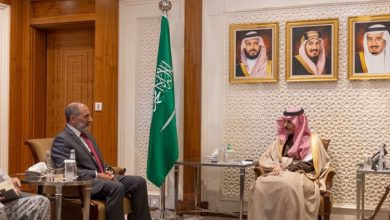
Prince Abdulaziz bin Salman Al Saud, Minister of Energy and Minister of Industry and Mineral Resources, met Japan’s Minister of Economy, Trade and Industry, Ryosei Akazawa, by video on 9 November, 2026. The Saudi Press Agency (SPA) reported the outcome on Friday.
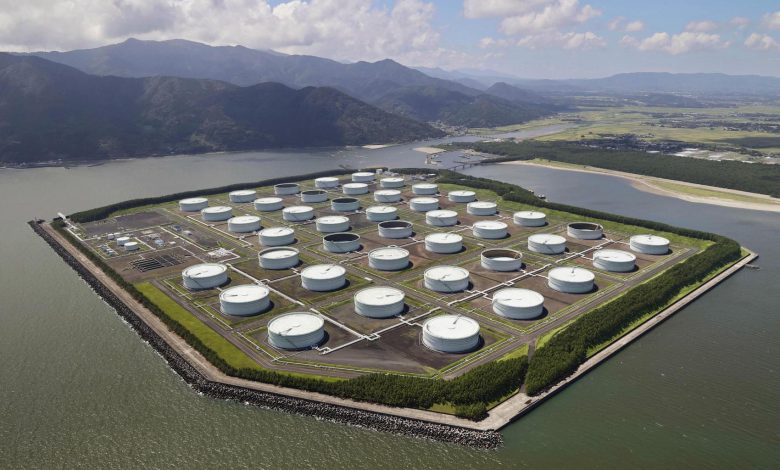
Japan will offer the extra capacity inside its national stockpile facilities for a fixed period. The new space comes on top of the 8 million barrels Saudi Arabia already holds there. As a result, the Kingdom’s potential storage in Japan reaches 24 million barrels.
Meanwhile, Japan plans to buy up to 8 million barrels of Saudi crude. That purchase depends on favorable market conditions. It also depends on Tokyo finishing its internal procedures. Saudi Arabia has already started refilling the joint storage tanks in Japan.
Why the Timing Matters
The announcement arrives as importers rebuild stockpiles. Many countries drew down reserves during the disruption around the Strait of Hormuz. Japan felt the strain sharply, because Middle Eastern crude supplied more than 90% of its imports before the conflict.
In addition, the International Energy Agency (IEA) coordinated a record release of 400 million barrels across member countries last month. Gulf crude exports have since recovered to 82% of prewar levels, according to the IEA. Therefore, the market now watches when importers will start buying oil back.
For Riyadh, the arrangement offers a clear advantage. Oil stored in Japan sits near Asian customers. Furthermore, Saudi Arabia can tap it if shipping through Hormuz stalls again. Japan, in turn, gets first access to that stored crude during a supply emergency.
By the numbers:
- 16 million barrels: the new, temporary Saudi storage capacity in Japan.
- About SAR 2.76 billion ($736 million): the estimated value of that purchase at $92 a barrel. This is an editorial estimate, not an official figure.
- About SAR 8.28 billion ($2.21 billion): the estimated value of all 24 million barrels at the same price.
- SAR 345 ($92): the recent Brent price per barrel. It is down roughly 16% from above SAR 412.50 ($110) in October.
- 2010: the year the joint crude storage project began.
- 8 October, 2026: the date of the AZEC ministerial meeting that presented the storage work program.
- 16 million barrels: Additional temporary storage capacity that Japan plans to make available to Saudi Arabia.
- 8 million barrels: Existing Saudi crude-storage capacity in Japan.
- 24 million barrels: Potential total capacity under the expanded arrangement.
- 8 million barrels: Maximum volume of Saudi crude that Japan plans to buy for its national reserves.
- 2010: Year when the Joint Crude Oil Stockpiling Project began.
- April 2026: Japan launched POWERR Asia with financial support of about $10 billion, or SAR 37.5 billion, using the Kingdom’s SAR 3.75-per-dollar exchange rate.
Both sides stressed the importance of stable global energy markets and secure supplies. The Saudi side called Japan a “strategic partner.” It also pledged long-term support for Japan’s energy security through reliable and stable crude supplies, according to SPA.
Japan, for its part, expressed deep appreciation for the stable supplies the Kingdom provides. Likewise, both ministers said they look forward to deepening the strategic energy partnership.
Regional Energy Security Framework
The two countries will also cooperate under Japan’s POWERR Asia initiative. Tokyo launched it to strengthen energy security across Asia. The initiative builds on the AZEC work program on oil storage, which ministers presented on 8 October, 2026.
That program sets out several steps. First, it calls for stronger institutional frameworks and storage infrastructure in Asia. Second, it urges closer cooperation with oil-producing countries. Finally, it aims to coordinate emergency response among members.
Japan’s Prime Minister, Sanae Takaichi, has pushed the idea further. This week she proposed a joint Asian task force to manage crude stockpiles. Meanwhile, Singapore plans to store Saudi crude in its Jurong Rock Caverns from the second half of 2027.
A Partnership Built Over Years
Saudi-Japanese energy ties run deep, and 2026 has sharpened them. In March, Akazawa and Prince Abdulaziz held an online meeting on energy cooperation. In May, Akazawa visited the Kingdom and delivered a letter from Prime Minister Takaichi to Crown Prince Mohammed bin Salman. That month, the two ministers also agreed to set up a joint task force on energy-system resilience.
The task force aims to strengthen supply chains and expand strategic storage. It also explores joint investment in Asia. Because of this work, the latest storage deal builds on a clear foundation rather than a one-off gesture.
The Okinawa facilities show how long this cooperation has lasted. Aramco has stored crude there for years under an arrangement with Tokyo. Japan extended the broader storage deal for three more years in November 2025.
What’s next: Japan still needs to complete its internal procedures before it buys the Saudi crude. Market conditions will also shape the timing. Even so, the direction is clear. Both capitals want a deeper, more resilient energy relationship.
The bottom line: The Kingdom is building storage close to its biggest customers. As a result, it protects its export position when shipping risks rise.