Shared Waters, Shared Threats: The Interconnection of Gulf-Mediterranean Security
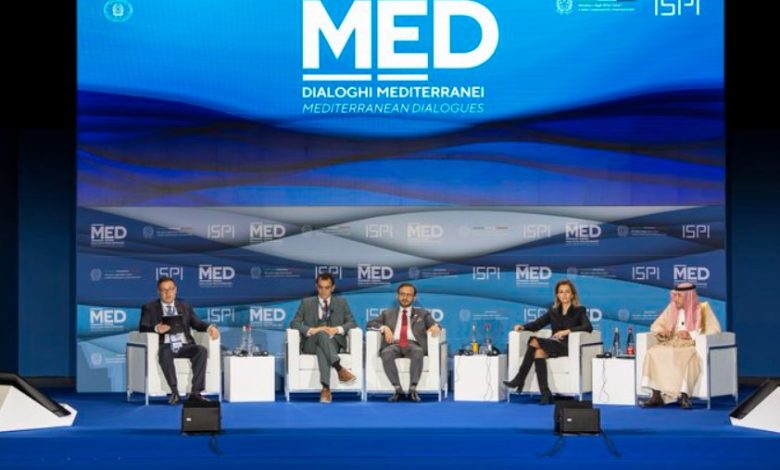
At the MED – Mediterranean Dialogues Forum, the relationship between maritime security in the Middle East and stability in Europe came into sharp focus.
Remarks by Saudi and GCC officials have underscored that security and economic prosperity in the Mediterranean cannot be separated from stability in the Red Sea and the Arabian Gulf. Therefore, deepening cooperation is imperative for the shared interests of both sides.
Chokepoint Security: A Global Concern
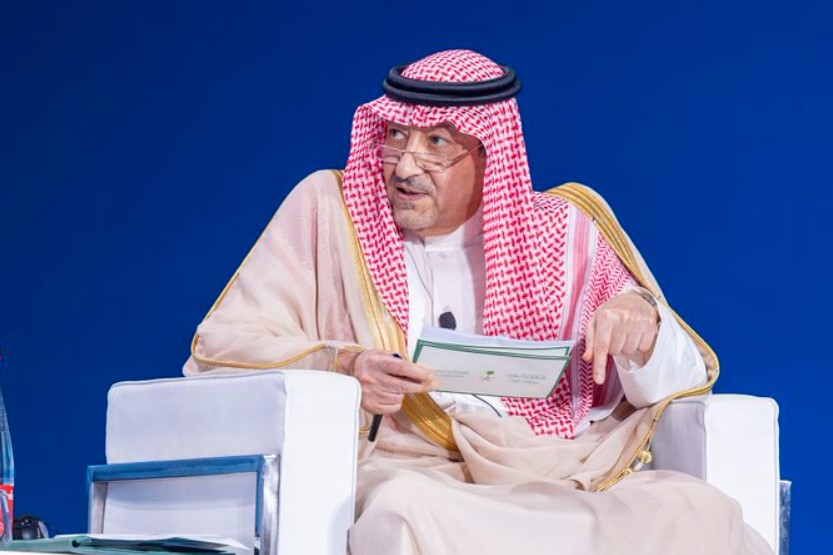
Driving the News: Saudi Arabia’s Vice Foreign Minister Waleed Al-Khuraiji took part in the 12th edition of the MED – Mediterranean Dialogues Forum, held in Naples, Italy, from November 19-21, 2026.
The Big Picture: Speaking at a session titled “The Revenge of Geography: Securing Chokepoints, Rethinking Maritime Security,” Al-Khuraiji highlighted the close connection between maritime security, regional stability, and global prosperity.
Between the Lines: The Saudi diplomat stated that the security of strategic waterways, most notably the Red Sea, the Bab al-Mandab Strait, and the Strait of Hormuz, is a matter of international concern. He emphasized the need to protect these critical chokepoints, calling it a “longstanding priority” that requires effective regional and international cooperation.
From the Gulf to the Mediterranean: The Underlying Link
The Context: Since the outbreak of the US-Iran conflict in late February 2026, critical maritime corridors across the region have become flashpoints. Iran has partially closed the Strait of Hormuz, through which around 20% of daily global oil and LNG supplies pass. In parallel, the Iranian-backed Houthi militia has escalated threats to commercial shipping in the southern Red Sea and the Bab al-Mandab Strait, which handle 10% to 15% of all global trade annually. The disruption of shipping in the Red Sea has affected traffic in the Suez Canal, the gateway connecting Gulf economies and major Saudi Red Sea logistics hubs to Mediterranean ports.
State of Play: During his speech, Al-Khuraiji warned that the international community must confront any attempts to use Yemeni territory as a launchpad for attacks against neighboring countries or international shipping.
The European Perspective: Italian Foreign Minister Antonio Tajani echoed a similar tone, stressing that regional stability is directly connected to Mediterranean security. He emphasized the importance of infrastructure connectivity, maritime trade, food security, and regional stabilization as interconnected pillars of Italy’s foreign policy. The Italian Minister also outlined a vision for a commercial network integrating Mediterranean, Middle Eastern and Gulf ports, extending from Europe to India through Egypt and the GCC countries.
The Saudi Doctrine: Deterrence & Diplomacy
A Firm Stand: Al-Khuraiji reaffirmed Saudi Arabia’s legitimate right to defend its territory, people, and national interests in accordance with international law.
The Backstory: Since July 2026, the Iranian-backed Houthi militia has launched drones and missiles targeting several Saudi cities, including attempted attacks on Makkah and Madinah, as well as airports and energy facilities. Saudi Arabia’s air defenses have demonstrated exceptional operational readiness and efficiency in protecting the Kingdom’s airspace and critical infrastructure from external threats around the clock.
Active Deterrence: On November 20, 2026, the Joint Forces Command of the Saudi-led Coalition to Restore Legitimacy in Yemen launched a precision military operation to neutralize Houthi capabilities threatening regional security and civilians in Saudi Arabia and Yemen. The operation resulted in destroying military infrastructure at the Hodeidah port used for smuggling weapons and ballistic missiles, alongside legitimate military targets, drone workshops, and supply facilities across Sanaa, Saada, and Taiz.
Prioritizing Diplomacy: This assertion goes hand in hand with Riyadh’s unwavering commitment to promoting security and prosperity in Yemen, prioritizing diplomacy, de-escalation, and addressing the root causes of regional instability. The Kingdom has long advocated for a political resolution in Yemen, providing substantial economic and developmental support for the internationally recognized government to alleviate the suffering of the Yemeni people and promote stability across the country.
A GCC-Mediterranean Framework
Go Deeper: Speaking at the forum’s opening session, titled “Building a New Architecture for Cooperation in the Wider Mediterranean,” Gulf Cooperation Council (GCC) Secretary-General Jasem Albudaiwi emphasized that the Arabian Gulf and the Mediterranean have become an interconnected strategic space united by vital interests in the fields of energy, trade, investment, maritime corridors, and people-to-people communication. He underscored the GCC states’ commitment to strengthening political, security, and economic ties with Mediterranean partners to advance mutual interests and promote regional and global stability and sustainable development.
Key Milestones: Albudaiwi highlighted major diplomatic and economic milestones in GCC-Mediterranean cooperation.
- GCC-Italy MoU: The July 2026 Memorandum of Understanding between the GCC General Secretariat and Italy’s Foreign Ministry on strategic dialogue and economic cooperation is a key step in expanding bilateral horizons.
- Upcoming GCC-Med9 Trade Meeting: Plans are underway for a Joint Ministerial Trade Meeting between the GCC and the Med9 Group in Italy in January 2027 to boost trade, investment, and economic integration.
- Union for the Mediterranean (UfM): GCC participation in the UfM Ministerial Meeting in Barcelona reflects its drive to turn geographical proximity into a sustainable strategic partnership.
An Interconnected Security Landscape
Zoom Out: Albudaiwi thanked Mediterranean states for their steadfast solidarity with GCC nations in confronting Iranian attacks and Houthi terrorist attacks on Saudi Arabia. He stressed that security and stability in both regions serve as two fundamental pillars of broader international security and prosperity.
In His Words: “Developments in the Arabian Gulf region have affected energy prices in Europe, supply chain movements across the Mediterranean Sea and food security on the African continent. Ensuring freedom of navigation through the Strait of Hormuz, the Bab al-Mandab Strait and the Suez Canal is a shared international interest, rather than a matter of limited regional concern.” – Jasem Albudaiwi, GCC Secretary-General.
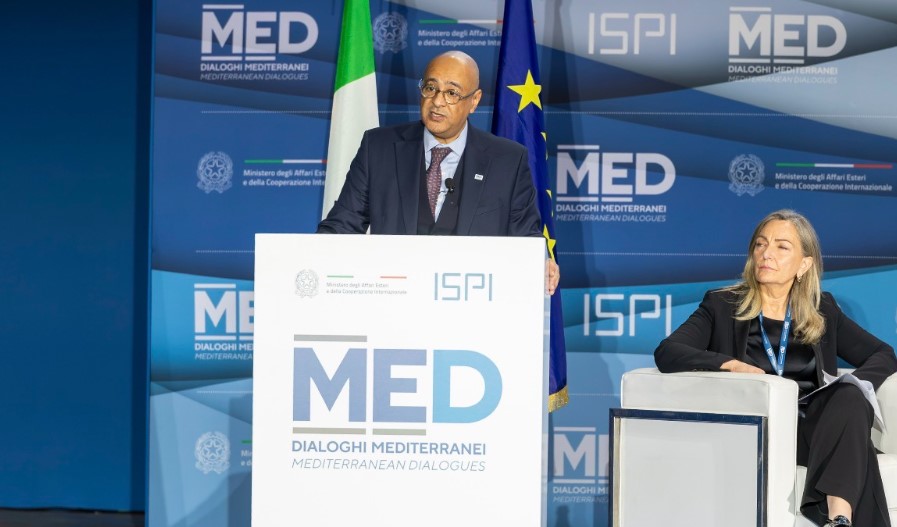
The GCC Peace Formula: The GCC chief highlighted the council’s approach toward stability in the region, reiterating that it is based on de-escalation, dialogue, and diplomacy. He also noted that any effective regional security framework must be founded on the principles of international law, respect for state sovereignty, and non-interference in internal affairs. In this context, Albudaiwi stated that lasting Middle Eastern security cannot be achieved without a just, comprehensive solution based on the two-state solution, which envisions an independent Palestinian state along the 1967 borders with East Jerusalem as its capital.
Three Pillars for Cooperation
Zoom In: During his speech, Albudaiwi outlined three key pillars for a more effective framework to drive future Gulf-Mediterranean cooperation.
- Strengthening Existing Frameworks: Deepening connections between existing cooperation mechanisms – such as the 1989 Cooperation Agreement, the first GCC-EU Summit in Brussels, the Joint Action Program, and structured security dialogues – and providing them with the political and strategic momentum needed to expand their scope and maximize their outcomes.
- Linking Security to Economic Resilience: Recognizing that maritime security, energy stability, and supply chains are interdependent across both regions.
- Achieving Balanced and Equal Strategic Partnerships: Recognizing GCC countries as reliable partners due to their centrality for global energy markets and international investments, as well as their strategic geographic location connecting Europe with Asia and Central Asia. This includes ensuring clear, stable regulatory rules and fair market access; easier movement for citizens and businesses; and prior consultation and coordination on policies with shared implications.
The Takeaway: By stressing that the security of strategic waterways is a global concern that requires close coordination and collective action, Saudi Arabia and the GCC are positioning themselves as proactive architects of a unified Gulf-Mediterranean security and economic corridor.