
Amid rising geopolitical tensions, maritime threats, and supply chain disruptions, logistical agility and swift response have taken center stage in today’s global energy landscape.
Recognizing this, Saudi Arabia has shifted toward expanding its overseas crude storage hubs – from Suez to Manila – building a resilient export network that can withstand global shocks and solidifying its status as the world’s primary energy stabilizer.
The Philippines on Saudi Arabia’s Radar
Driving the News: Saudi Arabia is in discussion with the Philippines to establish oil storage hubs in the country, Reuters reported citing Philippine Energy Secretary Sharon Garin.
The Big Picture: As a fuel-import-dependent nation, the Philippines is also in talks with other countries, including the US, Russia, Japan, Kuwait, and the UAE, on oil storage to hedge against supply disruptions triggered by the US-Iran conflict, which broke out in late February 2026, and climate-related risks, such as El Niño.
In Her Words: “If El Niño finishes in April, that’s the time that summer starts for us. So this would be a prolonged pressure for us, which started with the oil crisis in the Middle East.” – Sharon Garin, the Philippines Energy Secretary, stated on the sidelines of the Singapore International Energy Week conference.
Boosting Asian Energy Supplies
Zoom In: Saudi Arabia’s oil giant Aramco reached an initial agreement with Singapore’s Energy Market Authority (EMA) and JTC Corporation to store crude oil at Jurong Rock Caverns, the Energy Ministers of both countries announced on October 26, during the Singapore International Energy Week conference. The agreement is set to start from the second half of 2027.
What He Said: “Bringing supply closer to key Asian markets would strengthen the flexibility of our supply network and support Singapore’s security of supply and preparedness.” – Prince Abdulaziz bin Salman, Saudi Arabia’s Energy Minister.
Why It Matters: The Kingdom’s plans to expand its storage footprint have come in response to the mounting geopolitical tensions that affected critical maritime chokepoints such as the Strait of Hormuz and the Red Sea. By storing crude in key demand centers like Singapore and the Philippines, Aramco can execute spot sales directly to East Asian refiners, effectively bypassing transit delays.
From Suez to Europe: The Mediterranean Gateway
Between the Lines: As part of its proactive strategy, Saudi Arabia has established strategic storage hubs in Egypt, including in the SUMED pipeline, connecting Ain Sokhna on the Red Sea to the Sidi Kerir terminal on the Mediterranean. According to Kpler’s estimates, Saudi deliveries to Ain Sokhna averaged around 770,000 barrels per day between March and June and approached one million barrels per day in April.
Strategic Advantage: The Sidi Kerir terminal provides a direct overland transit route for Saudi energy shipments to European and Mediterranean refiners.
A Robust Storage Network
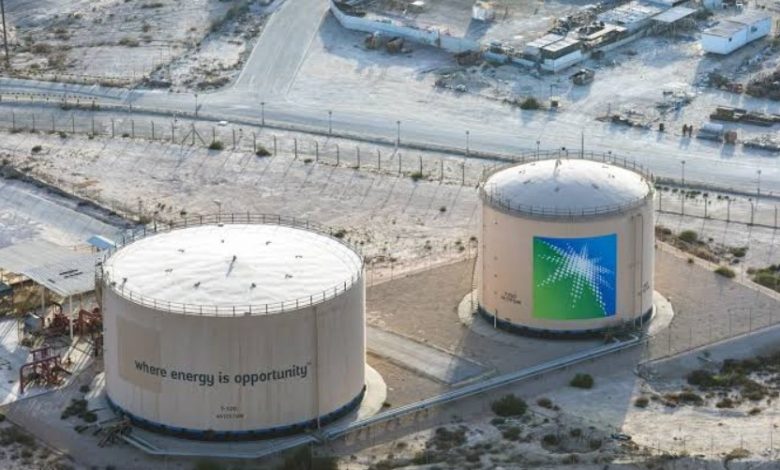
State of Play: Saudi Arabia maintains a robust overseas crude storage network to safeguard the stability of global supply chains and support Asian markets in the case of unexpected shortages.
Japan
Aramco signed an agreement with Japan Oil, Gas and Metals National Corp (JOGMEC) to lease 13 crude oil tanks to store crude oil in Okinawa. The capacity increased to 8.2 million barrels in September 2017. The agreement was renewed in November 2025 for an additional three years.
In June 2022, Aramco inked an agreement with ENEOS Corporation (ENEOS) for oil storage at ENEOS’ Kiire terminal in Kagoshima. Under the deal, Kiire provides an additional 3 million barrels of storage.
South Korea
In October 2023, Aramco signed a five-year agreement with Korea National Oil Corp (KNOC) to store 5.3 million barrels of oil in South Korea’s reserve facilities in the southeastern port city of Ulsan.
The Global Energy Stabilizer
The Context: As the world’s largest crude exporter, Saudi Arabia has invested heavily in its logistics infrastructure and overseas storage facilities to serve as a global buffer against extreme supply shocks and guarantee uninterrupted energy flow. In response to shipping disruptions in the Strait of Hormuz and the Bab al-Mandab Strait, the Kingdom has actively mitigated the fallout by enhancing maritime connectivity and supporting supply chain resilience by leveraging its robust logistics network, providing a lifeline for global markets.
The Backstory: The recent regional military tensions have turned critical waterways into flashpoints. Iran has disrupted maritime navigation in the Strait of Hormuz – through which around 20% of daily global oil and LNG supplies pass. Meanwhile, the Iranian-backed Houthi militia has targeted Saudi energy facilities and escalated threats to commercial shipping in the Red Sea and the Bab al-Mandab Strait, through which around 10% to 15% of all global trade passes annually.
In a further escalation, drone attacks launched by Iran-aligned groups based in Iraq targeted the East-West Pipeline in Riyadh and Madinah regions on September 10, prompting a temporary precautionary shutdown. However, Saudi Aramco has swiftly restored operations in the crucial energy pipeline.
The Takeaway: The agreements with the Philippines and Singapore highlight an established expansion strategy across critical global trade corridors. By boosting storage capacity in the world’s most dynamic markets, Saudi Arabia is laying the bedrock of global economic resilience and cementing its status as the anchor of the world’s energy security.