Gulf to Mediterranean Bridge: How Saudi-Syria Transport Deals Reshape Regional Trade
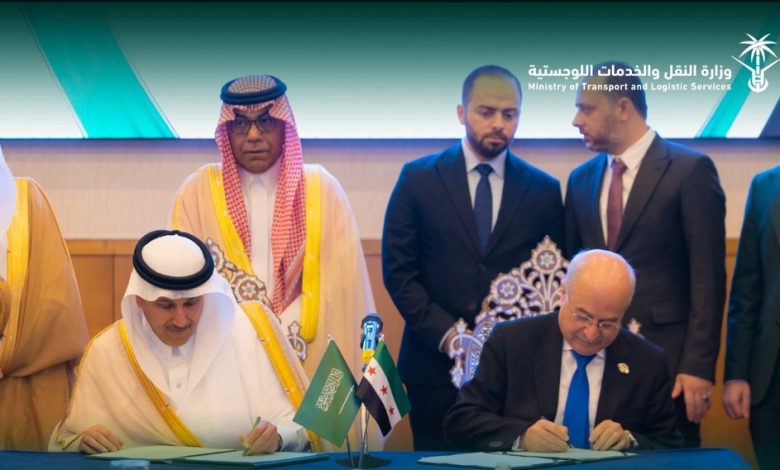
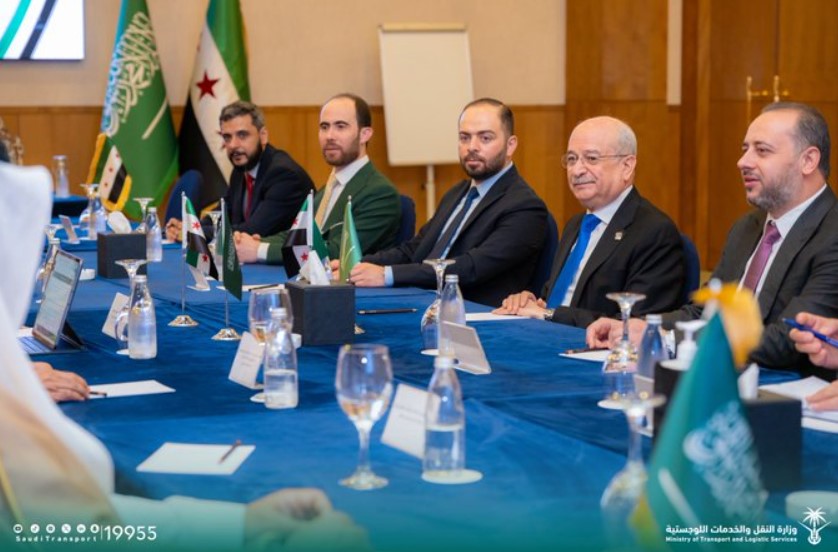
In line with its pivotal role as a regional stabilizer, Saudi Arabia‘s support for Syria has been evident across various sectors. On Thursday, August 27, 2026, two memorandums of understanding (MoUs) were signed to bolster railway and land connectivity between both countries.
These agreements not only advance Syria’s reconstruction and economic recovery, but also boost regional economic integration, restoring the Levantine trade route and connecting the Gulf to Europe through a land-bridge that bypasses maritime chokepoints.
Key Transport Accords
Driving the News: Saudi Minister of Transport and Logistics Services Saleh Al-Jasser and his Syrian counterpart Yarub Badr signed two MoUs in Damascus to enhance bilateral cooperation in land transport, railways and logistics, reported Syria’s state news agency SANA.
The Big Picture: The agreements focus on capacity building, expertise exchange, and research designed to rehabilitate Syria’s road and railway networks and promote transport and trade flows across Syria.
Between the Lines: Saudi Arabia has taken steps to streamline the issuance of visas for truck drivers and facilitate the movement of goods between the Kingdom and Syria in both directions. These efforts have been instituionalized through the recently inaugurated Tasheer Center, which the Saudi Embassy in Syria opened in Damascus to receive all visa applications, including those related to cargo and passenger transportation, according to the Saudi Press Agency (SPA).
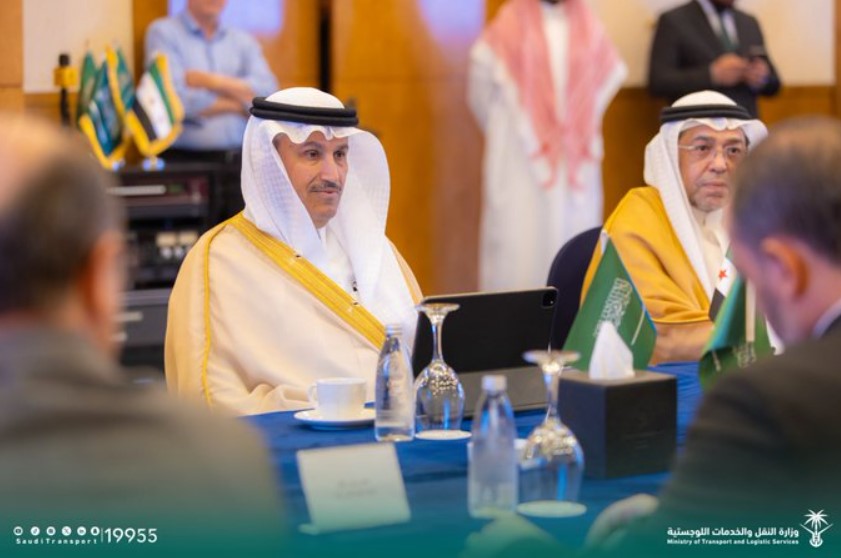
Flashback: These moves have followed months of coordination discussions between the Saudi and Syrian Transport Ministers to strengthen bilateral cooperation in land and rail transport to secure supply chains and boost economic integration among countries in the region.
Catch Up Quick: According to the Saudi Transport Ministry, Riyadh and Damascus also signed two MoUs in the postal and civil aviation sectors.
Bringing the Hejaz Railway to Life
The Context: As tensions escalated around the Strait of Hormuz, Saudi Arabia has led talks with Syria, Jordan, and Türkiye to revive the Hejaz Railway – an Ottoman-era line that extended from Damascus to Madinah, transporting pilgrims and troops, with subsidiary lines extending to Aleppo, Beirut and Türkiye. However, the railway was largely destroyed during World War I. Discussions are also under way to include more Gulf countries, such as Oman, in the line’s expansion.
Why It Matters: The Hejaz Railway project will provide a strategic alternative for the Strait of Hormuz and other maritime flashpoints, connecting the Gulf to the Mediterranean and Europe. It will also enhance supply chain resilience and boost economic integration among countries in the region.
What He Said: “The project will enhance regional integration, support trade, and develop a sustainable land transport system between the countries of the region.” – Saleh Al-Jasser, Saudi Arabia’s Minister of Transport and Logistics Services.
Land Transport Push
State of Play: The Saudi-Syrian MoUs align with Riyadh’s broader regional transport strategy. In early June 2026, Saudi Arabia and Türkiye signed two MoUs to strengthen railway and logistics cooperation. The agreements target technical cooperation, infrastructure development, safety standards, digitalization, and specialized workforce training, as well as building and managing shared logistics hubs.
Trilateral Framework: The agreements build on a trilateral framework signed in April 2026, involving Syria, Jordan, and Türkiye, to develop an integrated regional transport system aimed at streamlining passenger and goods movement, enhancing supply chain efficiency, and positioning the region as a key logistics hub.
Syria-Lebanon Rail Link: On August 25, 2026, Syria and Lebanon agreed on a unified plan to establish road and rail links connecting the two countries to Iraq, the Gulf States and Türkiye. Both Damascus and Beirut set up a technical committee to advance that plan, according to SANA.
The Impact: By standardizing transit procedures and ecosystems across Saudi Arabia, Syria, Lebanon, Jordan, and Türkiye, the region will have a unified multi-country transport zone acting as a key alternative to unstable maritime chokepoints and a strategic hedge against maritime transit risks and delays.
Leveraging Saudi Rail Infrastructure
The Catalyst: Under the objectives of Vision 2030 and the National Transport and Logistics Strategy (NTLS) to position the Kingdom as a global logistics hub, Saudi Arabia has developed a robust and rapidly evolving railway infrastructure.
SAR Network
The Saudi Arabia Railway (SAR) network already extends to Al-Haditha crossing near the Jordanian border through the North-South Line, effectively paving the way for immediate regional expansion.
Saudi Landbridge Project
The Saudi Landbridge project is a 1,500-kilometer railway network designed to connect the Jeddah Islamic Port on the Red Sea to the ports of Dammam and Jubail on the Arabian Gulf, passing through Riyadh.
The project centers on three key lines: a 900-kilometer line to King Abdullah Port, connecting Riyadh and Jeddah; an update for the Riyadh-Dammam corridor for faster trips; and a 172-kilometer line from King Abdullah Port to Yanbu Industrial City on the Red Sea.
By the Numbers:
- $7 billion:The project’s estimated cost.
- 5 days:Cargo transit time across the Arabian Peninsula by sea.
- 3 days:Cargo transit time across the Arabian Peninsula by rail.
Bilateral Benefits
The Takeaway: Railway and land connectivity between Saudi Arabia and Syria carries tangible dividends for both Riyadh and Damascus.
For Saudi Arabia: Syria provides Saudi exporters with direct land access to Mediterranean and European markets, with lower freight costs and expanded reach for logistics operators, enabling the Kingdom to bypass maritime flashpoints.
For Syria: Damascus’ participation in a global trade route provides it with sustainable transit revenue, infrastructure development, and a pathway to rebuild its economy. Moreover, Saudi Arabia’s extensive expertise will help Syria rehabilitate its railway network, which over 50% of it is currently out of service due to years of conflict.