Saudi Arabia and Oman have taken a bold step to bolster supply chains and fast-track trade across the Gulf region through the newly formalized Secure Green Land Corridor.
This new logistics corridor builds on the existing Saudi-Oman Highway, which serves as a vital economic lifeline, offering Oman direct land access to Saudi Red Sea ports and connecting Saudi Arabia directly to the Arabian Sea. It comes at a critical time as the region’s vital maritime chokepoints are facing increased threats against the backdrop of the escalating military tensions.
A Faster Trade Route
Driving the News: The Saudi Transport Ministry announced the signing of a strategic partnership agreement with Oman to launch an overland logistics corridor connecting the SOHAR Port in Oman with the SPARK Dry Port in Saudi Arabia.
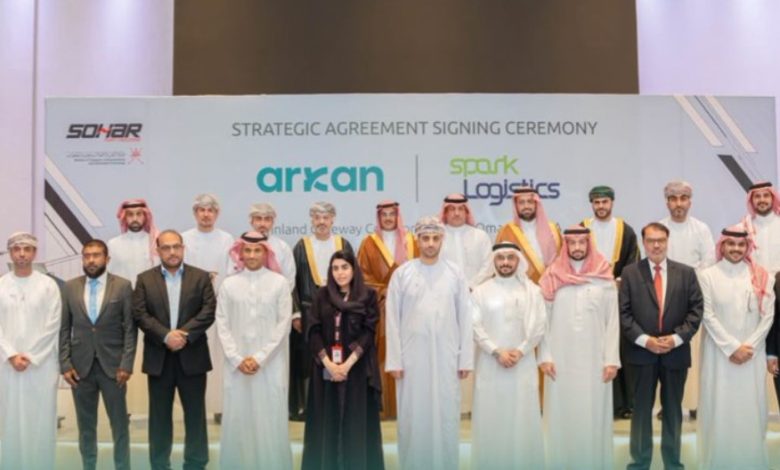
The Big Picture: Oman-based Arkan Logistics and Saudi Arabia’s SPARK Logistics signed the agreement on August 5, 2026, in the presence of the Saudi Deputy Minister for Logistics and Mobility, Mousa Albarqi.
Key Objectives:
- Enhance transit traffic
- Boost supply chain efficiency
- Facilitate the smooth flow of goods
Utilizing the Infrastructure
State of Play: The new logistics corridor will use the already existing Saudi-Oman Highway, which runs through Saudi Arabia’s Empty Quarter to Oman’s SOHAR Port.

Key Highlights:
- 740 km total length: Around 564 km on the Saudi side and nearly 161 km on the Omani side.
- Inauguration: Officially inaugurated in December 2021.
- Route: Runs from the Batha-Haradh intersection through the Shaybah Field and the Empty Quarter on the Saudi-Omani borders and then to the Ibri Governorate in Oman.
Operational Details
How It Works: Based on other GCC fast-track logistics frameworks, including the Green Corridor linking Dubai and Oman’s seaports, the Secure Green Land Corridor acts as an operational expressway connecting Omani ports (such as SOHAR, Salalah, and Duqm) on the Gulf of Oman and Arabian Sea directly to Saudi industrial and dry-port hubs in the Eastern Region, including SPARK.
Main Operational Features:
- Upgraded Border Infrastructure: Supported by improved facilities at the Empty Quarter border crossing, including dedicated freight lanes and synchronized customs coordination protocols between both nations.
- Direct Route & Fee Elimination: Utilizes the Saudi-Oman highway, completely bypassing third-country transit to eliminate 100% of intermediate border tariffs and handling delays.
-
تفعيل الممر البري الأخضر الآمن بين سلطنة عُمان والمملكة العربية السعودية
في الخامس من أغسطس ٢٠٢٦، وقّعت أركان اللوجستية (سلطنة عُمان) وشركة سبارك للخدمات اللوجستية (المملكة العربية السعودية) اتفاقية تعاون استراتيجية لتفعيل الممر البري الأخضر الآمن بين سلطنة عُمان والمملكة العربية… pic.twitter.com/qwGAHsQEVP— Arkan Logistics LLC (@Arkan_Logistics) August 6, 2026
Strategic Benefits:
- Time Reductions: By eliminating traditional border queues and paperwork bottlenecks, transit times are reduced by 14 to 18
- Distance & Fuel Savings: Driving through the Empty Quarter route slashes nearly 800 kilometers off the transit distance compared to older detours, drastically cutting operational fuel costs and carbon footprints.
- Enhanced Maritime Resilience: Gives Saudi importers and exporters a rapid land-based bypass option around sensitive maritime chokepoints, such as the Strait of Hormuz, by clearing goods at Omani ports facing the open ocean.
Supply Chain Resilience
The Backstory: Since the eruption of the US-Iran conflict in late February 2026, the Strait of Hormuz – through which around a fifth of daily global oil and LNG supplies pass – has become a key flashpoint. Iran has blocked the waterway, disrupting the flow of goods, essential commodities, energy exports, and aid supplies, while sending shockwaves across global markets.
Between the Lines: Saudi Arabia has actively mitigated shipping disruptions by enhancing maritime connectivity and supporting supply chain resilience through the Red Sea, providing a lifeline for global markets. This aligns with the National Transport and Logistics Strategy (NTLS) and the objectives of Saudi Vision 2030, which aims to position the Kingdom as a global logistics hub connecting three continents.
- Launching the “Logistics Corridors Initiative” to reroute shipping from ports in the Arabian Gulf to the Kingdom’s Red Sea ports.
- Introducing new shipping services to the Jeddah Islamic Port.
- Launching a new multimodal land bridge connecting Europe, Egypt, Saudi Arabia, Iraq and the Gulf Cooperation Council (GCC) countries through the Port of NEOM.
- Utilizing the East-West Pipeline with its full operational capacity of 7 millionbarrels per day in the first half of 2026, driving a $67.2 billion in net income for Aramco in H1 2026.
GCC Economic Integration
The Context: The Saudi-Omani Secure Green Land Corridor strengthens the bilateral economic partnership between Riyadh and Muscat, further boosting non-oil trade and regional manufacturing supply chains. Plans are also under discussion to extend a railway link connecting Saudi Arabia, Syria and Türkiye to Oman.
The Catalyst: The Saudi-Omani Coordination Council is the main driving force behind the two Gulf nations’ partnership. Established in 2021, it aims to leverage each country’s comparative advantages and align the shared goals of Saudi Vision 2030 and Oman Vision 2040.
The Bottom Line: The Saudi-Omani Secure Green Land Corridor goes beyond moving trucks, establishing a blueprint for seamless, tech-enabled trade across the Gulf region.