From Lab to Market: KAUST Backs New Faculty Track with Ma’aden AI Mining Deal
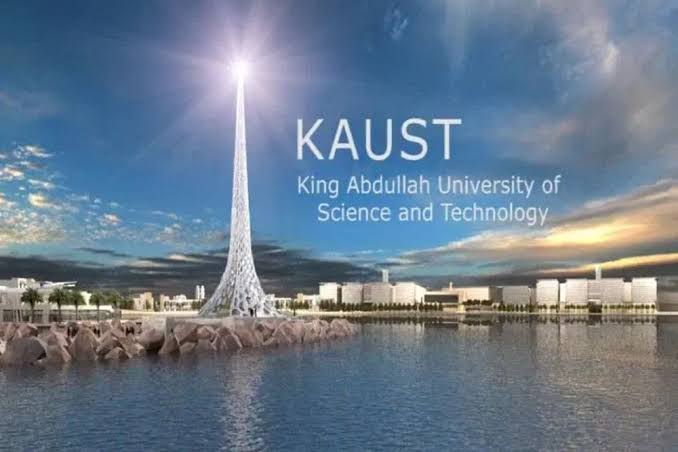
The big picture: King Abdullah University of Science and Technology (KAUST) is fundamentally transforming its academic framework. The graduate research university has established a specialized “Translational Faculty” track to bridge basic scientific discoveries and real-world industrial deployment.
Why it matters: Saudi Arabia seeks to diversify its economy under Vision 2030. Consequently, national academic institutions must convert theoretical research into viable commercial applications. KAUST’s new faculty model accelerates this transition. Specifically, it ensures that university research directly addresses critical national strategic priorities, including mining, artificial intelligence, biotechnology, and clean energy.
Bridging Scientific Research and Industrial Deployment
KAUST recently recruited four distinguished professors to launch this initiative: Pierre Braun, Mario Caccamo, Pascal Steiner, and Scott Franklin. Furthermore, the university plans to appoint additional translational professors in subsequent hiring phases.
Unlike traditional academic appointments that focus primarily on teaching and fundamental scientific inquiry, these professors possess extensive industry experience. Specifically, they specialize in technology development, commercial scaling, product engineering, and venture creation.
The new faculty members work under the Office of the Senior Vice President for Research (SVPR). Furthermore, they collaborate directly with the university’s Research Translation Office. Together, they identify promising scientific discoveries early, navigate technical obstacles, refine initial prototypes, and prepare emerging technologies for commercial adoption.
“The new faculty members strengthen an ecosystem designed to ensure KAUST’s research advances knowledge while reaching industrial sectors, policy makers, and communities that can benefit from it,” stated Dr. Hanan Al-Sharqi, General Director of Research Development at KAUST. “This supports the Kingdom’s ambition to make research and innovation drivers of economic diversification and long-term impact.”
Dr. Al-Sharqi emphasized that scientific output alone does not measure institutional success. “An innovation ecosystem demonstrates its maturity not only through the quality of science it produces, but through its ability to move that science toward real-world use,” she noted. “That is the capability we are continuing to build at KAUST.”
AI Mineral Exploration Serves as Strategic Proof Concept
A flagship initiative in geophysical exploration illustrates how KAUST’s translational framework functions in practice. Professors George Turkiyyah and David Keyes lead an innovative project that combines artificial intelligence with geophysics. They collaborate directly with imaging experts from the University of British Columbia in Canada.
The research team developed an advanced computational AI prototype to reduce geological uncertainty. Specifically, the AI model analyzes complex subterranean structures beneath Saudi Arabia’s mineral-rich Arabian Shield.
Historically, mineral exploration in hard-rock terrains presents severe technical uncertainties and substantial financial risks. However, the KAUST translational support system provided targeted internal funding and specialized engineering expertise to de-risk the initial proof-of-concept. Consequently, researchers transformed theoretical mathematical algorithms into a functional, market-ready computational prototype.
This milestone attracted immediate attention from the Saudi Arabian Mining Company (Ma’aden), the Kingdom’s national mining champion. Subsequently, Ma’aden signed a 30-month research and development contract with KAUST.
Under this contract, engineers and geologists test and deploy the AI computational solution using actual Saudi geological datasets. This partnership demonstrates how translational support converts complex laboratory research into immediate industrial utility for a critical national sector.
Unlocking Value Across Strategic National Priorities
The translational faculty cohort brings specialized expertise across several vital scientific domains. These include genetics, genomics, bioproduction technologies, computational biology, artificial intelligence, and applied engineering.
By the numbers:
- 30 months: The duration of the major R&D deployment contract secured between KAUST and national mining giant Ma’aden for AI-driven mineral exploration.
- 4 global experts: The initial cohort of translational professors appointed across key disciplines including genetics, AI, bioproduction, and engineering.
- SAR 9.375 trillion ($2.5 trillion): The estimated monetary value of untapped mineral potential within Saudi Arabia’s Arabian Shield that advanced technology aims to unlock.
- SAR 375 million ($100 million): Aramco’s 10-year research and development funding agreement with KAUST to advance scalable energy, carbon capture, and industrial solutions.
- 2 primary institutional pillars: The Office of the Senior Vice President for Research and the National Transformation Institute guiding technology translation from concept to market.
Institutional Synergy and Commercialization Pathways
KAUST manages technology commercialization through a structured, multi-tier innovation pathway. Initially, the Office of the Senior Vice President for Research leads early-stage translation. It allocates dedicated funding and technical guidance during proof-of-concept and validation stages.
In-house engineers refine early prototypes, evaluate competitive market viability, and test system performance under operational field conditions. In addition, early industry partnerships shape technology development so that solutions directly resolve commercial pain points.
Subsequently, as technologies mature toward market readiness, the National Transformation Institute (NTI) at KAUST assumes leadership. The NTI evaluates commercial pathways, engages potential corporate licensees, and structures industry partnerships. Furthermore, the institute actively facilitates venture creation, startup incubation, and technology spin-offs.
Dr. Al-Sharqi highlighted the pivotal role of translational professors within this ecosystem. “Translational faculty have the ability to operate at the interface of academia, industry, and government,” she explained. “They act as catalysts within KAUST, helping to unlock translational opportunities and shape new directions from existing research strengths.”
Driving Long-Term Economic Impact Across the Gulf
This institutional shift aligns directly with Saudi Arabia’s broader industrial ambitions. The Saudi government aims to transform mining into the third pillar of its national industry, alongside oil and petrochemicals.
By accelerating AI-powered mineral discovery, KAUST supports state efforts to map and extract high-value minerals, including copper, zinc, gold, and critical rare earth elements. Moreover, KAUST’s translational model establishes a benchmark for higher education institutions across the Gulf Cooperation Council (GCC) region.
Historically, regional universities struggled to move scientific discoveries beyond peer-reviewed academic journals. Today, KAUST demonstrates that targeted translational funding, specialized faculty appointments, and active corporate participation can convert academic breakthroughs into commercial enterprises.
Ultimately, the university continues to build an enduring bridge between laboratory discovery and industrial execution. Through structured commercial partnerships, intellectual property licensing, and venture creation, KAUST ensures that scientific innovation directly enriches the national economy and drives long-term regional prosperity.