Saudi Arabia Projects $371.2 Billion in 2027 Spending
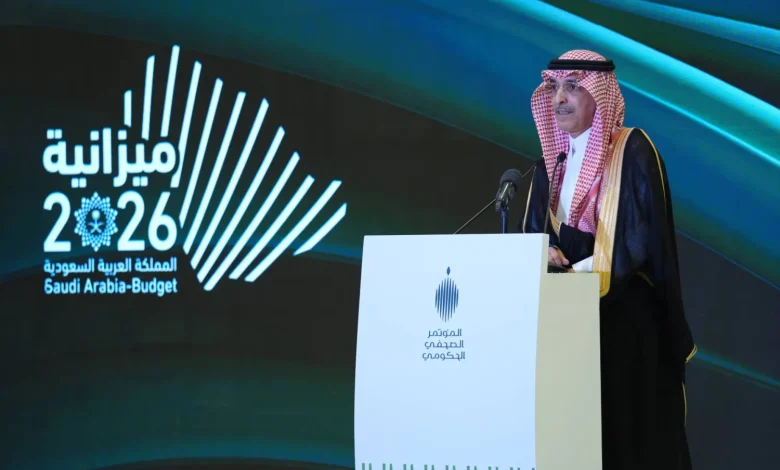
Saudi Arabia expects to spend approximately 1.392 trillion riyals ($371.2 billion) in 2027 as it advances economic growth and funds its development and strategic priorities. Revenues are projected at 1.202 trillion riyals ($320.5 billion), while the budget deficit is forecast at about 3.6% of gross domestic product.
The Ministry of Finance announced the preliminary budget statement for fiscal year 2027 on Wednesday as the Kingdom continues to implement its economic transformation programs and expand non-oil activities. The fiscal policy is intended to support growth while preserving the sustainability of public finances.
Revenue, Spending Outlook
According to Ministry of Finance estimates, total revenues are expected to rise from 1.202 trillion riyals ($320.5 billion) in 2027 to approximately 1.351 trillion riyals ($360.3 billion) in 2029. Expenditure is projected to increase from 1.392 trillion riyals ($371.2 billion) to around 1.544 trillion riyals ($411.7 billion) over the same period.
The projections reflect continued spending on development and strategic priorities, including projects with economic and social returns, within a long-term fiscal framework designed to preserve financial sustainability across economic cycles.
Economic reforms and diversification initiatives have also helped increase non-oil revenues from approximately 166 billion riyals ($44.3 billion) in 2015 to 505 billion riyals ($134.7 billion) in 2025, strengthening the stability and diversity of public income.
Non-Oil Economy Maintains Momentum
Initial estimates suggest that Saudi Arabia’s economy will be affected by economic and geopolitical developments in 2026, with real GDP expected to contract by 3.6% as oil-related activities decline by a projected 21.8%.
Non-oil activities, however, are expected to grow by 3.2% during the year, helping offset the impact of weaker oil-sector activity on the broader economy.
During the first half of 2026, non-oil activities grew by 1.8%, raising their contribution to real GDP to a record 57.3%. The growth was supported by strong domestic demand and inflows of private investment.
Unemployment, Inflation
The unemployment rate among Saudis fell to 6.5% in the second quarter of 2026.
Meanwhile, initial estimates indicate that inflation will reach approximately 2.1% for the full year, amid continued domestic demand and growth in non-oil economic activity.
Financing Development Priorities
The government plans to continue domestic and international financing operations in 2027 and over the medium term under its Medium-Term Debt Strategy. The strategy includes issuing bonds and sukuk, securing loans, and expanding alternative government-financing instruments.
These instruments will support projects, infrastructure, and export credit agencies, providing additional channels to finance development priorities.
Finance Minister Mohammed Al-Jadaan said the preliminary 2027 budget estimates were prepared amid continued global economic uncertainty and accelerating geopolitical developments.
He said the Kingdom was managing its public finances from a long-term perspective to strengthen its ability to respond to changing conditions, continue funding development and strategic priorities, and preserve fiscal sustainability and financial strength.
Al-Jadaan added that the government would continue monitoring economic and geopolitical developments and assessing their potential impact on the global economy, supply chains, and energy markets. It would address these challenges through flexible and proactive policies that support the economy and advance the objectives of Saudi Vision 2030.
He also reaffirmed the continuation of economic transformation plans aimed at supporting growth and broadening the economic base. These efforts are expected to increase non-oil revenues and contribute to more sustainable and stable income levels over the medium and long term.
Deficit Supports Long-Term Policy
The projected deficit of 3.6% of GDP is part of a fiscal policy aimed at preserving financial strength and enhancing sustainability while maintaining spending on priority projects.
According to the Ministry of Finance, this approach enables the government to adopt balanced fiscal policies across economic cycles, support growth, adapt to changing conditions, manage crises and emergencies, and maintain sustainable public-debt levels and substantial financial reserves.
The government also plans to continue domestic and international financing in 2027 and over the medium term through bonds, sukuk, and loans obtained at fair costs. At the same time, it will expand alternative government-financing tools, including project and infrastructure financing and export credit agencies.
Related Topics:
1st Egyptian-Saudi International Franchise Exhibition Opens in Cairo
How to Innovate Within a Franchise System While Preserving Brand Standards
Beyond Oil: How Saudi Arabia, Russia Are Redefining Trade in Landmark Year
Biban 2025 Forum to Offer 10,000 Investment Opportunities for Entrepreneurs