King Abdulaziz Al Saud: A Legacy of Statesmanship That Paved the Way for Arab Unity
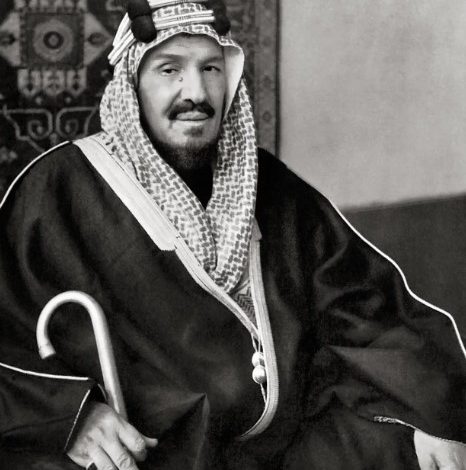
On September 23, 1932, the modern Kingdom of Saudi Arabia was born, marking the dawn of a new era for the Middle East and the wider region. Under the leadership of King Abdulaziz Al Saud (also known as Ibn Saud), Najd and Hejaz were unified as one nation, with Riyadh as its capital, Arabic as its official language, and the Quran as its constitution.
But King Abdulaziz’s ambitions did not stop there. He solidified the Kingdom’s position as a rising regional power with active participation on the global stage. Recognizing that broader Arab unity was essential for individual state sovereignty, King Abdulaziz leveraged diplomacy, treaties, and outspoken stances to build a unified regional front, laying the foundation for pan-Arab solidarity.
Good Neighbor Treaties
Shortly after the unification of the Kingdom, King Abdulaziz Al Saud advocated for regional stability by prioritizing the settlement of border disputes and territorial rivalries across the Arabian Peninsula and the Fertile Crescent through diplomatic means. To this end, King Abdulaziz signed treaties with Saudi Arabia’s neighbors.
The Treaty of Taif
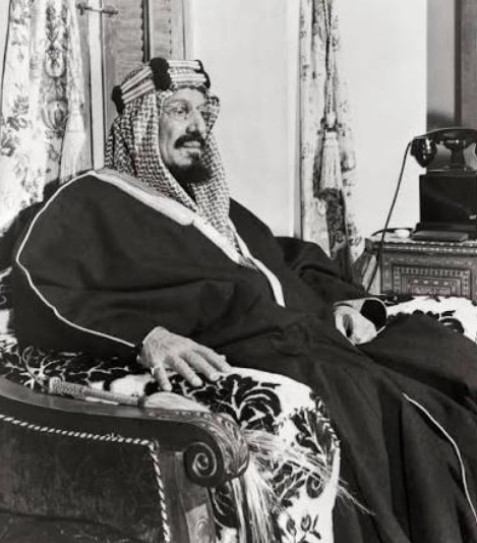
In May 1934, Saudi Arabia and Yemen signed the Treaty of Islamic Friendship and Arab Brotherhood (Treaty of Taif) to end their border war. The agreement called for the withdrawal of troops from both countries, provided mechanisms for resolving border disputes, and established the principles of respect for sovereignty, territorial integrity and non-interference to normalize relations between the parties.
The Treaty of Arab Brotherhood and Alliance
Two years later, in April 1936, Saudi Arabia signed a similar treaty with Iraq, known as the Treaty of Islamic Friendship and Arab Brotherhood, setting the stage for stronger diplomatic and military ties between the two countries. The treaty aimed to bolster cooperation, and ensure stability and good neighborliness between both nations.
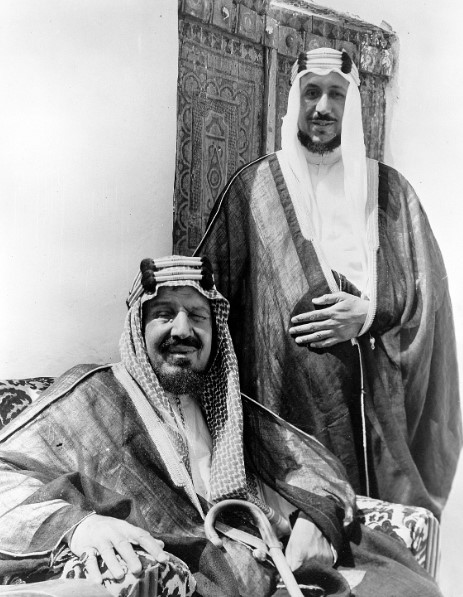
Shortly after, Yemen joined the treaty, marking the early groundwork for a unified Arab and Islamic diplomatic framework. Furthermore, the agreement encouraged Egypt to follow suit, by signing another treaty that officially recognizes Saudi Arabia.
The Radwa Summit: The Launchpad for Arab Unity
In a watershed moment in January 1945, King Abdulaziz and Egypt‘s King Farouk held a historic meeting at Mount Radwa (Jabal Al Radwa), near Yanbu. As World War II was drawing to an end, this meeting was crucial for charting the roadmap for pan-Arab unity, sovereign decision-making as well as collective action.
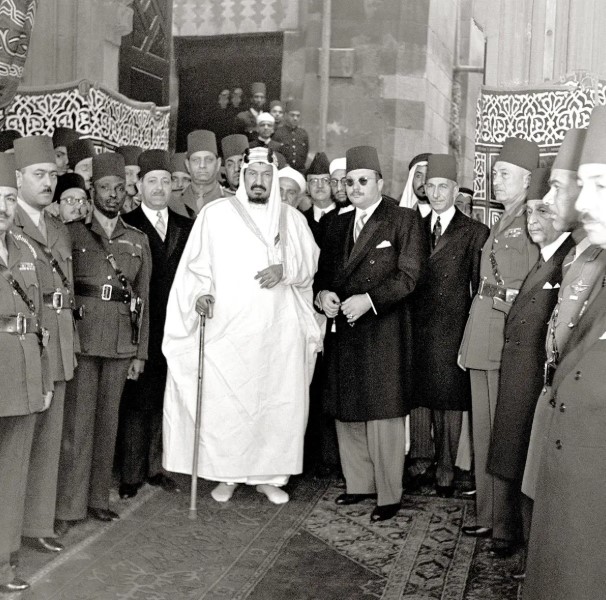
The Kings of the region’s two most prominent states agreed on defending Palestine and creating a unified Arab front to fend off European influence in the Arab World. During this landmark meeting, King Abdulaziz approved the Alexandria Protocol, reiterating support for the establishment of the Arab League.
The Arab League: The First Unified Front
Building on the historic meeting between King Abdulaziz and King Farouk, Saudi Arabia took practical steps to support the Arab League, moving from bilateral agreements to a broader, institutionalized, and internationally recognized body that solidified Arab solidarity in the face of shared challenges and threats.
In March 1945, the Kingdom, alongside six other nations, signed the Arab League Charter as a founding member. The League held its first summit (Inshas Summit) in May 1946 in Egypt.

Saudi Arabia’s commitment to Arab unity grounded in the shared ambitions of the entire nation was the key driving force behind King Abdulaziz’s endorsement of the Arab League. He also stressed that Arab states should prioritize the collective good over individual interests and avoid any actions that could jeopardize shared Arab interests.
A Firm Stand on Palestine
King Abdulaziz was one of the most vocal advocates for Palestinian rights, firmly rejecting foreign schemes aimed at seizing Arab land. This position was made clear during a historic meeting between the Saudi King and US President Franklin D. Roosevelt in February 1945.
Aboard the USS Quincy in Egypt’s Great Bitter Lake, near the Suez Canal, King Abdulaziz elaborated on Saudi Arabia’s stance on the rights of the Palestinian people to their land, firmly opposing European Jewish displacement to Palestine or any Arab country.
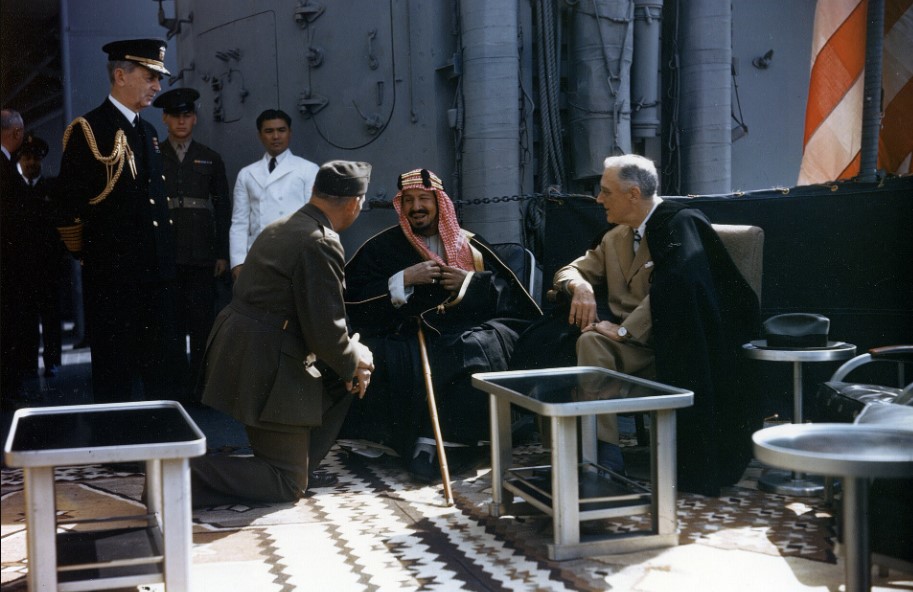
As a result, King Abdulaziz secured a pledge from Roosevelt that the US would take no action hostile to the Arab people and would not make any decision on the situation in Palestine without full consultation with Arab leaders.
This pledge was made in writing two months later – just two weeks before Roosevelt’s death. “It gives me pleasure to renew to Your Majesty the assurances which you have previously received…with regard to the question of Palestine and to inform you that the policy of this government in this respect is unchanged,” Roosevelt wrote to King Abdulaziz.
A Lasting Blueprint
King Abdulaziz laid the early foundations of Saudi Arabia’s foreign policy, anchoring it in boosting strength at home, fostering peaceful relations with neighbors, and championing key Arab causes.
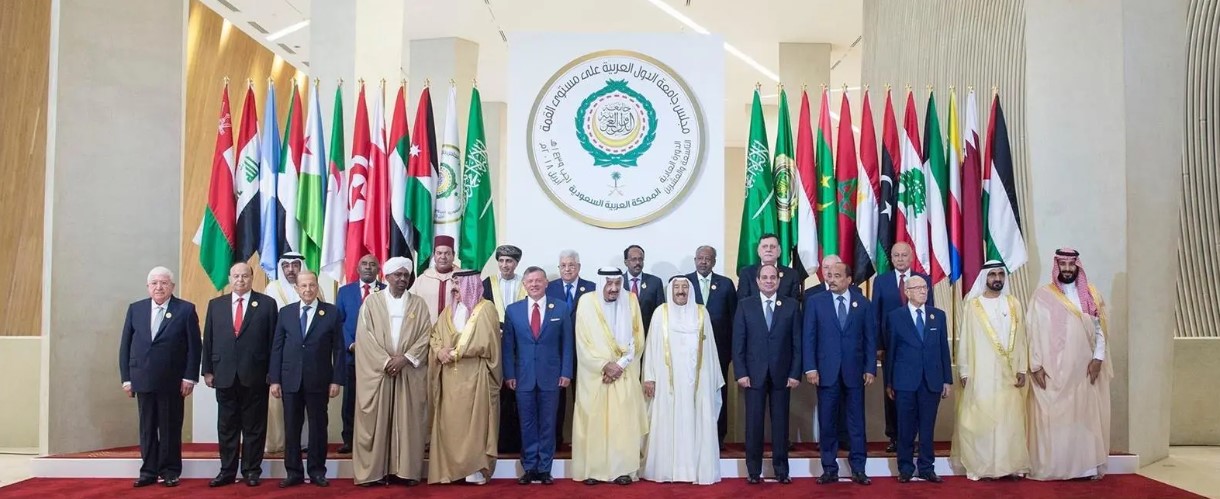
This approach has been carried forward by successive monarchs. Today, King Salman bin Abdulaziz and Crown Prince Mohammed bin Salman are sustaining King Abdulaziz’s legacy, cementing Saudi Arabia’s status as a pillar of regional stability and Arab unity.