Makkah Accord Alliance Mobilizes Urgent Military Summit to Fortify Saudi Defense
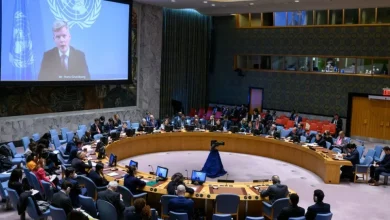
The big picture: Saudi Arabia hosted a crucial diplomatic summit at the United Nations headquarters in New York as regional security threats intensify. Top foreign ministers prepared for an urgent Chiefs of Staff meeting to activate operational joint defense protocols.
Consequently, this high-level military summit will establish immediate operational mechanisms to support Saudi national security against external threats. The alliance demonstrates a decisive shift toward collective regional deterrence.
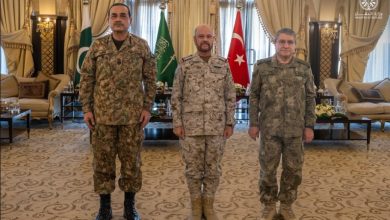
Driving the news: Saudi Foreign Minister Prince Faisal bin Farhan Al Saud led high-level talks at the Saudi Permanent Mission in New York. He met with Pakistani Deputy Prime Minister and Foreign Minister Mohammad Ishaq Dar alongside Turkish Foreign Minister Hakan Fidan. The ministers finalized arrangements for the upcoming Chiefs of Staff meeting under the Makkah Joint Defense Agreement framework. This diplomatic milestone transitions mutual defense commitments into active military readiness.
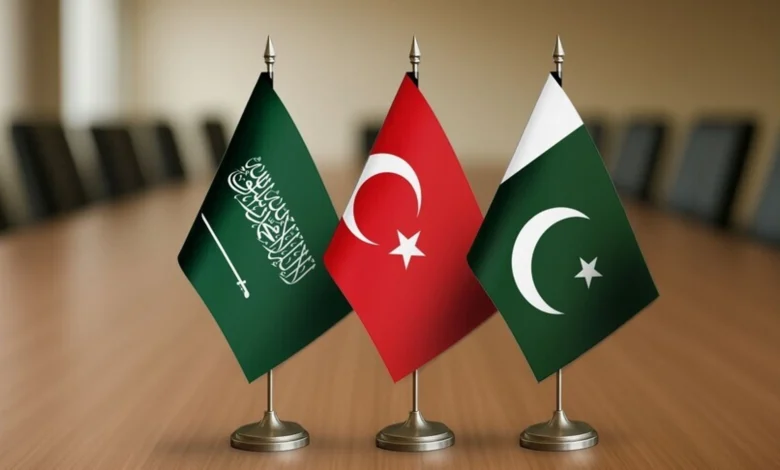
Between the lines: The Makkah Accord establishes a binding collective security umbrella across the region. The mutual defense treaty unites Riyadh, Islamabad, and Ankara into a comprehensive alliance. Crucially, the agreement explicitly stipulates that an attack against any member state constitutes an attack against all member states. During the meeting, the ministers evaluated concrete steps to establish the permanent Secretariat General. Furthermore, they reviewed technical preparations for specialized committees and expert task forces.
What they’re saying: The foreign ministers reaffirmed their unwavering commitment to foundational international principles. Specifically, they stressed respect for state sovereignty, good-neighborly relations, and non-interference in internal affairs.
“The ministers reaffirmed their determination to pursue sustainable peace and regional stability,” stated the Saudi Foreign Ministry. Additionally, the diplomats pledged continuous support for de-escalation initiatives and peaceful diplomatic solutions. They also emphasized the urgent necessity of guaranteeing absolute freedom for maritime navigation across regional waterways.

Countering Persistent Houthi Aggression
The New York summit responds directly to years of hostile cross-border attacks by Houthi militias against Saudi Arabia. Operating with external backing, Houthi forces have launched hundreds of ballistic missiles and explosive drones targeting Saudi territory. The ministers issued a resolute joint statement condemning these unlawful attacks in the strongest terms. Specifically, they condemned the “sinful attacks that targeted holy Makkah, and civilian and economic facilities in Saudi Arabia.” Most egregiously, Houthi militias fired ballistic missiles toward Makkah, Islam’s holiest city. Saudi Air Defense forces successfully intercepted those incoming missiles and protected millions of Muslim pilgrims.
Direct impacts: Houthi strikes have continually targeted civilian communities across southern Saudi Arabia. Armed drones and missiles have hit residential neighborhoods in Abha, Jizan, Najran, Khamis Mushait, and Taif. These indiscriminate attacks have caused civilian casualties and damaged private property. Consequently, these violent acts violate international humanitarian law and threaten innocent lives. In response, the ministers praised the vigilance and high readiness of the Saudi Armed Forces. Furthermore, they affirmed Saudi Arabia’s legal right to defend its security under Article 51 of the UN Charter.
Twice in recent weeks, Saudi forces intercepted a Houthi drone and missiles aimed toward Makkah. Officials say these were the first such alerts near Islam’s holiest site in nearly a decade. On 19 September, Saudi Arabia also confirmed the Houthis tried to strike Riyadh with a ballistic missile. That marked the first attempt on the capital since the fighting intensified. The Houthis, for their part, deny targeting Makkah. They insist their real targets are oil facilities and military bases.
Strategic Realignment and Economic Impacts
Why it matters: The Makkah Accord creates a powerful strategic triad in the Middle East and South Asia. The agreement combines Saudi financial resources, Turkish advanced defense technology, and Pakistani military capacity. This historic partnership strengthens deterrence against non-state armed groups and hostile foreign actors. Moreover, the pact fosters deep defense-industrial cooperation, joint military exercises, and shared intelligence capabilities. The alliance actively accelerates joint manufacturing projects for advanced unmanned aerial vehicles and naval defense systems.
By the numbers:
- 7 million barrels per day: The volume of crude oil output that Houthi strikes halted at Abqaiq and Khurais, cutting half the Kingdom’s production.
- 7 million barrels per day: Maximum capacity of Saudi Arabia’s East-West Petroline. Aramco shut the pipeline on September 10-11 after drone strikes and has since restarted it, aiming for roughly 4 million barrels per day.
- SAR 750 million ($200 million): The estimated daily revenue loss that Saudi Aramco experienced during forced production halts following energy facility attacks.
- SAR 1.875 billion ($500 million) to SAR 3.75 billion ($1 billion): The direct financial capital that Saudi Aramco invested to repair damaged oil infrastructure.
- SAR 11.25 billion ($3 billion): The strategic financial package that Saudi Arabia provided to bolster Pakistani foreign exchange reserves under mutual economic cooperation.
- Hundreds of ballistic missiles: The number of aerial projectiles that Houthi forces launched toward Saudi Arabian cities, including Makkah, Abha, and Jizan.
- 73 civilians: Wounded in earlier Houthi strikes on Abha, Khamis Mushait, Jazan and Najran, according to Saudi Arabia’s UN envoy.
- Nearly 10 years: Time since Saudi Arabia last activated a security alert over Makkah, before this month’s Houthi drone interception.
Diplomacy and Deterrence Move Together
What’s next: Saudi Arabia is pairing battlefield resilience with diplomatic pressure. Beyond the trilateral pact, Riyadh has pushed the UN Security Council to enforce Resolutions 2216 and 2722. Both call for an end to Houthi attacks and protection of Red Sea shipping. The kingdom’s UN envoy consistently frames the Houthi campaign as a violation of international law. He also calls it a direct threat to freedom of navigation — a message the Makkah Agreement partners echoed again this week.
The bottom line: For now, the trilateral pact functions mainly as a diplomatic shield. It signals unified political backing for Saudi Arabia. It also keeps the door open for deeper military coordination if the Houthi campaign escalates further. The coming chiefs-of-staff meeting will offer the real test. It should show whether Ankara and Islamabad move from statements of solidarity toward tangible battlefield support. Or, Saudi Arabia may continue to rely mainly on its own air defenses and coalition partners to protect its cities, its oil infrastructure and its holiest site.