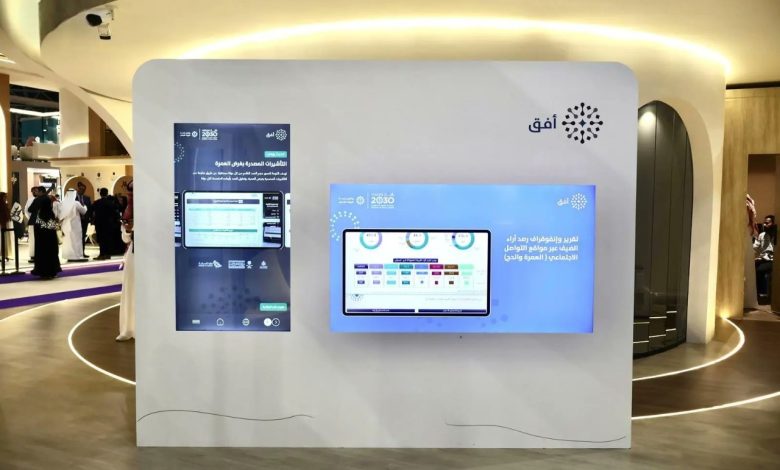
Driving the news: Saudi Arabia launched on Wednesday “Ufuq”, a national system that turns Hajj and Umrah data into tools for better decisions. Minister of Hajj and Umrah Dr. Tawfiq Al-Rabiah unveiled it at the Pilgrim Experience Program (PEP) pavilion. The launch took place during the sixth Hajj Conference and Exhibition in Jeddah, which ran from 8 to 11 November.
Why it matters: Reliable data helps planners serve millions of guests of the Two Holy Mosques. Moreover, Ufuq shows how the Kingdom backs its long-standing care for pilgrims with modern tools.
What Ufuq Delivers
Ufuq gathers the Hajj and Umrah sector’s knowledge in one trusted place. The system includes more than 100 annual reports and over 15 dashboards. As a result, more than 55 government entities now track indicators and share knowledge through the same source.
The platform also reaches beyond government. It provides more than 15 high-value open datasets through the National Open Data Platform. Therefore, researchers, planners, and other interested parties can use the information too.
Ufuq’s products fall into four groups: reports, dashboards, open data, and foresight tools. All of them follow the slogan “Data Beyond Numbers.” In short, the goal is to support planning and decisions that rest on evidence.
The big picture: Ufuq forms part of the PEP, one of the Kingdom’s Vision 2030 programs. King Salman launched the program in 2019. Since then, it has aimed to ease pilgrims’ arrival and raise service quality from trip planning to the return home. Al-Rabiah chairs the PEP committee.
By the numbers:
- 100+: annual Hajj and Umrah reports in Ufuq.
- 15+: dashboards that track sector indicators.
- 55+: government entities that use Ufuq’s products.
- 15+: high-value open datasets on the National Open Data Platform.
- 60+: government entities in the Hajj Projects Office, which oversaw about 600 action plans.
- 93%: Hajj satisfaction in 1447 AH, up from 74% in 1443 AH.
- 18 million+: Umrah performers who arrived from abroad, up more than 214% from 2022, according to Al-Rabiah in March 2026.
- 1 million+: pilgrims contracted for Hajj 2026 six months before the season, across 77 countries.
- SAR 88 (about $23.47): Umrah insurance cost, down from SAR 235 (about $62.67), a cut of 63%..
- SAR 29 (about $7.73): Hajj insurance cost, down from SAR 109 (about $29.07), a cut of 73%.
A Record of Care for the Guests of Rahman
Ufuq arrives as the Kingdom’s results already show. Al-Rabiah said Saudi Arabia beat the 90% satisfaction target in the Pilgrim Experience Program. Pilgrim satisfaction reached 93% in 1447 AH. Meanwhile, Umrah satisfaction rose to 94% by 2025.
Teamwork drives those results. More than 60 government entities work together under the Hajj Projects Office. They study roughly 600 action plans before each Hajj season. Consequently, services at the holy sites reach pilgrims in a coordinated way.
The Kingdom has also cut costs and red tape. For example, the Umrah visa now lasts 90 days instead of 30. Authorities issue it in under 24 hours. Visitors on any type of visa can perform Umrah and visit Madinah. In addition, officials lowered insurance costs for both Umrah and Hajj pilgrims.
Digital services carry much of the load. The Nusuk app now offers more than 130 digital services. Pilgrims use it to book Umrah permits, plan visits to Al-Rawdah Al-Sharifah, and check crowd density. Furthermore, the ministry’s Hajj and Umrah Data Center completed its 100% move to cloud computing in June 2026. The centre serves more than 20 million pilgrims a year and supports more than 51 million Nusuk users with over 500 digital services.
Moreover, the system proved its readiness during regional disruptions. The ministry set up a special operations room with the General Authority of Civil Aviation. Al-Rabiah said the team solved every challenge and delivered all services to Umrah performers. Likewise, the Hajj system has simplified contracts. In September, the ministry bundled holy site arrangements, lodging, transport, and catering into a single electronic agreement.
What’s next: The sixth Hajj Conference marks the start of early preparations for the 2027 Hajj. Therefore, Ufuq arrives at a useful moment. Planners can now draw on the same data as they finalize contracts and operational plans. Likewise, open datasets give outside experts a chance to test ideas and suggest improvements.
For pilgrims, the benefit is simple. Better data leads to better crowd planning, faster services, and a calmer journey. Ultimately, Ufuq shows that the Kingdom treats serving pilgrims as both a sacred duty and a measurable commitment.