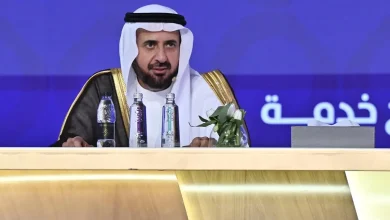
Driving the news: The Royal Commission for Makkah City and Holy Sites will launch the first phase of Wasel Al-Haram during the coming Ramadan. Chief Executive Eng. Saleh Al-Rasheed shared exclusive details of the project with Al Arabiya. He said it rests on seven core corridors and aims to serve more than 200 million journeys every year.
Why it matters: Makkah welcomes millions of pilgrims, Umrah performers and visitors each year. Therefore, smooth access to the Grand Mosque sits at the heart of the Kingdom’s service to the Guests of God. Wasel Al-Haram turns that priority into a modern transport network. It places safety and comfort first.
A Seven-Corridor Network Built Around Pilgrims
Al-Rasheed spoke on Al Arabiya’s Fourth Bulletin. He explained that the project aims to ease the arrival of pilgrims, Umrah performers and visitors at the Grand Mosque. Moreover, he said it will deliver a travel experience marked by ease and simplicity.
He stressed that the core goal is a distinctive mobility experience. In his words, the safety and comfort of pilgrims and Umrah performers come first. He added that the first phase will improve access to the Grand Mosque, strengthen the safety of the Guests of God and raise the quality of services for them.
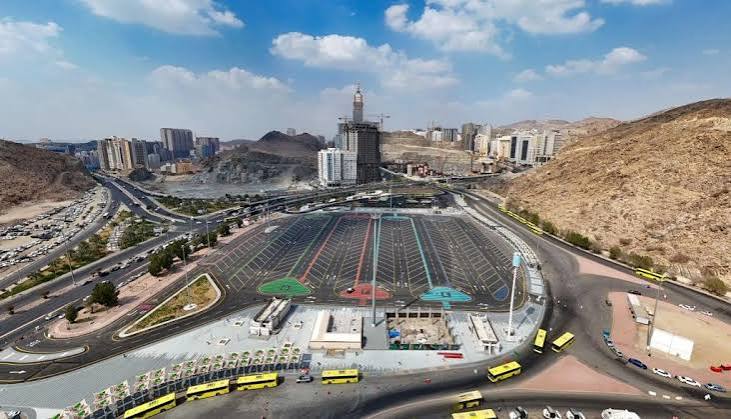
According to the Saudi Press Agency (SPA), the project includes 19 stations and parking facilities. They span seven corridors and cover 3.1 million square meters. The operating system includes 3,200 buses. Furthermore, the network will carry 205 million passengers a year across its three packages. As a result, movement to and from the central area should become more organised.
Private Capital Drives Delivery
Zoom in: The General Transport Center, the executive arm of the Royal Commission, signed the Wasel Al-Haram agreements. They cover parking, stations and corridors in the central area and across Makkah. The deals total SAR 5.664 billion ($1.51 billion). Private-sector partners fully finance all three packages.
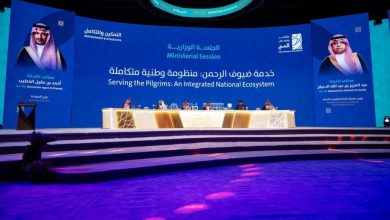
Industry reports say the signing took place at the opening ceremony of the sixth Hajj Conference and Exhibition in Jeddah. A consortium of Saudi Alqaid Co., Moventis and Waskita won the first package. Meanwhile, the Mawgif consortium leads the second.
Al-Rasheed described the signing as the start of an important stage in Makkah’s transport development. He said the model combines infrastructure, operating services and long-term investment. In addition, he said it draws on private-sector capabilities to raise the efficiency of assets and the quality and sustainability of services.
By the numbers:
- SAR 5.664 billion ($1.51 billion): total value of the agreements.
- 7: transport corridors.
- 19: stations and parking facilities.
- 1 million square meters: combined project area.
- 3,200: buses in the operating system.
- 205 million: passengers a year across the three packages.
- 200 million+: annual journeys the project targets, per Al-Rasheed.
- SAR 11–12 billion ($2.93–$3.2 billion): projected contribution to Saudi Arabia’s GDP.
- 2,800–3,000: local jobs over an investment period of seven to 10 years.
Building on Makkah’s Transport Record
The big picture: Wasel Al-Haram builds on proven large-scale operations. During Hajj 2025, the Royal Commission ran an integrated system of more than 23,000 buses. It also launched the General Center for Transport to coordinate the public transport plan for every stage of the pilgrimage. Dedicated bus lanes cut journey times to about 20 minutes.
Earlier, the Makkah Buses initiative began trial operations on the route linking the Haramain high-speed rail station to the Grand Mosque. The initiative falls under the Guests of God Service Program, one of the Vision 2030 programs.
Meanwhile, the Royal Commission keeps widening its pipeline. In May 2026, it tendered initial design studies for a long-planned Makkah metro. In June, it awarded SAR 13.3 billion ($3.55 billion) of projects under its Developed Neighborhoods Program. Consequently, Makkah now pairs private capital with public planning to modernise the holy city.
What’s next: The first phase opens in Ramadan, due in early 2027. The three packages will then unfold over seven to 10 years. During that period, the corridors, stations and bus fleet will come online step by step.
For pilgrims, the payoff is simple. Shorter waits, clearer routes and safer movement around the Grand Mosque sit at the center of the plan. In short, Wasel Al-Haram aims to make the final mile to the Haram as dignified as the journey itself.