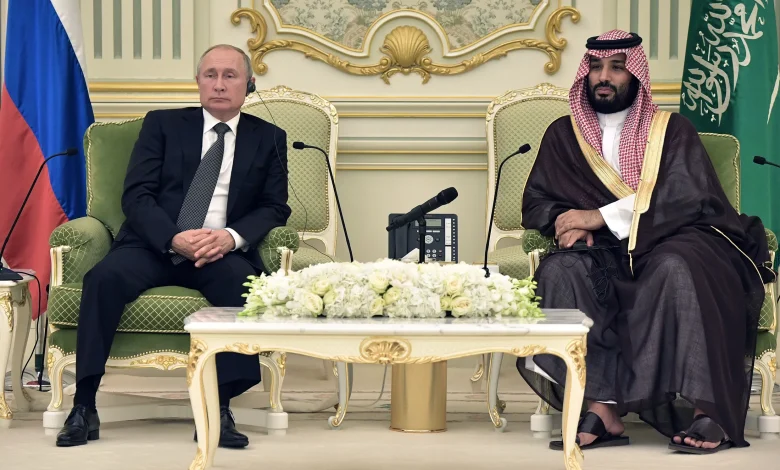
The big picture: Saudi Arabia and Russia are rapidly strengthening economic cooperation across energy, agriculture, technology and tourism, and this expansion coincides with a milestone year for the two nations. Russia and Saudi Arabia mark one hundred years since the establishment of diplomatic relations in 2026, a relationship that traces back to 1926, when the Soviet Union became the first non-Arab state to recognize the newly established Saudi Kingdom under King Abdulaziz Al Saud.
Why it matters: The Kingdom continues to diversify its global partnerships under Vision 2030, and this deepening relationship with Russia gives Saudi Arabia additional channels for trade, investment and technology transfer while it maintains strong ties with Western partners.
Landmark Agreements and Strategic Investments
Saudi Arabia served as the guest of honor at the St. Petersburg International Economic Forum (SPIEF) in June 2026, a designation tied directly to the centenary of bilateral relations. The Kingdom dispatched more than 180 officials, investors, bankers and corporate executives to the forum, and delegates concluded approximately 30 agreements and memoranda of understanding during the event. This followed an earlier round of talks in Riyadh, where Russian and Saudi representatives reached nearly ninety separate agreements involving government agencies, corporations and business associations.
Energy Minister Prince Abdulaziz bin Salman led the Saudi delegation to SPIEF, and he confirmed that the Kingdom and Russia would sign thirty cooperation agreements spanning energy, education, industry, technology and renewables. Saudi Aramco also played a central role at the forum, occupying a dedicated national pavilion and holding discussions on petrochemicals and downstream industries.
By the numbers:
- Bilateral trade between the two countries has approached the $4 billion mark, and Russian exports to the Kingdom continue to grow steadily.
- Russia and Saudi Arabia produced 9.129 million and 9.472 million barrels of oil per day, respectively, in 2025, and both countries continue to stabilize global oil markets through the OPEC+ framework.
- The Public Investment Fund (PIF) now manages assets worth more than $900 billion and aims to surpass $2 trillion in the coming years.
- Business leaders set a target to triple bilateral trade to $10 billion, though officials acknowledge that payment and money-transfer restrictions remain a key obstacle to reaching that goal.
Food Security Takes Center Stage
Agriculture and food security emerged as a major pillar of the partnership at SPIEF 2026. Saudi Vice Minister of Environment, Water and Agriculture Mansour Al-Mushaiti witnessed the signing of 13 agreements and memoranda of understanding worth SAR4.8 billion ($1.28 billion) between Saudi and Russian entities, with a focus on food security, biotechnology, livestock production and supply-chain resilience. The deals also covered the marketing and export of Saudi camel milk products, coffee and soft drinks to Russian and international markets, and they established cooperation with Russian firms to distribute Saudi fish and shrimp products worldwide.
“The Kingdom’s participation in SPIEF reflects the importance of the strategic partnership between Saudi Arabia and Russia and provides opportunities to exchange expertise and explore investment opportunities in the environment, water, and agriculture sectors,” Al-Mushaiti said.
A New Mediterranean Gateway for Russian Goods
Russia is also moving to open a new commercial channel into Gulf markets through Syria, and this development will boost Saudi trade flows. Russia hopes by mid-July to have a commercial logistics hub running in one of two berths at the naval base it leases in the Syrian port of Tartous, while keeping a military presence at the other, according to Syrian officials cited by Reuters.
The hub will handle a wide range of Russian goods, and cargo volumes of around 250,000 tons per month are being targeted initially, with operations expected to begin with a 30,000-ton grain shipment.
The project aims to establish a regular maritime route between Russia’s Black Sea port of Novorossiysk and Tartous, from where goods will be distributed across Syria and neighbouring countries.
Ossama Ajaj, general manager of Syrian logistics firm Rus Line and adviser to the Russian-Syrian Business Council, detailed the target markets to Reuters. Ajaj identified Saudi Arabia as the primary target market, followed by Iraq, Jordan, Kuwait, Qatar, and Bahrain.
He added that the hub will initially handle Russian wheat, animal feed, vegetable oils, timber, and steel. Therefore, the Tartous development serves as a critical logistical link that connects Russian trade flows directly to the Saudi market. This development supports the broader Gulf initiative to diversify import streams and secure regional supply lines.
Officials said the project was outlined at a meeting in Moscow between Syrian President Ahmed Al-Sharaa and his Russian counterpart Vladimir Putin, and they called the meeting a turning point in efforts to revive economic cooperation.
Visa-free Travel Opens New Doors
Beyond trade, the two countries have also made travel between them significantly easier after an agreement on mutual visa-free travel between Russia and Saudi Arabia entered into force, and citizens of both countries can now visit each other without obtaining visas and remain in the host country for up to ninety days per year. This step supports growing tourism flows in both directions and creates new openings for business travel, academic exchange and cultural cooperation.
Saudi Arabia continues to position itself as a global economic hub with strong ties across multiple blocs, and this approach aligns closely with Vision 2030’s goal of building a diversified, resilient economy. As energy cooperation through OPEC+ remains a steady foundation, the Kingdom and Russia are now building additional bridges through agriculture, industry, logistics and tourism, and these efforts point toward a broader and more balanced partnership in the years ahead.
Bottom line: A century after establishing diplomatic ties, Saudi Arabia and Russia are translating a long-standing relationship into concrete economic outcomes, and the Kingdom’s expanding global partnerships reinforce its role as a stable, diversified economic power in a changing world.