The big picture: Saudi Arabia’s Aramco achieved an impressive 33% surge in its second-quarter adjusted net income, reaching $33.4 billion on Tuesday. Consequently, the Kingdom’s energy giant comfortably outperformed consensus market estimates of $31.1 billion compiled by Bloomberg analysts. A dramatic rise in global crude prices drove this strong quarterly earnings growth, even as total production volumes experienced a notable decline.
Why it matters: The financial surge underscores Saudi Aramco’s pivotal role in stabilizing global markets during severe geopolitical turbulence. Furthermore, the company demonstrated exceptional operational agility by maintaining unhindered export flows despite severe maritime disruptions in regional waterways.
Strategic Pipeline Bypass Protects Global Supply
Escalating regional conflict severely disrupted international maritime shipping across primary global transit routes. Nevertheless, Aramco preserved stable crude supply lines through strategic domestic infrastructure assets.
- Market dynamics: Crude oil fetched an average of roughly $108 per barrel between April and June. Consequently, prices surged over 60% compared to the $67 per barrel average during the prior-year period.
- Production adjustments: Total hydrocarbon production declined by approximately 25% over the same timeframe. However, sharply elevated crude prices fully compensated for lower output levels.
- Infrastructure triumph: Aramco successfully deployed its 1,200-kilometer East-West pipeline to transport crude oil across Saudi Arabia directly to the Red Sea port of Yanbu.
- Sustained throughput: This critical land pipeline allowed the energy firm to maintain exports near its 7 million barrels per day ceiling while the Strait of Hormuz remained effectively blocked.
Record Financial Resilience and Capital Allocations
By the numbers:
- $33.4 billion: Aramco achieved this adjusted net income. This figure beat Bloomberg analyst estimates of $31.1 billion.
- $108 per barrel: Crude oil fetched this average price between April and June. Consequently, prices jumped 60% compared to the previous year.
- 7 million barrels: The company maintained this daily export ceiling despite severe regional instability.
- $21.9 billion: The board declared this massive base dividend for the third quarter.
Operational activities generated $25.4 billion in cash flow during the second quarter. Furthermore, free cash flow reached $12.3 billion, reflecting a $13.6 billion working capital build across corporate assets.
Meanwhile, Aramco’s gearing ratio climbed to 6.2% by late June, rising from 4.8% recorded three months earlier.
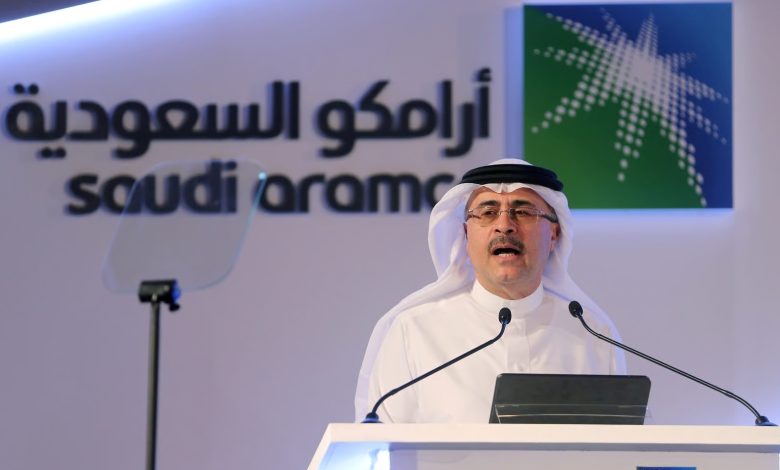
What they’re saying: Saudi Aramco President and Chief Executive Officer Amin H. Nasser highlighted severe market pressures resulting from prolonged conflict.
“The conflict continues to aggravate the biggest supply shock in history,” Nasser stated. He estimated that global industries lost more than 2.6 billion barrels of crude supply. Emergency inventory releases and alternative routes mitigated total net losses to approximately 1.8 billion barrels.
Moreover, Nasser issued a clear warning regarding global market recovery timelines. Rebuilding depleted worldwide inventories will require up to 18 full months at an average rate of 2.1 million barrels per day, even if the Strait of Hormuz reopens immediately. Previously, Nasser noted that market normalization could extend into 2027 if transit disruptions persist.
Security Operations Remain Unshaken
Security challenges intensified as hostilities widened to involve neighboring countries. Iran-backed Houthi militants launched attacks targeting Aramco installations in Yanbu and Jizan in late July.
However, Aramco confirmed that these aggressive regional strikes caused no material impact on its financial position, core operations, or cash flows. Consequently, the company continues operating its network safely to reinforce international energy security.
The bottom line: Saudi Aramco’s strong performance underscores the Kingdom’s critical role in stabilizing energy markets during global crises. By leveraging robust domestic infrastructure and proactive supply management, the energy giant continues meeting international commitments while generating substantial returns for investors. Despite geopolitical uncertainty and regional security threats, Aramco’s balanced strategy ensures long-term fiscal stability, operational resilience, and sustained global leadership.