Saudi Arabia has taken a fresh step toward building a homegrown electric vehicle industry. The Local Content and Government Procurement Authority (LCGPA) signed two agreements with CEER National Automotive Company this week, and officials expect the deals to generate SAR 9.213 billion ($2.4 billion) in economic impact over the next decade.
Why it matters: Saudi Arabia wants to move beyond assembling cars. Instead, it aims to design, engineer, and manufacture vehicles fully inside the Kingdom. These agreements push that goal forward and could reshape Saudi Arabia’s industrial base.
By the numbers:
- $2.4 billion (SAR 9.213 billion): projected economic impact over 10 years
- 2,600+ jobs: expected from the new LCGPA-CEER agreements alone
- 30,000 jobs: CEER’s total workforce target by 2034, split between 6,500 direct and 23,500 indirect roles
- 80%: share of direct CEER jobs that Saudi nationals will hold
- 45%: local content share CEER wants to hit by 2034
- SAR 30 billion: CEER’s own projected economic impact by 2034
A Strategic Sector for the Kingdom
The deals cover sedan and SUV electric vehicles. In exchange, authorities will add CEER’s products to the Mandatory List of National Products. That listing steers government spending toward domestic manufacturers, strengthens local suppliers, and lifts the sector’s competitiveness.
LCGPA CEO Abdulrahman Al-Samari called the automotive industry one of the strategic sectors that Saudi Arabia’s National Industrial Strategy targets. He said the agreements will strengthen local supply chains and encourage manufacturers to buy raw materials from the Saudi market.
“These agreements reflect our ongoing efforts to develop local content through the localization of specialized industries and the transfer of advanced knowledge and technologies,” Al-Samari said. He added that the deals will boost local content and raise the value each riyal contributes to the national economy.
Beyond raw materials, the partnership also transfers advanced technology and engineering know-how to Saudi manufacturers. That transfer matters because it builds long-term domestic capability rather than one-off production contracts.
CEER Builds Toward 2034
CEER CEO James DeLuca called the agreements a milestone for the company. “By localizing engineering, manufacturing, and knowledge transfer, we are building a world-class automotive ecosystem in the Kingdom,” he said.
That local-content push already has momentum. Earlier this year, CEER signed 16 additional commercial agreements worth more than SAR 3.7 billion with local suppliers at the PIF Private Sector Forum. Those deals covered everything from chemical compounds to heavy steel equipment, and they built on SAR 5.5 billion in similar agreements from the previous year. Together, the announcements show a company moving from planning toward execution.
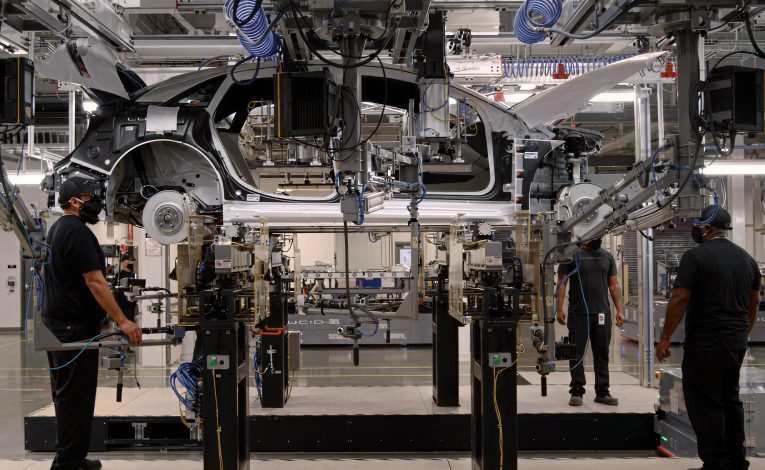
CEER, a joint venture between Saudi Arabia’s Public Investment Fund and Foxconn, is building its manufacturing plant in King Abdullah Economic City. The company aims to launch production later this year and has partnered with global names including BMW, Hyundai Transys, and SABIC to bring EV technology into the Kingdom.
The bottom line: These agreements fit squarely into Saudi Arabia’s Vision 2030 goals. By localizing technology, expanding supply chains, and building a competitive production base, the Kingdom aims to become a genuine EV manufacturing hub rather than an assembly point for imported parts.