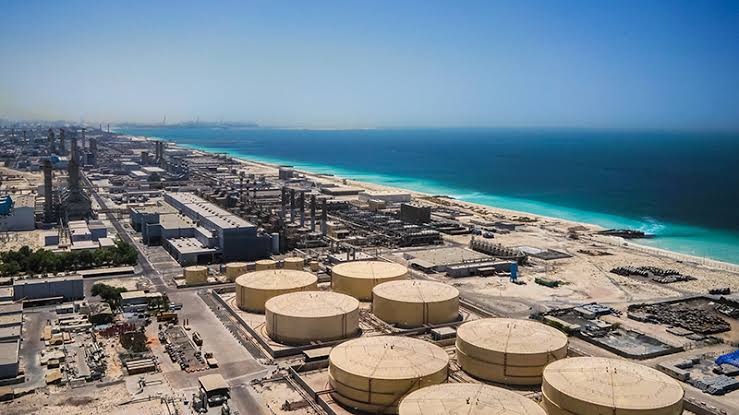
The big picture: Saudi Arabia’s water sector achieved a major operational milestone by raising its inland desalination capacity. Water Desalination, the operational arm of the Saudi Water Authority (SWA), boosted non-seawater production past 4 million cubic meters daily. Specifically, the Kingdom expanded capacity across groundwater and surface water by 1.5 million cubic meters daily over two years. Furthermore, this achievement solidifies Saudi Arabia’s standing as the world’s top desalinated water producer.
Why it matters: Water security remains a primary strategic pillar for the Kingdom under Saudi Vision 2030. Consequently, expanding inland treatment facilities diversifies regional supply options significantly. Over 400 specialized plants now operate across all Saudi regions. Furthermore, these plants produce potable water that strictly meets approved national quality standards. The geographically distributed network works directly alongside massive coastal seawater desalination plants. As a result, the national grid handles demand fluctuations with greater operational flexibility and resilience.
Operational Efficiency and Carbon Savings
By the numbers: Recent engineering developments delivered substantial environmental and operational benefits across the national network:
- 4 million m³ daily: Total daily production capacity from groundwater and surface water sources.
- 5 million m³ daily: Production capacity added over the past two years.
- 400 plants: Active inland desalination facilities operating across Saudi provinces.
- 400,000 barrels: Equivalent liquid fuel saved annually through electrical grid integration.
- 170,000 tons: Annual carbon dioxide emissions eliminated through efficiency upgrades.
- 1 million m³ daily: Saudi Arabia’s combined total national desalinated water production.
Institutional Restructure Under Vision 2030
Between the lines: To advance institutional reforms, Water Desalination signed a supervisory agreement with Water Solutions Company. Environment Minister Eng. Abdulrahman Al-Fadhli and SWA Chairman Eng. Abdullah Al-Abdulkarim attended the signing ceremony. Under the agreement, Water Solutions Company manages plant administration and technical supervision. The contract bears the title “Delegating Supervision and Management Tasks for Groundwater and Surface Water Desalination Plants”. “This partnership elevates operational efficiency while preserving our national technical capabilities,” official representatives declared.
Meanwhile, this agreement marks a decisive phase in restructuring the Saudi water sector. The initiative directly supports the core goals of National Water Strategy 2030. The strategy clearly separates water production, distribution, and regulation functions across independent entities. Consequently, each organization focuses entirely on its core statutory mandate. In addition, this clear division improves asset efficiency, optimizes capital spending, and elevates performance.
Technological Innovation and Future Growth
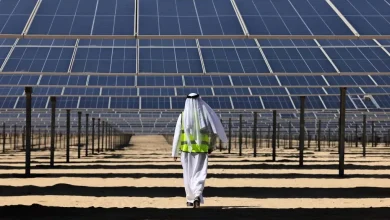
The background: In addition to expanding daily capacity, Saudi Arabia continuously adopts clean energy efficient technologies. Specifically, reverse osmosis technology now replaces traditional thermal desalination units across national infrastructure. This technological shift drastically reduces energy consumption and operational expenses per cubic meter. Moreover, the Kingdom integrates renewable solar power directly into water treatment facilities nationwide. Consequently, Saudi Arabia establishes new global benchmarks in sustainable natural resource management.
Developing Saudi Talent and Expertise
What’s next: While Water Solutions Company provides supervision, native technicians retain full direct operational responsibility. National cadres from the authority execute all daily operational and maintenance routines across every plant. In fact, Saudi nationals staff these facilities with a 100% national workforce rate.
Ultimately, this operational structure safeguards decades of accumulated engineering knowledge. It continuously develops specialized Saudi capabilities within the critical utility sector. Furthermore, Saudi Arabia aims to meet 90% of national potable water demand through desalination by 2030.
By pairing modern asset management with native talent, the Kingdom secures long-term water resilience and sustainable development across all regions.