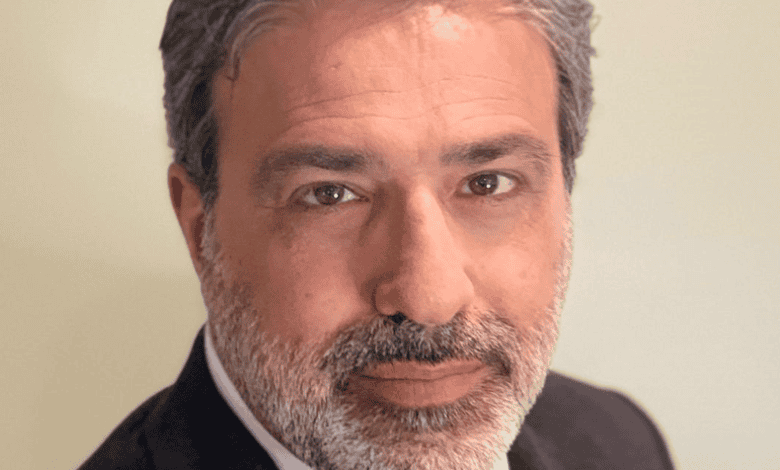
By Colonel Abbas Dahouk
On Saturday, October 10, a ballistic missile attack on Riyadh’s King Khalid International Airport killed and injured more than 300 people, according to Saudi Arabia’s General Authority of Civil Aviation (GACA). The casualties included people of multiple nationalities, among them a U.S. citizen and four Saudi nationals. Missiles struck two airport terminals, causing extensive damage and prompting a temporary suspension of operations for safety inspections. It was reportedly at least the third strike targeting the airport in a week.
The Houthi movement poses a serious threat to Saudi Arabia, international shipping, and regional stability. Its attacks demonstrate how an Iran-aligned group can widen a regional conflict, threaten civilian infrastructure, and disrupt critical international trade routes.
This is not merely a Saudi security concern or another chapter in Yemen’s civil war. It is also a direct challenge to American interests in freedom of navigation, regional stability, and global energy security.
The U.S. response was immediate, with President Donald Trump describing the attack as “terrible” and saying that the situation was “not acceptable.” Asked whether Washington would join Saudi military operations against the Houthis, Trump said, “We may. We’re going to look at it,” adding that a decision would be made quickly. The administration has yet to announce a definitive commitment to direct U.S. strikes against the group.
The U.S. State Department said Washington “stands firmly” with the Kingdom. Secretary of State Marco Rubio confirmed that a U.S. citizen was among those killed and condemned the attacks as demonstrating “a blatant disregard for innocent civilian life.” Both Trump and Rubio also indicated plans to speak with Saudi Crown Prince Mohammed bin Salman.
Why the Houthis Matter to Washington
The Houthis provide Iran with a means of exerting pressure on the United States and its partners without relying exclusively on direct Iranian military action. Their missiles and drones threaten Saudi cities and critical infrastructure, while their maritime operations endanger commercial shipping and naval forces.
For Washington, securing the Bab al-Mandeb Strait is not simply a matter of supporting Saudi Arabia. It is essential to preventing Iran and its regional partners from gaining leverage over international commerce and one of the world’s most important maritime corridors.
The economic implications are significant. According to Reuters, citing industry sources, war-risk insurance premiums for tankers linked to Saudi Arabia have risen sharply since early July, following the designation of the Red Sea as a high-risk area by London’s marine insurance market after Houthi attacks near Bab al-Mandeb. Such increases can affect shipping costs, energy markets, and global supply chains. Because oil is traded in an interconnected global market, higher transportation and insurance costs can ultimately influence fuel prices and the cost of goods in the United States and elsewhere.
Confronting the Houthi threat is therefore one of the clearest areas in which American and Saudi security interests converge. Saudi Arabia’s Vision 2030 ambitions depend on secure airports, reliable maritime connections, and sustained investor confidence. The United States and Saudi Arabia share a fundamental interest in ensuring that the Houthis cannot threaten civilian infrastructure or disrupt a vital international shipping corridor.
Previous U.S. operations against the Houthis also underscore the importance of a comprehensive security strategy. The group operates mobile launchers, maintains dispersed stockpiles in mountainous terrain, and uses underground facilities. Its supply networks have also been linked to Iranian support. Airstrikes can degrade military capabilities, but lasting results require sustained defensive measures, effective intelligence, maritime coordination, and efforts to prevent the replenishment of weapons. Success should be measured not only by the number of targets struck but also by whether the Houthis are prevented from launching further attacks, threatening commercial shipping, and endangering Saudi territory.
Some analysts caution that expanded U.S. military involvement could complicate an already volatile regional conflict, worsen Yemen’s humanitarian crisis, or produce limited results if military operations are not accompanied by a broader strategy. Others emphasize the value of diplomacy, including engagement through Oman, in reducing tensions and supporting a durable ceasefire.
These considerations reinforce the case for a coordinated, clearly defined approach that combines defensive assistance, intelligence sharing, maritime security, and diplomatic engagement. Such a strategy would strengthen Saudi Arabia’s ability to protect its territory while reducing the risks of a wider conflict. It would also demonstrate that attacks on civilian infrastructure and international shipping carry serious strategic consequences.
Washington and Riyadh do not need to agree on every aspect of the broader confrontation with Iran to recognize their shared strategic imperative: the Houthis must not be allowed to threaten Saudi cities, endanger international shipping, or turn Bab al-Mandeb into an instrument of Iranian leverage.
The United States should work closely with Saudi Arabia through enhanced intelligence cooperation, integrated air and missile defense, joint maritime security initiatives, and carefully defined military options where necessary. Diplomatic efforts should complement these measures by addressing the wider regional dynamics driving the conflict.
The objective is not to initiate another open-ended war in Yemen. It is to strengthen deterrence, protect civilian populations and international commerce, and prevent Iran from using an armed regional partner to impose strategic costs on both countries. By reinforcing their security partnership, Washington and Riyadh can help safeguard a critical maritime corridor, uphold regional stability, and protect their shared economic and strategic interests.
Biography of the writer
Colonel Abbas Dahouk is a retired soldier-diplomat and inductee of the U.S. Army (OCS) Hall of Fame. A naturalized U.S. citizen, Dahouk brings a distinctive perspective shaped by his experiences during the Lebanese Civil War and a 33-year career in the U.S. Army, during which he served in a range of military, diplomatic, and national-security roles.