Breaking Iraq’s Trap: A Three-Pillar Strategy for Sovereignty, Security and Regional Integration: Col. Dahouk
By Colonel Abbas Dahouk
Prime Minister Ali al-Zaidi did not arrive in office on the strength of a movement, a militia, or a mandate. He arrived because, after months of paralysis, Iraq’s fractured political factions could agree on no one but a banker and businessman with no parliamentary bloc of his own and no armed wing to protect him, elevated in no small part under pressure from a Washington that had frozen the dollar shipments on which Iraq’s economy depends. He has since sat across from President Trump in the Oval Office and spoken of an “economic partnership” between the two countries.
That should be seen not only as weakness, but as opportunity. A leader with few factional obligations has less to lose by challenging the arrangements that have left Iraq weak, dependent, and exposed for two decades. Nearly seven years after ISIS’s territorial defeat, Iraq appears stable on the surface but remains structurally trapped: caught between Washington and Tehran, unable to fully control its armed militias, and viewed by neighbors more as a battleground than a partner. If al-Zaidi wants to be remembered as more than a caretaker between stronger figures, he should use what independence he has to pursue a focused three-pillar agenda: Sovereignty, Security, and Regional Integration.
Pillar I: Restore Economic Sovereignty
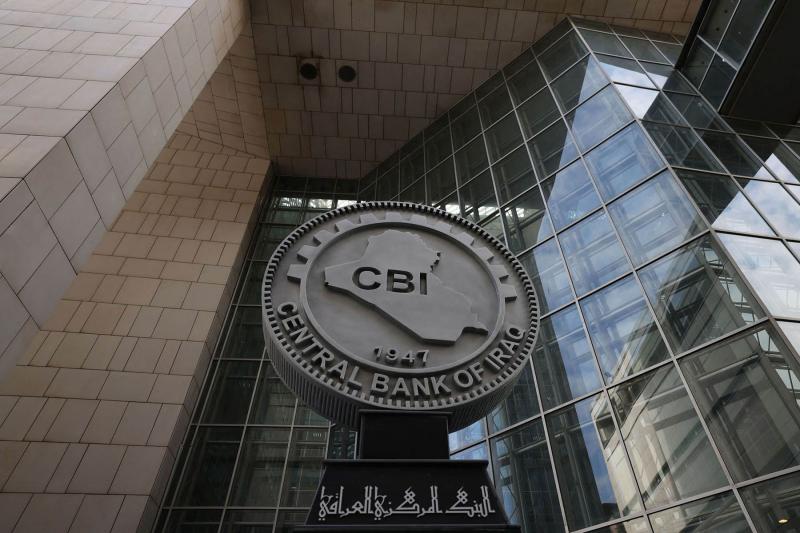
Iraq cannot exercise full economic sovereignty while its power grid remains dependent on Iranian gas, its banking system remains vulnerable to sanctions and external financial pressure, and major economic decisions are shaped by Tehran’s anticipated response. Al-Zaidi should make energy diversification, domestic gas-capture projects, and the development of alternative power-generation capacity an immediate priority, opening these opportunities to Western firms, regional grid connections, and investment from neighboring countries. Recent Iraqi government efforts to reduce dependence on Iranian energy, including moves to expand domestic gas production and capture, diversify electricity imports, and accelerate alternative energy partnerships, provide an important foundation. However, these measures need to be consolidated into a broader strategy for economic independence. Baghdad should also strengthen the institutional independence and resilience of the Central Bank and financial system, reducing exposure to external leverage and ensuring that Iraq’s banking channels remain compliant with international standards while serving Iraqi national interests.
At the same time, Iraq should capitalize on its geography, energy resources, ports, and transportation networks to advance the Development Road and related Asia–Europe connectivity projects, creating a second major source of economic growth and strategic leverage beyond oil. The objective should be to convert Iraq’s economic interdependence from a source of vulnerability into a diversified network of partnerships that gives Baghdad greater freedom of action.
Pillar II: Secure All Weapons Under State Command
No government fully controls its country while armed groups, especially elements of the Popular Mobilization Forces (PMF), can act outside the state’s chain of command. This is the most difficult pillar and the one most likely to carry political costs for al-Zaidi, since the Coordination Framework that elevated him includes parties aligned with those groups. Yet the government has now moved beyond rhetoric: on June 29, Baghdad set September 30, 2026, as a deadline for armed groups to hand over weapons and come under state control, with the government stating that weapons remaining outside the state framework after that date would be subject to legal action. Recent government actions and statements indicate that al-Zaidi is attempting to turn this commitment into an operational process, even as several powerful Iran-aligned factions resist or seek conditions for retaining their weapons. The September deadline, which coincides with the planned completion of the U.S. military withdrawal, therefore represents a critical test of whether Baghdad can translate political commitments into effective state authority. A prime minister without a militia of his own has little to gain from preserving a system in which forces beyond his control define Iraq’s security limits. Gradually integrating willing PMF elements into a professional command structure, while strengthening the Counter-Terrorism Service, federal police, air defense, and other national security institutions as capable, loyal alternatives, would do more to secure his authority than any cabinet reshuffle. The objective should ultimately be not merely to register or administratively absorb militia forces, but to establish the state’s exclusive authority over the possession, deployment, and use of weapons.
Pillar III: Regional Integration, Not Regional Battleground
Al-Zaidi should build on his predecessors’ tentative steps by accelerating Iraq’s economic and security integration with the Gulf and other neighboring states. Recent developments, including deeper electricity interconnection with the GCC, expanding energy and investment partnerships with Saudi Arabia and the UAE, and continued efforts to advance the Development Road, provide Baghdad with an opportunity to turn regional integration into a pillar of national strategy rather than a collection of individual projects.
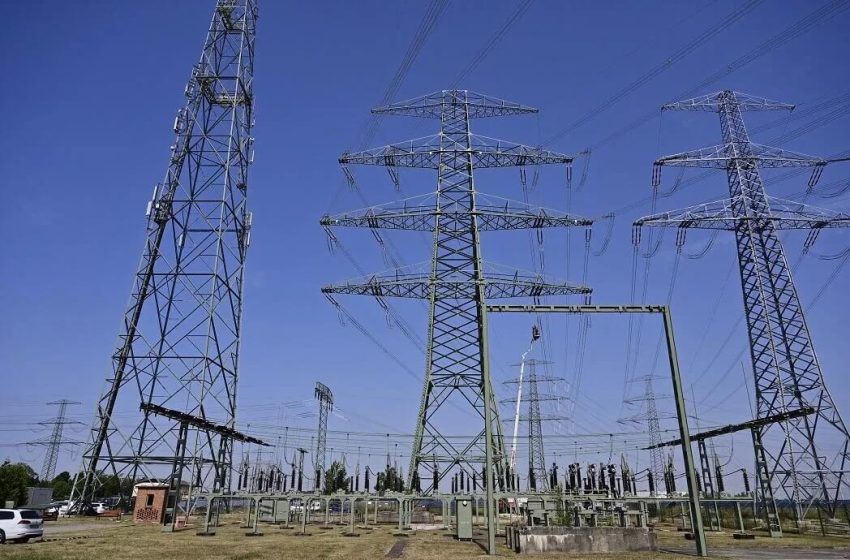
Electricity links, trade corridors, energy partnerships, and joint investment are more than development initiatives; they are strategic insurance. Multiple economic and diplomatic lifelines would make Iraq more resilient to pressure from any single external power and reduce its vulnerability to regional rivalries. Baghdad should also build on its role as a venue for regional dialogue by expanding practical security cooperation with its Arab neighbors on border security, counterterrorism, maritime security, and intelligence sharing. By positioning Iraq as a bridge between the Gulf, Turkey, Iran, and the wider international community, rather than as an arena for their competition, al-Zaidi can increase Baghdad’s strategic leverage and begin to establish a foreign-policy agenda grounded in Iraqi national interests rather than the preferences of the factions that helped bring him to power.
Why This Is the Only Strategy That Serves Him
These pillars work only in concert. Sovereignty is hollow if armed factions remain beyond state control; security gains are brittle if Iraq stays isolated and dependent on outside patrons; and regional integration without sovereignty merely replaces one dependency with another. Together, the pillars reinforce each other: a sovereign Iraq can command its decision-making, a secure Iraq can be a credible neighbor, and an integrated Iraq can resist being pulled fully into any one power’s orbit.
Al-Zaidi’s critics will say he lacks the power to deliver this agenda. A prime minister without a bloc or militia may hold the title without fully commanding the authority behind it. Yet that weakness can also create space to act. With fewer entrenched interests to defend, al-Zaidi has less to lose by challenging a system that has served Iraq’s factions far better than Iraq itself. He came to office through circumstance, not strength. Whether he is remembered as a caretaker or as the leader who began moving Iraq out of its trap will depend on how he uses that circumstance: as a constraint, or as room to pursue a sovereign, secure, and integrated future.
Biography of the writer
Colonel Abbas Dahouk is a retired soldier-diplomat and inductee of the U.S. Army (OCS) Hall of Fame. A naturalized U.S. citizen, Dahouk brings a distinctive perspective shaped by his experiences during the Lebanese Civil War and a 33-year career in the U.S. Army, during which he served in a range of military, diplomatic, and national-security roles.