
More Than a Game: The Lesson in Faith and Conviction from Senegal’s Pape Thiaw
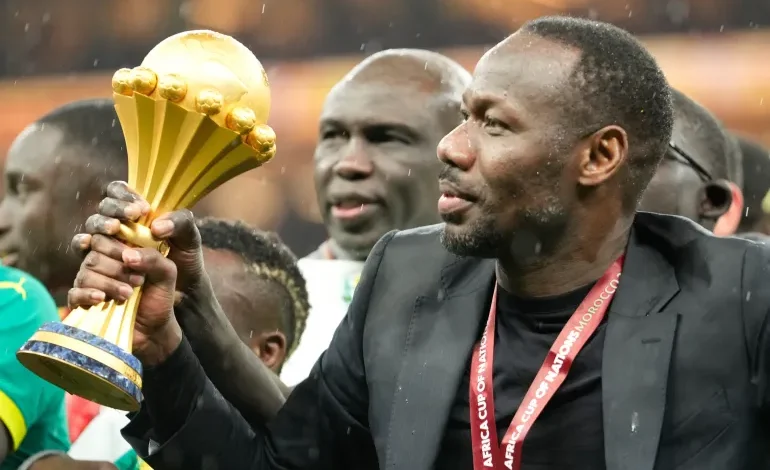
In the modern era of professional sports, athletes and coaches are often celebrated for their tactical expertise, athletic accomplishments, and competitive success. Yet some moments transcend the boundaries of sport, offering lessons that resonate far beyond the stadium. Such a moment emerged recently when Senegal national football team coach Pape Thiaw reminded the world that, for many people, faith remains a guiding principle that cannot be subordinated to professional obligations.
The Senegalese coach found himself at the center of public attention after reports emerged that his team attended Friday prayers despite security warnings related to adverse weather conditions. During a subsequent press conference, Thiaw was asked about the decision. His response was both simple and profound: while others feared the wind, he said, his team feared the Creator of the wind.
The remark quickly spread across social media platforms and news outlets, sparking discussion well beyond football circles. Its impact stemmed not from controversy, but from its clarity. At a time when many public figures are reluctant to speak openly about matters of faith, Thiaw articulated a conviction shared by millions: that religious obligations are not secondary commitments to be observed only when circumstances are convenient.
His comments also highlighted an increasingly relevant question in contemporary society: how should individuals balance professional responsibilities with personal beliefs? In a world driven by relentless schedules, commercial pressures, and public expectations, there is often an assumption that success requires setting aside other priorities. Thiaw’s message challenged that notion directly.
For many observers, the significance of his remarks lies in the fact that they came from a figure operating at the highest level of international sport. Football remains one of the world’s most influential cultural forces, commanding vast audiences and generating enormous economic activity. Yet Thiaw made it clear that, in his view, even the sport’s global prominence does not outweigh commitments he considers fundamental.
Equally noteworthy was his assertion that not even a World Cup final would justify neglecting prayer. Whether one agrees with his perspective or not, the statement reflected a consistency of principle that is increasingly rare in public life. Leadership is often measured by victories, rankings, and trophies, but it is also defined by the values leaders uphold when confronted with competing demands.
The positive reaction to Thiaw’s remarks, particularly across the Muslim world, reflects a broader appreciation for public figures who remain grounded in their beliefs and cultural identities. His comments were interpreted not merely as a personal declaration of faith, but as an affirmation of values that continue to shape communities across Africa and the wider Islamic world.
There is another dimension to this episode. In an age when religion is often portrayed as being at odds with modernity, Thiaw’s example suggests that the two need not be mutually exclusive. Professional excellence and religious commitment can coexist. Success on the global stage does not require abandoning deeply held convictions; rather, those convictions can serve as a source of discipline, purpose, and resilience.
Ultimately, the significance of Pape Thiaw’s remarks extends beyond football and beyond Senegal. They serve as a reminder that genuine commitment to one’s principles is most evident when circumstances make compromise easier. In a culture that often prioritizes performance above all else, his words reaffirm a timeless truth: achievements may define a career, but values define a legacy.
Al-Jawhara Bint Turki Al-Otaishan
Editor-in-Chief