By: Sara Thabet

In today’s fast-paced work environment, many managers spend their days moving from one urgent task to another. Meetings, reports, operational problems, and endless emails consume both time and energy.
While this constant activity may create the impression of productivity, it often leaves little room for innovation, strategic thinking, or long-term planning.
The problem is not operational work itself, it is when operational work becomes the only type of leadership happening.
When leaders focus only on solving today’s problems, they risk losing sight of tomorrow’s opportunities and challenges.
The trap of constant busyness
Many leaders confuse being busy with being effective. A manager may work long hours every day without creating meaningful progress within the organization. Operational tasks are endless, and without balance, they consume all attention while increasing pressure.
In 2020, a workplace study by Gallup (American global analytics and advisory company) on employee burnout and engagement found that nearly 76% of employees experience burnout at least sometimes, while managers often face even higher pressure levels. This explains why many leaders feel exhausted despite achieving little strategic development.
The more leaders become absorbed in daily details, the harder it becomes to see the bigger picture.
Management is more than operations
Effective leadership requires more than monitoring daily workflows. Strategic management means understanding where the organization is heading, anticipating change, and preparing for future risks and opportunities.
One well-known example is Kodak, the American photography company that dominated the film industry for decades. Although Kodak developed one of the first digital cameras in 1975, it failed to adapt quickly to digital transformation and later filed for bankruptcy in 2012. The company’s challenge was not poor operations, but weak strategic adaptation.
Why time for development matters
Continuous learning is essential for modern leaders. Reading, attending training programs, analyzing trends, and reviewing performance regularly help managers make stronger decisions and improve team performance.
A 2023 report by McKinsey & Company (global management consulting firm) on leadership and organizational performance found that organizations investing in leadership development and employee wellbeing often achieve stronger engagement and higher productivity.
Strong leaders understand that improvement should continue even when business appears stable, because stability without innovation can quickly turn into stagnation.
Creating balance between operations and strategy
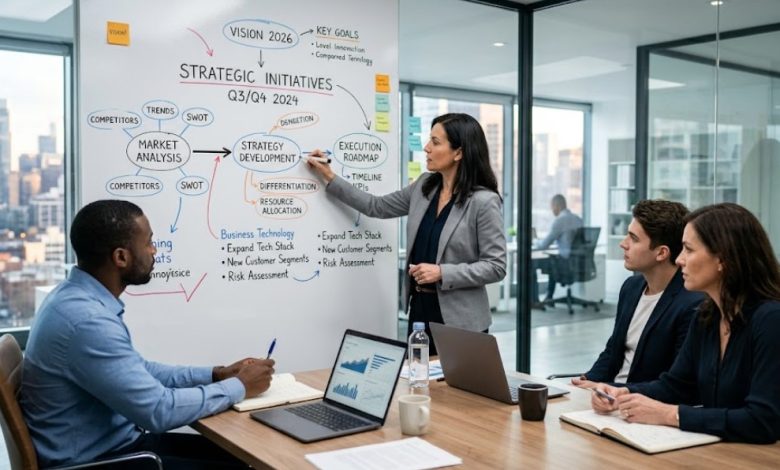
Balancing operations with strategic thinking requires intentional habits. Leaders can dedicate weekly time for strategic reflection and long-term planning while delegating some operational responsibilities to create space for higher-level thinking.
Regularly reviewing overall performance indicators instead of focusing only on daily details also helps managers identify opportunities and risks earlier.
The impact of future-oriented leadership
Organizations led by forward-thinking managers are often more adaptable and resilient. Strategic thinking improves decision-making quality, helps identify opportunities earlier, and strengthens team performance.
When leaders create a culture focused on learning and improvement, organizations become better prepared for change instead of simply reacting to crises.
Management is not only about solving problems
True leadership is the ability to balance present responsibilities with future preparation. Managers who focus only on daily operations may maintain short-term stability, but they often lose the ability to innovate and grow.
The strongest leaders create time for reflection, learning, and strategic thinking, because sustainable organizations are built not only through constant activity, but through vision and adaptability as well.