The decision by Donald Trump to reduce U.S. troop levels in Germany has sparked debate across European capitals. Yet beyond the element of surprise, the move may ultimately serve as a constructive turning point – encouraging Europe to assume a stronger, more balanced role within NATO.
For decades, the transatlantic alliance has rested on a clear division of responsibilities, with the United States providing the bulk of military power. Today, however, shifting global dynamics call for a more distributed model of security – one in which Europe contributes more actively alongside Washington.
Rather than viewing the troop reduction as a rupture, several European leaders have framed it as an opportunity.
Keir Starmer has emphasized the need for a stronger European pillar within NATO, while Jonas Gahr Store has highlighted the importance of coordination and unity as the alliance adapts.
This evolution reflects a broader reality: security challenges today are more complex and interconnected, from tensions in Eastern Europe to developments in the Middle East and key global trade routes. A more capable and engaged Europe can enhance NATO’s overall resilience and flexibility.
Importantly, this shift does not signal a weakening of transatlantic ties. On the contrary, it offers an opportunity to modernize them.
By increasing defense investment, strengthening joint capabilities, and improving strategic coordination, European nations can become more effective partners to the United States.
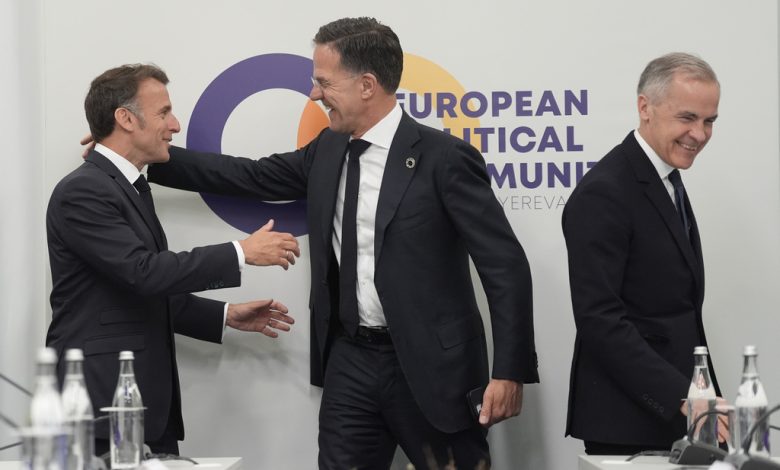
Leaders such as Emmanuel Macron have long advocated for greater European strategic responsibility.
Recent developments suggest that this vision is gaining traction—not as an alternative to NATO, but as a reinforcement of it.
For observers around the world, these changes are particularly relevant. A more proactive Europe could play a constructive role in supporting stability, safeguarding trade routes, and contributing to diplomatic efforts in areas of shared interest.
At a time when global security requires cooperation rather than dependence, Europe’s growing role within NATO is a positive and necessary development. The United States remains a central pillar of the alliance, but a stronger European contribution ensures that NATO is better equipped to meet the challenges of a rapidly changing world.
In this light, the current moment is less about reduction than about rebalancing—a recalibration that could ultimately strengthen the alliance and enhance collective security on both sides of the Atlantic.