“Nobody Will Break Our Back”: Saudi Arabia Hosts Global Energy Week Amid Global Uncertainty
As geopolitical uncertainty continues to test the global energy landscape, Saudi Arabia has reaffirmed its determination to maintain reliable supplies and uphold its international commitments to international markets.
“We Come Out of the Ashes”
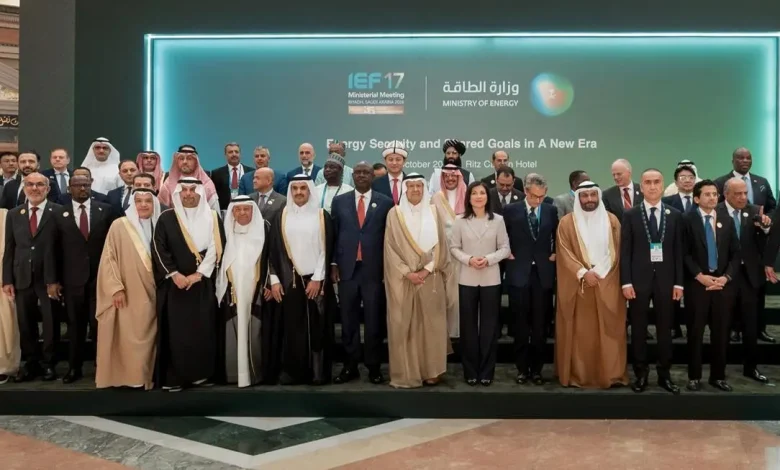
Addressing global energy leaders in Riyadh on Sunday, Energy Minister Prince Abdulaziz bin Salman highlighted the Kingdom’s unparalleled resilience in his address to global energy leaders.
“We are like a phoenix, we come out of the ashes all the time, and every time,” he said at the opening of the 17th International Energy Forum Ministerial Meeting, according to Arab News.
The minister underscored that Saudi Arabia would remain steadfast in its plans and international responsibilities regardless of the mounting challenges it encountered.
“We make sure that whatever happens, our resilience, our plans, our commitment to the world, will be adhered to. There is no way that somebody will break our back,” he said.
Saudi Arabia’s Resilience Amid Geopolitical Concerns
The energy gathering unfolded in the shadow of a deadly attack that had hit King Khalid International Airport on Saturday.
According to the General Authority of Civil Aviation (GACA), the devastating attack claimed 12 lives and left 309 people injured, underscoring the difficult circumstances surrounding the international meetings.
The victims included four Saudi citizens, two Bangladeshis, and one person each from the United States, Egypt, Jordan, Syria, Palestine, and Sudan.
The Arab Coalition attributed the attack to the Iran-backed Houthi militia.
Against this backdrop, Riyadh Energy Week continued as scheduled from October 11 to 15, drawing energy officials and international representatives to the Saudi capital.
Nigeria’s Minister of State for Petroleum Resources (Oil), Heineken Lokpobiri, attended in person as co-host of the International Energy Forum meeting, alongside representatives from the United States, Russia, Romania, South Korea, and other countries.
Saudi Arabia Builds Export Alternatives
Held under the theme “Energy Security and Shared Goals in a New Era,” the ministerial brings Saudi Arabia, Italy, and Nigeria together around a shared priority: reinforcing the global energy system against mounting uncertainty.
Prince Abdulaziz, who also serves as minister of industry and mineral resources, noted that protecting energy security necessitated coordinated international action particularly as successive shocks placed pressure on markets and the global economy.

In this context, he also suggested that the Kingdom’s own experience demonstrated the significance of preparedness. Saudi Arabia had steadily maintained its energy supplies and fulfilled its commitments despite challenging conditions, with the East-West pipeline standing out as a key part of that resilience.
Stretching from the Eastern Province to Yanbu on the Red Sea, the route allows Saudi crude exports to bypass the Strait of Hormuz.
More boldly, the Kingdom is also pursuing further pipeline projects, the minister said.
Despite the fact that such infrastructure demands years of development, planning and substantial investment, he argued that these costs pale in comparison with the economic consequences of having no alternatives when critical passages are disrupted.
Global Energy Resilience Faces a Test
Crucially, the consequences of energy disruptions extend beyond infrastructure and export routes, affecting the resilience of the global energy system itself.
Pedro Miras, President of WPC Energy, told Asharq Al-Awsat on the sidelines of the meeting that security of supply had had once again become the industry’s leading priority.
He noted that the global energy system was now better positioned to absorb shocks than it had been several years ago.
However, greater resilience does not eliminate the economic risks. The need for broader cooperation is also reflected in efforts to support vulnerable economies. World Bank President Ajay Banga told Reuters this week that the bank was discussing crisis financing with 30 to 40 countries seeking to manage energy price shocks associated with the war in the region.
Riyadh Takes Center Stage in Global Energy Talks
The scale of these challenges and the need for dialogue among energy ministers reinforce the importance of international platforms such as the International Energy Forum (IEF).
Based in Riyadh and led by Secretary-General Jassim Alshirawi, the IEF brings together the world’s largest gathering of energy ministers. Its next ministerial meeting will take place in Italy in 2028.
Notably, Riyadh’s energy agenda extends well beyond a single ministerial meeting. From October 11 to 13, the Saudi capital is hosting the 17th Clean Energy Ministerial and the 11th Mission Innovation Ministerial, followed by the 25th WPC Energy Congress from October 12 to 15.
The congress adds another dimension to the gathering, bringing the event to Saudi Arabia for the first time in its more than nine-decade history.
The broad scope of these gatherings reflects the growing complexity of energy security. Discussions span investment, critical minerals, and the mounting electricity needs of artificial intelligence and data centers, expanding the focus beyond conventional questions of oil production and export routes.
For global energy markets, recent disruptions have raised the fact that security depends not only on the volume of available supplies but also on the systems that deliver them.
By bringing international energy discussions to Riyadh, the week places these interconnected challenges at the center of a wider debate over how the world can build and maintain more resilient energy systems.
Related Topics:
WPC Congress 2026: How Riyadh Charts the Course for Global Energy Transition
Riyadh Energy Week: Saudi Arabia Hosts Global Leaders to Redefine the Future of Energy
Defense Synergy: Saudi Arabia, France Join Forces to Safeguard Global Energy Supply