Riyadh Energy Week: Saudi Arabia Hosts Global Leaders to Redefine the Future of Energy
Saudi Arabia prepares roll out the red carpet for the global energy industry at “Riyadh Energy Week” from 11 to 15 October, 2026. The landmark gathering features the 25th WPC Energy Congress under the official theme, “Pathways to an Energy Future for All”.
Why it matters: Saudi Arabia sits at the very heart of the global energy architecture. Consequently, the Kingdom continues to balance crude oil market stability with an ambitious national energy transition. This historic week brings together key decision-makers to tackle global supply security, market fluctuations, critical minerals, and clean technology investments.
A Powerhouse Gathering of World Decision-Makers
The big picture: Energy ministers, corporate executives, policy architects, and top financial analysts will gather at the Riyadh Front Exhibition & Conference Center. Moreover, the official opening ceremony takes place on 12 October, 2026.
Saudi Energy Minister Prince Abdulaziz bin Salman will officially open the congress alongside WPC Energy President Pedro Miras. In addition, senior Saudi officials will lead executive policy dialogues:
- Minister of Economy and Planning Faisal Al-Ibrahim
- Head of Saudi Investments Fahad Abduljalil Al-Saif
- Aramco Technology Executive Vice President Ahmad Al-Khowaiter
- Aramco Upstream President Nasir Al-Naimi
- Aramco Chief Financial Officer Ziad Al-Murshed
- Aramco Strategy Executive Vice President Ashraf Al-Ghazzawi
International policymakers will join them, including Egyptian Petroleum Minister Karim Badawi and OPEC Secretary-General Haitham Al-Ghais. Meanwhile, International Energy Forum (IEF) Secretary-General Jasem Al-Budaiwi and World Energy Council CEO Angela Wilkinson will address global energy governance.
Top international corporate leaders will also participate in high-level strategy panels:
- Darren Woods, Chairman and CEO of ExxonMobil
- Patrick Pouyanné, Chairman and CEO of TotalEnergies
- Wael Sawan, CEO of Shell
- Meg O’Neill, CEO of BP
- Lorenzo Simonelli, Chairman and CEO of Baker Hughes
- Christian Bruch, CEO of Siemens Energy
- Olivier Le Peuch, CEO of SLB
- Andy O’Brien, President and CEO of ConocoPhillips
Furthermore, premier energy market analysts will evaluate geopolitical risks and long-term supply outlooks. Prominent commentators include S&P Global Vice Chairman Daniel Yergin, RBC Capital Markets Global Commodity Head Helima Croft, Carlyle Senior Advisor Jeffrey Currie, Energy Aspects Founder Amrita Sen, and Rapidan Energy Group President Bob McNally.
By the numbers:
- 25,000+ participants expected, spanning nearly 1,000 companies
- 100 ministers and 500 CEOs attending
- 800+ speakers across the executive and technical program
- 30+ ministerial, strategic and leadership sessions, plus 30+ technical forums across five tracks
- 50,000+ square meters of exhibition space at the Riyadh Front
- 3-13.4 million barrels per day: Saudi Arabia’s targeted crude production capacity by late 2026 or early 2027
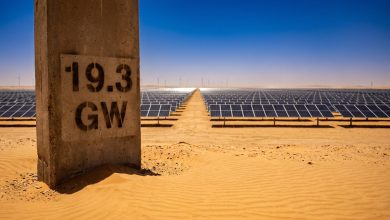
- 130 gigawatts: the Kingdom’s renewable-energy capacity target by 2030, up from roughly 12% of current electricity output
- 4 million tones per year: the clean-hydrogen production goal under Saudi Arabia’s National Hydrogen Strategy
- $5 billion (SAR 18.75 billion): PIF and Air Products’ green-hydrogen plant investment
- $51 billion+ (SAR 191.3 billion+): the value of renewable-energy projects currently tracked in the Kingdom, with 14 additional gigawatts slated for award in 2026
Saudi Leadership Amid Evolving Global Energy Challenges
Between the lines: The global energy sector faces an increasingly complex trilemma: balancing security, affordability, and sustainability. As the world’s leading crude exporter, Saudi Arabia plays an indispensable role in safeguarding global energy supplies. However, the Kingdom simultaneously drives massive green initiatives under Vision 2030.
The energy sector faces several urgent hurdles today:
- Exploding AI energy demand: Rapid expansion of artificial intelligence data centers drives unprecedented electricity consumption globally.
- Geopolitical instability: Regional conflicts and trade tensions threaten supply chains and price stability.
- Transition capital gaps: Developing economies require immense financial capital to deploy scalable low-carbon infrastructure.
To navigate these hurdles, Saudi Arabia champions the Circular Carbon Economy (CCE) framework. This holistic strategy reduces atmospheric emissions through carbon capture, utilization, and storage (CCUS) while maintaining reliable hydrocarbon supplies.
The Road Ahead: History and Rising Challenges
The 25th WPC Energy Congress marks a landmark milestone for WPC Energy, an organization with a 90-plus-year history.
Crucially, Saudi Arabia hosts this prestigious congress for the first time. Furthermore, this gathering represents only the second time the congress convenes in the Middle East, following the 20th edition in Doha in 2011.
The World Petroleum Congress traces its roots to 1933 and traditionally convenes every three years, though the pandemic once forced a postponement of the 23rd edition to late 2021. Riyadh’s turn follows a successful 24th edition in Calgary, Canada, in 2023, which drew more than 10,000 participants from 111 countries, a scale the Saudi edition is set to more than double. Hosting the Congress for the first time therefore marks a milestone for the Kingdom rather than a routine turn in the rotation.
Previous editions shaped global energy dialogue:
- 24th Congress (Calgary, Canada, 2023): Focused on “Energy Transition: The Path to Net Zero” and attracted over 15,000 global attendees. During this event, WPC Energy presented its prestigious Dewhurst Award to Aramco President and CEO Amin Nasser for exceptional industry leadership.
- 23rd Congress (Houston, USA, 2021): Examined market resilience, energy poverty, and post-pandemic economic recovery.
- 22nd Congress (Istanbul, Turkey, 2017): Highlighted global energy bridges, trade networks, and sustainable resource management.
However, the industry arrives in Riyadh facing real headwinds. Global oil markets remain volatile, with 2026 supply forecasts complicated by OPEC+ output decisions, an oversupplied first quarter and periodic disruptions tied to regional tensions around the Strait of Hormuz. Consequently, energy security now sits alongside affordability and sustainability as a simultaneous, and sometimes competing, set of priorities for producers and consumers alike.
Moreover, financing the transition adds another layer of difficulty, since scaling up renewables, hydrogen and carbon-management infrastructure demands capital even as oil revenues fund much of that same diversification. Meanwhile, the rapid growth of AI-driven electricity demand forces utilities and producers to rethink infrastructure planning far faster than earlier energy transitions required.
What they’re saying: WPC Energy President Pedro Miras emphasized the core mission of the Riyadh gathering: “Our congress provides an inclusive platform to debate and define realistic, workable paths to a net-zero future.”
Technology, Digital Transformation, and What Comes Next
The tech angle: Artificial intelligence and advanced digital solutions will occupy center stage at the exhibition. Major tech enterprise leaders, including Microsoft, Siemens Energy, Hitachi Energy, SLB, and Samsung E&A, will showcase operational tools. These technologies optimize power grids, enhance predictive maintenance, and significantly reduce operational carbon footprints.
In addition to executive forums, the congress features a comprehensive technical program with 30 research forums across five core pillars:
- Primary Energy Supplies
- Energy Infrastructure
- Fuels and Molecules
- Energy Technologies
- Sector Leadership
What’s next: Riyadh Energy Week expands far beyond the central congress. Specifically, participants will attend the International Energy Forum (IEF) Ministerial Meeting, the Clean Energy Forum, and specialized sessions focusing on youth, women in energy, and circular carbon networks. Together, these gatherings will establish actionable policy frameworks and trade pathways for world markets.