From October 11-15, 2026, Riyadh hosts the 25th WPC Energy Congress (formerly World Petroleum Council), bringing together energy leaders and experts from around the globe to chart the path for an inclusive transition.
Under the theme “Pathways to an Energy Future for All,” the event will explore practical ways to build a sustainable energy future, further solidifying Saudi Arabia’s position as the anchor of global energy security and stability.
WPC 2026: A New Era in Riyadh
Driving the News: Organized by the Saudi Ministry of Energy, the 25th WPC Energy Congress kicks off in Riyadh for the first time on Sunday, October 11, as part of the “Riyadh Energy Week.”
In tandem, Riyadh hosts the IEF17 Ministerial Meeting of the International Energy Forum, the 17th Clean Energy Ministerial (CEM17), the 16th Session of the Arab Ministerial Council for Electricity, and a series of technical events organized by the Organization of Arab Petroleum Exporting Countries (OAPEC).
The Big Picture: These events gather energy ministers, policymakers, industry leaders, investors, and experts to develop a shared vision, shape policy frameworks, and advance global cooperation.
Why It Matters: Saudi Arabia is the world’s largest energy producer. Riyadh Energy Week cements the Kingdom’s status as a driver of energy innovation and a leader in delivering secure, sustainable energy supplies.
Global Energy Investment in 2026
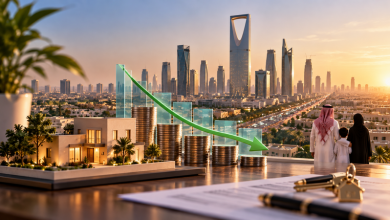
By the Numbers: (IEA World Energy Investment Report)
- $3.4 trillion: Total projected global energy investment in 2026 – a 5% increase year-over-year.
- $2.2 trillion: Allocated toward clean energy, power grids, battery storage, and energy efficiency.
- $1.2 trillion: Directed toward oil, natural gas, and coal supply chains.
Future-Oriented Discussions
State of Play: The WPC Congress features plenary sessions, ministerial dialogues, leadership talks, and strategic panels aimed at providing a neutral and inclusive platform for debate on energy security, supply resilience, responsible production, and the integration of lower-carbon systems.
It also aims to address key challenges facing the future of energy, including security and reliability of supply, global markets and investment, technological innovation, sustainability, and workforce development.
Key Highlights:
- 25,000 delegates
- 100 energy ministers
- 500 CEOs
- 800 speakers
- 1,000 companies
Packed Agenda: Macro Strategy & Technical Innovation
Go Deeper: The 25th WPC Energy Congress program bridges high-level policy with ground-level technical innovation across three complementary pillars:
Executive Program
Convening ministers, CEOs, and global policymakers, the Executive Program focuses on navigating the energy trilemma – balancing security, affordability, and sustainability. Through a series of sessions, it addresses market outlooks and security, investment dynamics, transformation pathways and emerging digital technologies.
Technical Program
Spanning five thematic blocks and 31 specialist forums, the Technical Program covers primary energy supply, infrastructure transformation, emerging fuels and molecules, leadership and advanced technologies focused on safety, efficiency and emissions performance.
Special Program
The Special Program fosters cross-disciplinary collaboration through interactive tracks such as the Debate Series, Knowledge Sprints, and an Energy Hackathon. Moreover, the Young Professionals, Women in Energy, the Circular Carbon Economy, Social Responsibility, and AI and Digitalization tracks strengthen the human and technological dimensions of energy transformation.
The Path for Green Transition
Between the Lines: Driven by the Saudi Green Initiative (SGI) – one of Vision 2030’s ambitious programs – Saudi Arabia is targeting an optimal domestic energy mix of 50% natural gas and 50% renewable energy by 2030. The Kingdom has made major strides toward achieving the 130 GW-renewable-power-capacity milestone.
At the heart of these efforts lies NEOM, Saudi Arabia’s innovative city, which is poised to host the world’s largest green ammonia plant, with the NEOM Green Hydrogen Company set to become fully operational by the end of 2026. The facility will produce up to 600 metric tons of carbon-free hydrogen per day in the form of green ammonia, significantly contributing to reducing global carbon emissions.
Decarbonization Technologies
Go Deeper: Beyond renewables and green hydrogen, Saudi Arabia is utilizing cutting-edge technology to reduce emissions across conventional energy operations. Central to this strategy is the Circular Carbon Economy (CCE) framework – a model championed by the Kingdom during its G20 presidency that focuses on four pillars (the 4Rs): Reduce, Reuse, Recycle, and Remove.
- Carbon Capture, Utilization, and Storage (CCUS): Through flagship initiatives such as the Jubail CCUS hub – set to be one of the largest in the world – Saudi Arabia is aiming to capture and store up to 44 million metric tons of CO2 per year by 2035, demonstrating how traditional hydrocarbon production can align with ambitious net-zero targets.
- AI and Digital Operations: Aramco leverages artificial intelligence (AI), big data analytics, and autonomous operations across its smart facilities for predictive maintenance, methane detection, and grid efficiency optimization.
Looking Ahead: As global demand continues to grow, particularly across developing economies, the key takeaway from Riyadh is that a successful global energy transition depends on fostering diversified, realistic, and inclusive strategies tailored to regional socio-economic realities.
The Bottom Line: By hosting the 25th WPC Energy Congress alongside major international high-level summits, Riyadh reinforces its role as the pragmatic anchor of the global energy landscape, demonstrating that energy security, economic growth, and environmental sustainability can advance hand in hand.