KAUST, Oxford Breakthrough: New Blood Sensor Could Revolutionize Parkinson’s Detection
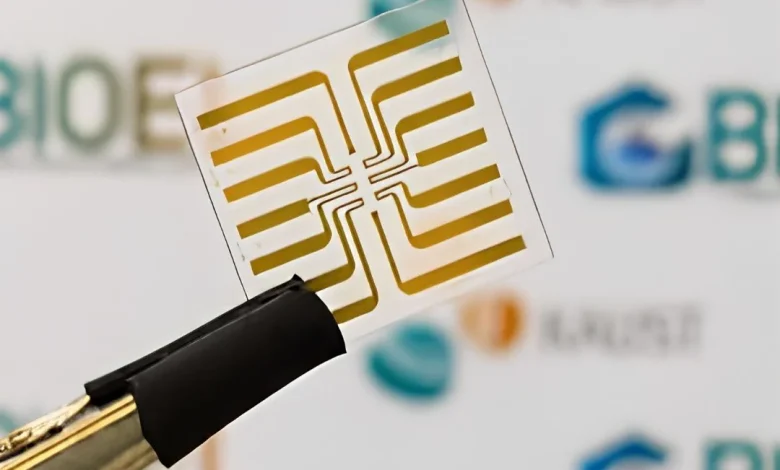
Saudi researchers have built an electronic sensor that detects Parkinson’s disease markers in blood, and the early results look promising.
Driving the news: Scientists at King Abdullah University of Science and Technology (KAUST) and the University of Oxford developed the ultra-sensitive device. It reached 90.9% accuracy in an initial study of 59 participants. The team published the findings in Science Advances.
Why it matters: Parkinson’s disease progressively damages dopamine-producing neurons inside the human brain. Subsequently, patients suffer severe movement disorders, balance loss, and cognitive decline.
Currently, physicians diagnose the condition through clinical evaluations only after motor symptoms appear. However, detecting brain-derived proteins in peripheral blood unlocks early intervention before irreversible neurological damage occurs.
How the KAUST Electronic Sensor Works
The technical challenge: Measuring brain proteins in blood streams presents a massive biological hurdle. Specifically, red blood cells produce over 95% of circulating alpha-synuclein proteins, generating heavy background noise that obscures target signals.
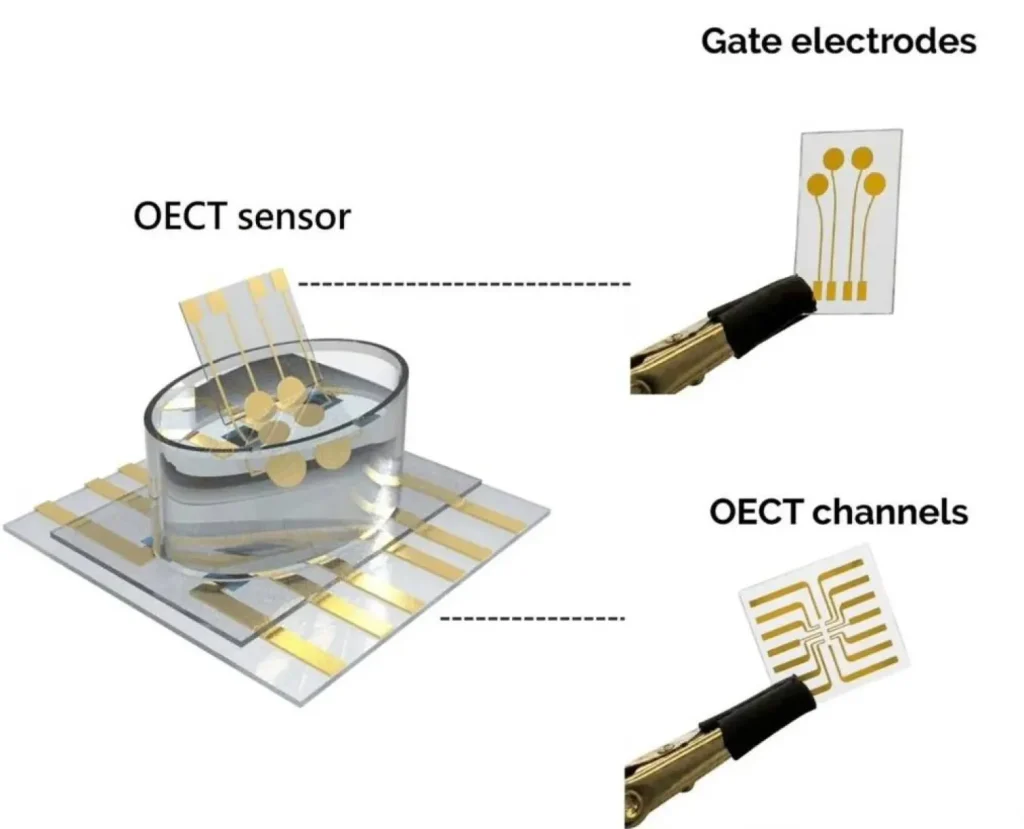
The solution: KAUST researchers overcome this obstacle through an innovative two-stage process. First, they isolate extracellular microvesicles that brain neurons release directly into blood circulation. Next, an organic electrochemical transistor evaluates the hidden neuronal cargo inside these microvesicles.
- The custom transistor converts extremely weak biological signals into robust electronic readings.
- The device simultaneously detects three distinct structural forms of alpha-synuclein protein.
- The system delivers complete biomarker measurements in just 40 minutes.
- Traditional laboratory assays routinely fail to detect such microscopic protein concentrations.
What they’re saying: KAUST Associate Professor of Bioengineering Sahika Inal highlighted the strategic value of this breakthrough:
“Parkinson’s-related changes begin long before clinical diagnosis. While blood samples are easy to obtain, detecting these changes in blood remains a major challenge. Our technology enables simultaneous detection of multiple forms of alpha-synuclein protein, even at extremely low concentrations. These initial results are encouraging, and our next step is to validate performance across significantly larger patient cohorts.”
Clinical Validation and Saudi Vision 2030 Healthcare Targets
Behind the data: The joint team evaluated human blood samples from the Oxford Discovery research cohort under strict double-blind protocols. Specifically, the trial cohort contained 59 participants, including:
- Diagnosed Parkinson’s disease patients.
- Healthy control individuals.
- Patients with isolated REM sleep behavior disorder (iRBD), a known high-risk condition for future neurodegeneration.
By identifying distinct protein pattern shifts across these groups, researchers proved the superiority of multi-biomarker profiling over single-protein tracking.
Connecting to national priorities: Saudi Arabia prioritizes preventative healthcare and early disease screening across its expanding medical ecosystem. Currently, average life expectancy in the Kingdom has reached 79.7 years. Thus, Saudi Arabia rapidly approaches its official Vision 2030 target of 80 years.
As the Kingdom’s senior population grows over coming decades, early detection tools for age-related neurodegenerative conditions become essential. Consequently, biosensors like KAUST’s innovation directly support long-term national health security and clinical readiness.
Saudi Arabia’s Expanding R&D Ambition and KAUST’s Global Impact
The bigger picture: Saudi Arabia aggressively expands its scientific research, development, and innovation (RDI) landscape under Vision 2030. The Kingdom aims to boost national RDI expenditure to 2.5% of GDP by 2040.
To fuel this transformation, Saudi Arabia allocates substantial funding through the Research, Development and Innovation Authority (RDIA). The authority directs more than SAR 10 billion ($2.7 billion USD) annually toward high-impact scientific initiatives.
KAUST’s central role: KAUST operates with a landmark endowment of SAR 75 billion ($20 billion USD). Consequently, the university serves as the primary engine for deep-tech innovation in the Middle East. Over the past decade, KAUST researchers have achieved global distinction across vital sectors:
- Biomedical engineering: Developing diagnostic tools, gene-editing therapies, and advanced biosensors.
- Environmental sustainability: Pioneering high-efficiency solar cells, desalinization systems, and carbon capture technologies.
- Artificial intelligence and computing: Building supercomputing infrastructure and advanced AI models for healthcare applications.
Moreover, KAUST translates academic research into economic growth through specialized venture capital funds. Consequently, these programs establish Saudi Arabia as a global hub for scientific discovery.
By the numbers:
- 9%: Diagnostic accuracy achieved by the biosensor during double-blind retrospective trials.
- 40 minutes: Processing time required for the electronic sensor to analyze blood samples.
- 59: Total participants evaluated within the Oxford Discovery research cohort.
- 3: Structural forms of alpha-synuclein protein detected simultaneously by the device.
- 95%: Proportion of circulating alpha-synuclein originating from red blood cells, which the new method successfully bypasses.
- 7 years: Current average life expectancy in Saudi Arabia, nearing the 80-year Vision 2030 target.
- SAR 10 billion ($2.7 billion): Annual funding allocated by Saudi authorities to support national RDI programs.
- SAR 75 billion ($20 billion): Founding endowment supporting KAUST’s world-class research infrastructure.
What’s Next for Clinical Deployment
Looking ahead: Although these initial findings offer tremendous promise, researchers emphasize that the device requires further development. The current phase represents a retrospective assessment on a preliminary cohort.
Therefore, moving into routine clinical practice requires extensive, multi-center longitudinal studies. Future clinical trials will monitor larger patient groups over extended periods to confirm the biosensor’s long-term predictive accuracy.