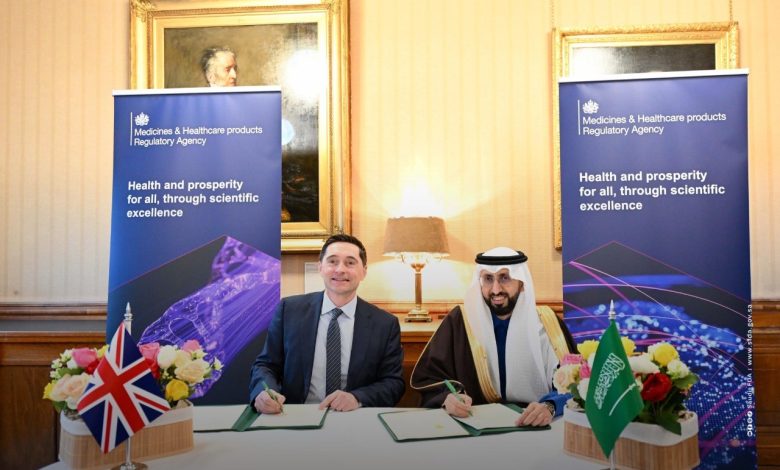
Driving the news: Saudi Arabia and the United Kingdom have agreed to speed up how regulators assess new medicines.
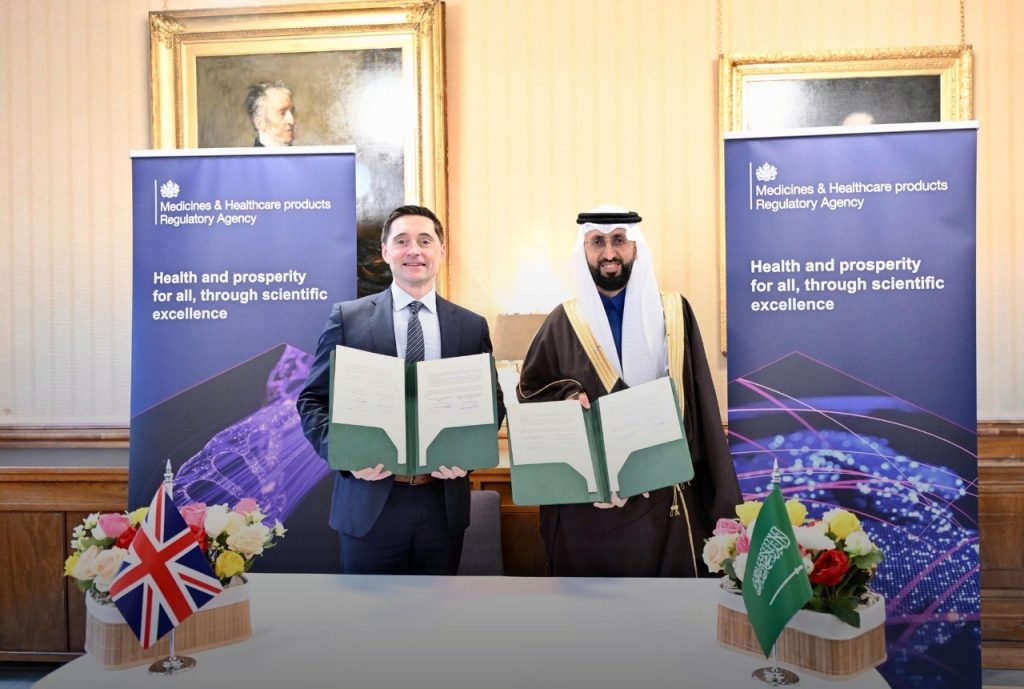
The Saudi Food and Drug Authority (SFDA) signed a memorandum of understanding with the UK’s Medicines and Healthcare products Regulatory Agency (MHRA). The deal aims to sharpen the evaluation of innovative therapies and to bring them to patients on time. Both agencies pledge to firmly protect safety, quality and efficacy throughout.
SFDA CEO Dr. Hisham Aljadhey and MHRA CEO Lawrence Tallon signed the memorandum on the sidelines of the DIA-MHRA Global Summit in London. The summit ran on 16-17 November. It took place during London Life Sciences Week. MHRA Chair Professor Anthony Harnden also attended. Notably, the Drug Information Association and the MHRA launched this summit together. It gathers regulators, industry leaders, academics and patient groups to discuss safer and smarter health innovation.
Why it matters: Patients with rare diseases often wait the longest for treatment. Therefore, both regulators want to clear a faster path for therapies that serve people with few options. At the same time, they refuse to cut safety corners. Early clarity on rules also helps developers avoid costly delays, which in turn helps patients who cannot afford to wait.
Scope of Cooperation
The memorandum spans several areas of drug regulation. First, the two agencies will assess rare disease treatments, advanced therapies and biotechnology products. Second, they will swap expertise on artificial intelligence, modelling and computer simulation in clinical studies and trials.
Furthermore, the agreement clarifies regulatory requirements for developers at an early stage. This step matters most for companies that build treatments for patients with limited options. Clearer rules should speed up development and evaluation, yet they will not weaken safety conditions.
In addition, the agencies will share information and experience in several practical areas. These include the registration and evaluation of medical products, good manufacturing practices and quality systems. They also cover product testing and analysis, supply chain monitoring and the detection of potential risks.
Overall, the text points toward lasting regulatory partnership rather than one-off reviews. Shared methods for artificial intelligence and simulation could shorten trial design, while shared quality checks could reduce duplicate inspections. These gains remain potential, however, because the agencies have yet to publish implementation details.
By the numbers:
- 16-17 November: The DIA-MHRA Global Summit runs in London.
- $11.8 billion (SAR 44.3 billion): Saudi Arabia’s pharmaceutical market in 2024, according to industry estimates.
- $15.6 billion (SAR 58.5 billion): The projected size of that market by 2030.
- $34.6 billion (SAR 129.8 billion): The non-oil GDP contribution that the National Biotechnology Strategy targets by 2040.
- 3: The priority areas the memorandum names: rare disease treatments, advanced therapies and biotechnology products.
- 11,000: The jobs the same strategy aims to create by 2030.
- SAR 5.5 billion ($1.47 billion): The agreements reported at the Riyadh Global Medical Biotechnology Summit in September 2026.
- 14 September 2026: The date SFDA signed a similar memorandum with Singapore’s Health Sciences Authority.
 Strategic Alignment
The big picture: The partnership supports Saudi Vision 2030 goals to improve quality of life. It also aligns with the National Biotechnology Strategy, which the Kingdom launched in January 2024. Moreover, the deal strengthens regulatory and scientific capacity and backs innovation in biological medicines and advanced therapies.
Meanwhile, SFDA keeps widening its global network. In September, it signed a memorandum with Singapore’s Health Sciences Authority to share expertise and explore facilitative regulatory pathways. Those pathways include products that involve biotechnology and artificial intelligence. The London agreement extends that push to one of the world’s most influential regulators.
SFDA also holds membership in the International Council for Harmonisation, which sets global technical standards for drug registration. That status lets Saudi regulators work with peers such as the MHRA on shared technical benchmarks.
Industry data show room to grow. Saudi Arabia ranks as the largest pharmaceutical market in the Middle East and North Africa, and local manufacturing remains a national priority. Consequently, faster and clearer approvals could help global developers bring advanced treatments to Saudi patients sooner.
The UK regulator also pursues similar goals elsewhere. The MHRA has stepped up its work with the US Food and Drug Administration to speed access to new medical technologies and artificial intelligence tools. As a result, the Saudi agreement places the Kingdom inside a widening web of regulatory partnerships.
What’s next: The memorandum sets a framework, but the announcement did not list timelines or joint projects. Watch for early guidance to developers, updates on rare disease pathways and the first shared work on artificial intelligence in clinical trials. Ultimately, success will depend on how quickly both agencies turn this text into practice. Patients, developers and investors will judge the partnership by the speed and consistency of the decisions it delivers. Regulators in both countries now face that important and public test together.