
Regional Security in Focus: Inside the High-Level Saudi-US Military Talks in Riyadh

From the Strait of Hormuz to the Red Sea, the Middle East is on edge as military tensions escalate across the region.
During high-level meetings in Riyadh, Saudi Arabia and the US explored ways to bolster cooperation to navigate the current escalation, demonstrating how diplomacy and deterrence go hand in hand to achieve regional stability and underscoring the depth of Saudi-US relations.
CENTCOM Commander in Riyadh
Driving the News: US Central Command (CENTCOM) Commander Adm. Brad Cooper arrived in Riyadh on November 19, 2026, where he held separate meetings with Saudi Crown Prince Mohammed bin Salman and Defense Minister Prince Khalid bin Salman.
Why It Matters: The meetings demonstrate how Riyadh and Washington are closely coordinating to safeguard the Gulf region, secure global maritime routes, and prevent the Middle East from descending into turmoil.
A Closer Look at the Military Talks
The Big Picture: Saudi Crown Prince and Prime Minister Mohammed bin Salman received Cooper in Riyadh. During their meeting, they reviewed Saudi-US ties, focusing on military cooperation. The two sides also discussed the latest regional developments.
Senior Attendance: Senior Saudi officials attended the meeting, including Defense Minister Prince Khalid bin Salman, Minister of State and National Security Adviser Dr. Musaed Al-Aiban, and Chief of the General Staff and Acting Commander of the Joint Forces General Fayyad bin Hamed Al-Ruwaili.
Zoom In: In a separate meeting, Prince Khalid bin Salman held talks with Cooper, where they discussed bilateral defense cooperation and efforts to promote security, stability, and peace in the region. Gen. Al-Ruwaili was also present at the meeting.
A Tense Regional Landscape
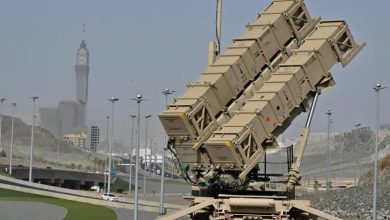
State of Play: The US CENTCOM Commander’s visit to Riyadh came amid heightened military tensions across the region. Saudi air defenses have been actively intercepting and destroying Houthi missiles and drones around the clock since the Iranian-backed militia renewed its escalation in July 2026. Meanwhile, Kuwait and Bahrain have been the subject of Iranian strikes in the past few days, while a UAE oil tanker was attacked near the Strait of Hormuz.
The Backstory: Since the outbreak of the US-Iran conflict in late February 2026, GCC states have endured more than 7,000 Iranian missiles and drones fired against civilian and energy facilities. The Iranian-backed Houthi militia has also escalated threats against Saudi Arabia since mid-July, targeting Saudi cities, including Makkah and Madinah, and civilian infrastructure with missile and drone attacks. These military tensions have also extended to critical maritime chokepoints, disrupting shipping and freedom of navigation in the Strait of Hormuz and the Bab al-Mandab Strait.
What’s at Stake: As mediators Qatar and Pakistan step up efforts to reach a peace deal, US President Donald Trump has issued mixed signals, warning of renewed military action against Iran while indicating that he would give negotiations a chance. In remarks to Fox News on November 19, Trump said that the US would “see what happens” in its conflict with Iran after January 1, without explaining the significance of that date.
Safeguarding Regional Security
The Context: The US has reiterated its unwavering commitment to Gulf security and sovereignty, reassuring its allies and regional partners that any deal with Iran will take into account their interests and stability.
Flashback: In late July 2026, the Saudi Armed Forces coordinated with US CENTCOM to conduct precision strikes against specific targets in Iraq from which drone attacks against the Kingdom’s oil facilities in the Eastern and Riyadh regions originated.
Prioritizing Diplomacy: Saudi Arabia maintains a dual-track approach of diplomacy and deterrence, advocating for diplomatic resolutions to conflicts and crises. This was evident in Riyadh’s push to avert major escalation in early August 2026. Following a phone call with Crown Prince Mohammed bin Salman, US President Donald Trump decided to cancel a “powerful attack” on Iran.
8 Decades of Saudi-US Partnership
Zoom In: The strategic partnership between Saudi Arabia and the US dates back over 80 years, evolving over the decades into a firm partnership across various sectors, including trade, defense, energy, education, technology and tourism. The US views Saudi Arabia as the cornerstone force for political stability and economic progress in the Gulf region and the Middle East.
Between the Lines: In November 2025, the US formally designated Saudi Arabia as a major non-NATO ally. This key announcement followed the signing of the landmark Saudi-US Strategic Defense Agreement. In September 2026, the US approved a potential $24.3 billion sale of 48 F-35 Lightning II fighter jets and related equipment to Saudi Arabia, as well as a $5 billion precision-guided munitions package. These packages aim to strengthen the Kingdom’s long-term defensive and airborne strike deterrence capabilities.
The Bottom Line: The US CENTCOM Commander’s meetings in Riyadh directly align with Saudi Arabia’s dual-track approach: maintaining unyielding defensive deterrence and strong military partnerships with the US, while consistently championing diplomatic de-escalation and regional stability.