Riyadh-Washington Coordination: Inside Saudi Arabia’s Push for Regional De-Escalation
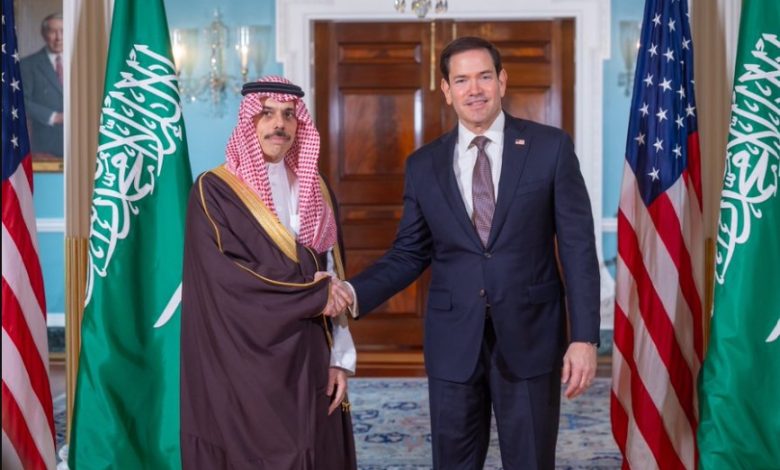
Building on the momentum of the UN General Assembly (UNGA) in New York, Saudi Arabia’s Foreign Minister Prince Faisal bin Farhan traveled to Washington for a high-level meeting with his US counterpart Marco Rubio.
The meeting marked another strategic move by Riyadh to anchor regional stability, by coordinating with its allies and partners to protect freedom of navigation in global trade routes and maritime corridors, while pushing for de-escalation across the Middle East.
Diplomacy in Washington
Driving the News: Prince Faisal bin Farhan and Rubio met in Washington on Monday, September 28, 2026. The meeting was attended by senior Saudi officials, including Saudi ambassador to the US Princess Reema bint Bandar, and key Foreign Ministry advisors.
The Big Picture: The meeting focused on discussing bilateral cooperation on regional security and stability, including in Iran, Gaza, Lebanon, Sudan, and other regional issues, according to the US State Department.
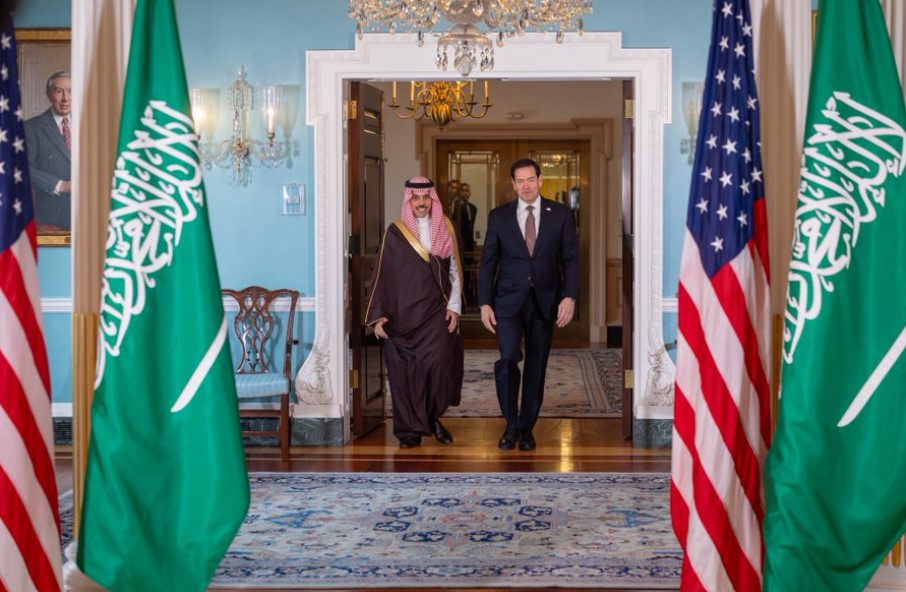
Zoom In: The Saudi Foreign Ministry said in a statement that the two officials discussed regional security and political developments, most notably the situation in Yemen. They also stressed the importance of safeguarding maritime security and freedom of navigation, particularly through the Strait of Hormuz and the Bab al-Mandab Strait, to strengthen regional stability and the uninterrupted flow of global trade and supply chains.
Two Waterways at Stake
State of Play: The US-Iran conflict, which erupted on February 28, has sparked military tensions around two strategic maritime corridors – the Strait of Hormuz and the Bab al-Mandab Strait.
The Strait of Hormuz
The Strait of Hormuz is a strategic maritime chokepoint linking the Arabian Gulf with the Gulf of Oman and the Arabian Sea, through which around 20% of daily global oil and LNG supplies pass.
Using it as a bargaining chip in the conflict, Tehran has partially closed the critical waterway, illegally blocking transit without its permission, deploying naval mines, and attacking commercial vessels.
The Bab al-Mandab Strait
The Bab al-Mandab Strait connects the Red Sea and Gulf of Aden, acting as a direct artery for maritime trade between Europe and Asia. It handles roughly 10% to 15% of all global trade annually.
Since the closure of the Strait of Hormuz, the Bab al-Mandab has emerged as a key alternative route for trade and energy flows, linking the Gulf countries to Europe (via the Suez Canal) and to Asia through Saudi ports.
However, the Iranian-backed Houthi militia has escalated threats around the Bab al-Mandab Strait, threatening commercial shipping in the critical trade route.
Safeguarding the Chokepoints
Between the Lines: Saudi Arabia has taken proactive measures to protect freedom of navigation in international waterways, firmly rejecting any attempts to use vital maritime corridors as a tool for pressure, threat, or harm to the interests of states, in accordance with international law and relevant UN resolutions.
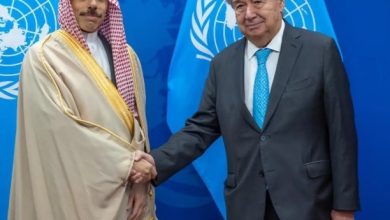
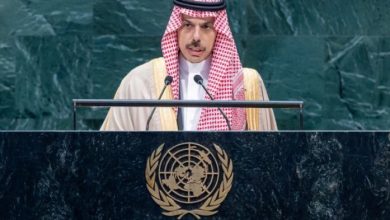
During his participation in the UNGA, Prince Faisal bin Farhan explained the scale of the threat, stressing that safeguarding international navigation and the sustainability of global supply chains is a shared responsibility that requires serious international cooperation to prevent disruptions to global commerce.
The Strategy: Riyadh has leveraged its membership in international platforms, such as the International Maritime Organization (IMO), to ensure the smooth movement of maritime transport and the sustainability of supply chains.
The Kingdom has also condemned attacks that threaten the security of global trade and stressed that the Strait of Hormuz is an international waterway where the right of passage is guaranteed under international law.
On the Red Sea front, the Kingdom launched the Multinational Maritime Defense Coalition in late July 2026 to address and deter the growing threats to maritime security, including attacks against commercial vessels, energy tankers, and naval infrastructure in the Bab al-Mandab Strait, the Red Sea, and the Gulf of Aden.
Coordination with Allies
Go Deeper: During the Washington meeting between Prince Faisal bin Farhan and Rubio, both diplomats reiterated the importance of continued Saudi-US coordination and consultation on issues of mutual interest. They also emphasized the need to support diplomatic efforts aimed at addressing regional crises and advancing security, peace, and stability.
#Washington | HH Foreign Minister Prince @FaisalbinFarhan met with U.S. Secretary of State @SecRubio.
The two sides reviewed the strategic Saudi-U.S. relationship and ways to further strengthen cooperation across various fields. They also discussed regional and international… pic.twitter.com/aDxTCkYlhN
— Saudi Embassy USA (@SaudiEmbassyUSA) September 28, 2026
The Backstory: Saudi Arabia has leveraged its alliances and partnerships to advocate for the security of critical maritime corridors and energy routes. The UK said it will dispatch a single RAF Voyager air-to-air refueling aircraft to Saudi Arabia for defensive missions, while France announced it will deploy military assets to help protect energy facilities in Yanbu.
Moreover, the European Union (EU) has raised the alert level of its EUNAVFOR ASPIDES naval mission in the Red Sea to enhance security in the critical maritime route amid the escalating Houthi threats, saying that the bloc will reinforce coordination with the Saudi-led Multinational Maritime Coalition.
Saudi-US Coordination
Saudi Arabia and the US share a strategic partnership anchored in over eight decades of ties, reinforced by a landmark strategic defense agreement signed in November 2025. Since the start of the conflict, Washington has repeatedly reaffirmed its unwavering commitment to the security and sovereignty of Saudi Arabia and its Gulf allies.
Riyadh maintains close coordination with Washington, in line with the Kingdom’s dual approach of diplomacy and deterrence:
- Diplomacy: In early August, Riyadh leveraged its diplomatic weight by preventing a major escalation in the regional conflict. Following a phone call between Crown Prince Mohammed bin Salman, US President Donald Trump decided to cancel a “powerful attack” on Iran.
- Deterrence: In late July, the Saudi Armed Forces coordinated with US Central Command (CENTCOM) to conduct precision strikes against specific targets in Iraq from which drone attacks against the Kingdom’s oil facilities in Eastern and Riyadh regions originated.
In His Words: “Saudi Arabia is a strategic defense partner… We will live up to those commitments. We are living up to those commitments now.” Marco Rubio, US Secretary of State.
The Bottom Line: The meeting between the Saudi and US foreign ministers underscores that regional stability and freedom of navigation are inseparable from global economic stability. It also highlights how Riyadh balances active diplomacy with military deterrence to maintain regional security.